 हिंदी खबर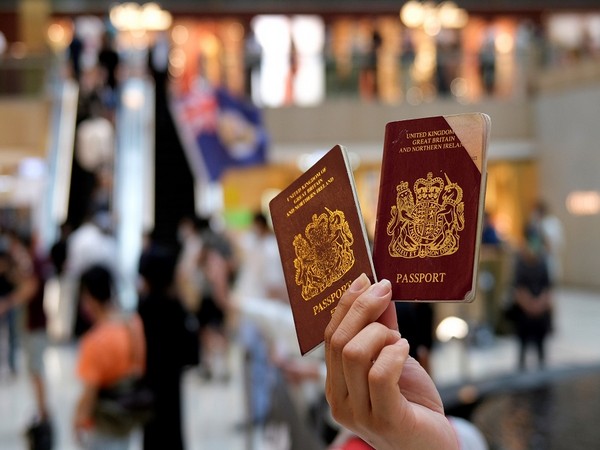

Hong Kong, January 23 (ANI): Top Beijing officials discussed proportionate ways to retaliate against London's new pathway for Hong Kong (HK) residents to acquire British citizenship through British overseas passport, as well as overhauling the city's electoral system on Friday ahead of its next leadership race in 2022, reported South China Morning Post (SCMP).
While the measures were not formally deliberated, they were reportedly addressed by officials attending the National People's Congress Standing Committee session (NPCSC) - China's top legislative body, in a three-day meeting in Beijing that started on Wednesday, said analysts Tony Cheung and William Zheng.
Last week, SCMP reported that Beijing was mulling to ban British National (Overseas) passport holders in Hong Kong from public office in retaliation over London's decision to offer them a visa with a path to the right of abode.
The diplomatic row between China and Britain over the passports first broke out after London announced last July that it would provide Hong Kongers eligible for BN (O) status a pathway to citizenship. The move was in response to Beijing's imposition of a national security law last June, and London presented the new visa scheme as its way of keeping its promise to Hong Kong people under the 1984 Sino-British Joint Declaration.
According to memorandums of understanding agreed upon by both London and Beijing, all those with British Dependent Territories citizenship would cease to have it on July 1, 1997, the day of the handover. In its place, however, they would be entitled to "retain an appropriate status" enabling them to continue to use passports issued by the British government - and thus, the BN (O) arrangement was born.
However, the memorandums made explicit that BN (O) status did not confer upon its holders the right of abode in Britain.
So when British Home Secretary Priti Patel announced the new BN (O) visa policy in July, China was quick to accuse London of violating the agreement.
Full details of BN (O) are expected to be unveiled by January 31, when applications open. But according to an overview of the proposal last October, those with BN (O) status will be allowed to apply for a special class of visa - one that entitles them to choose between entering and remaining in Britain for an initial period of 30 months, extendable by a further 30 months, or for a single period of five years.
After the conclusion of the five-year visa period, those under the scheme will be entitled to the right of abode in Britain, and after another 12 months, they will be allowed to apply for full citizenship, according to the Foreign, Commonwealth and Development Office.
Meanwhile, Beijing under the Basic Law is planning retaliatory measures against BN (O) holders who move to Britain, said Cheung and Zheng.
Under the Basic Law, Hong Kong's top political figures, such as the chief executive, chief justice, principal ministers and advisers in the Executive Council - as well as the Legislative Council's chief and all lawmakers for geographical constituencies - must be permanent residents with no right of abode in any foreign nation.
Earlier, foreign passport holders were allowed in the civil service, including in the uniformed services, such as police, some of whom were foreign nationals who stayed on after the handover in 1997.
Last month, sources told the SCMP that Beijing was also planning a drastic revamp of Hong Kong's 1,200-member Election Committee by abolishing all 117 seats likely to be taken up by opposition district councillors to quash their influence in the 2022 leadership race.
"Beijing would include both the BN (O) issue and Hong Kong's electoral shake-up as one package to be scrutinised at the NPC's plenary session in March, as it could involve amending the Basic Law, the city's mini-constitution. The plenary session will start on March 5," said Tam Yiu-chung, Hong Kong's sole delegate to the NPCSC.
Under the Basic Law, electoral reform packages require a two-thirds majority in the legislature, or the support of 47 lawmakers, to be approved. But after the mass resignation of opposition legislators last year, there are only 43 lawmakers left, noted Lau Siu-kai, vice-president of the Chinese Association of Hong Kong and Macau Studies, a semi-official think tank.
Asked if it was legitimate for Beijing to take the initiative to reform Hong Kong's electoral system, Tam pointed to a commentary published by the Communist Party mouthpiece People's Daily on January 12.
The commentary, titled "Hong Kong elections must not become tools of anti-China forces", said a "comprehensive and strong barrier must be established to deprive anti-China activists of the opportunities to usurp the governing power of Hong Kong".
Tam said the commentary reflected Beijing's determination to reform the city's political system.
"It mentioned what are the problems with the election, and when Beijing says something needs to be done, it will get it done," he warned.
Meanwhile, London has lambasted Beijing over its threat to stop recognising the BN (O) passport as a valid travel document, a proposed reprisal against Western nation for offering Hongkongers a pathway to citizenship in order to escape the draconian National Security Law that came into effect from July 1, 2020. (ANI)
China deliberates on British overseas passport, HK's electoral system in NPCSC meeting
ANI | Updated: Jan 23, 2021 11:35 IST


