

ADD ANI AS A TRUSTED SOURCE
googleads
ANI Logo
Menu
Asia

China countering foreign sanctions through 'Wolf Warrior' diplomacy

Beijing [China], June 19 (ANI): In order to counter new foreign sanctions, China started with 'Wolf Warrior' diplomacy to dissuade G7 member states from imposing new sanctions against Beijing under pressure from the US.

ANI Jun 19, 2021 09:58 IST googleads

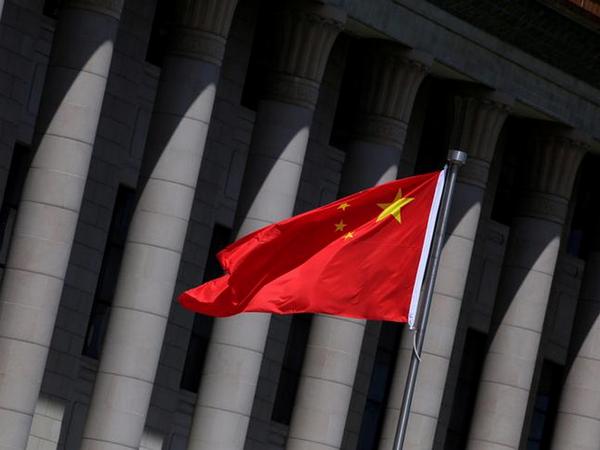
Representative Image

Beijing [China], June 19 (ANI): In order to counter new foreign sanctions, China started with 'Wolf Warrior' diplomacy to dissuade G7 member states from imposing new sanctions against Beijing under pressure from the US.
It was Chinese President Xi Jinping himself who first introduced China's Wolf Warrior diplomacy. Wolf warrior diplomacy originated from what Chinese Foreign Minister Wang Yi referred to as Xi's "great diplomatic philosophy," reported Newsweek.
Moreover, it was Xi himself who bolstered the Chinese public's sense of nationalism as part of a strategy to further consolidate his power and increase his prestige.
In an opinion piece in Newsweek, Jianli Yang wrote that over the past two years, Xi Jinping demanded that Chinese diplomats demonstrate a "fighting spirit" and take a tough stance on Sino-US relations and international challenges.
The Standing Committee of the National People's Congress of China hastily passed its new law on countering foreign sanctions before the 47th G7 summit convened in England.
It was done in response to concerns about forced labour in Xinjiang and the suppression of human rights in Hong Kong. G7 and European Union countries imposed sanctions on certain Chinese companies and individuals, after which Beijing imposed counter-sanctions on the countries in question.
Doing so would demonstrate the shared resolve of the seven most powerful countries in the West to resist totalitarian China. Beijing was wary of this, and thus deemed it necessary to take preventive actions, wrote Jianli.
On the eve of the G7 summit, the Chinese Communist Party (CCP) passed the Law on Countering Foreign Sanctions (also known as the Anti-Foreign Sanctions Law).
The law is intended to influence countries that are not as strong as the United States and the United Kingdom (such as Germany, Japan and other states that are less willing to stand up against China) to consider the cost of Chinese countermeasures and choose not to go along with US sanctions.
Nearly six months since US President Joe Biden took office, China has clearly demonstrated that Washington must shed the illusion that US-China relations can return to some sort of pre-Donald Trump status quo.
Seeing that the relationship between the US and China isn't getting better, Beijing feels justified in using all available means and tools to counter the West's attempt to contain China, reported Newsweek.
At a CCP Politburo study meeting held on the afternoon of May 31, Chinese President Xi Jinping instructed officials to do a good job of telling the "Chinese story"--to propagate the voice of China, ensure that China has an international voice commensurate with its comprehensive national power and global status, "grasp the right tone," be "modest and humble," pay attention to the "strategy and art of the 'public opinion struggle'" and "elevate the persuasiveness of Chinese discourse."
Observers have noted that Xi wants to make some adjustments to China's 'Wolf Warrior' diplomacy, wrote Jianli.
The fact that the CCP's diplomatic efforts have hit a brick wall beyond China's borders is not essentially a question of the choice of words, tone, or posture adopted by Chinese diplomats. Rather, the fundamental problem is one of soft power.
As long as Xi fails to change his "great diplomatic philosophy," as long as he continues to rely on strong nationalist sentiment to maintain his power and prestige, and as long as the CCP maintains its present course and continues to commit gross violations of human rights, then no matter what superficial changes Xi makes with respect to form and style, no one will regard him as trustworthy, respectable, or likeable and China's wolf warrior diplomacy will continue to rear its ugly head time and again.
China's passage of the Law on Countering Foreign Sanctions makes it abundantly clear that Xi does not intend to reduce his confrontational approach, let alone abandon confrontation altogether, reported Newsweek.
Although the law increases deterrence against multinational corporations in the US and other Western countries, it will undoubtedly lead to more resistance, wrote Jianli.
The West, especially the United States, will not lift sanctions against China simply because of the law's introduction. On the contrary, it may provoke the US to use even more power and resources to fight China, reported Newsweek.
Of course, Beijing must have considered such consequences when introducing the law, but despite knowing what the result would be, the CCP rushed to pass it before the G7 summit. This demonstrates that Xi is ready for an escalated confrontation between China and the United States as a result of the law. (ANI)


Get the App

What to Read Next

Asia

India rushes to safeguard 9,000 nationals in Iran

India rushes to safeguard 9,000 nationals in Iran

India on Thursday highlighted a high-level diplomatic push to protect Indian interests, emphasising the twin priorities of citizen safety and the stability of energy supply chains.

Read More
Asia

China’s expanding system of censorship exposed in Dharamshala

China’s expanding system of censorship exposed in Dharamshala

The event titled "Understanding China's System of Political Repression: Voices of Resistance through Art and Journalism" brought together prominent voices critical of China's information control, as reported by Phayul.

Read More
Asia

Tibetan Women’s Association organises protest against China

Tibetan Women’s Association organises protest against China

It's an event to remember the day when Tibetan women from all three provinces of Tibet, for the first time in the history of Tibet, stood together and raised their voice against the brutal Chinese military forces that were occupying Tibet in 1959.

Read More
Asia

India’s Consul General meets Ant Group to boost tech ties

India’s Consul General meets Ant Group to boost tech ties

India's Consul General in Shanghai, Pratik Mathur, met Ant Group leadership to discuss fintech and digital economy opportunities. This follows high-level engagements with Shanghai's Mayor, aligned with Prime Minister Narendra Modi's "Reform, Perform and Transform" mantra to strengthen bilateral and multilateral cooperation through the SCO and BRICS.

Read More
Middle East

UAE hails UNSC resolution condemning unprovoked Iranian strikes 

UAE hails UNSC resolution condemning unprovoked Iranian strikes 

The UAE has led a successful UN diplomatic push, with the Security Council adopting Resolution 2817 to condemn Iran's "egregious attacks." Co-sponsored by 140 nations, the resolution demands an end to "indiscriminate strikes" and affirms the UAE's right to self-defence against threats to its sovereignty and civilian infrastructure.

Read More
US

UNSC adopts resolution condemning Iran’s “egregious attacks”

UNSC adopts resolution condemning Iran’s “egregious attacks”

The UN Security Council has adopted a resolution condemning Iran's "egregious attacks" against regional neighbours, demanding an immediate halt to hostilities and interference with maritime trade. While 13 members voted in favour, Russia and China abstained, with Tehran dismissing the move as a "manifest injustice" and a "serious setback."

Read More
US

Trump targets India in new unfair trade practice investigation

Trump targets India in new unfair trade practice investigation

The Trump administration has launched "unfair trade practice" probes into 16 nations, including India and China, to reinstate tariff pressure. US Trade Representative Jamieson Greer stated the "investigations will focus on economies" with "structural excess capacity." Additional probes into forced labour could lead to new tariffs by July.

Read More
Middle East

Saudi military downs drones targeting Shaybah oil field

Saudi military downs drones targeting Shaybah oil field

Saudi Arabia intercepted multiple drones targeting the "Shaybah oil field" as regional tensions soar. Amid the conflict, Russia and Saudi Arabia "emphasised the need" for international efforts to prevent escalation. Meanwhile, the US warned Russia not to intervene, despite Trump and Putin discussing "opportunity for some peace" in Ukraine.

Read More
Asia

Russian FM holds talks with Saudi counterpart on Middle East esca

Russian FM holds talks with Saudi counterpart on Middle East esca

Russian Foreign Minister Sergey Lavrov held a telephonic conversation with Foreign Minister of Saudi Arabia Faisal bin Farhan on the need to make efforts to prevent further escalation of the Middle East crisis.

Read More
Asia

Taiwan detects 6 Chinese naval vessels around itself

Taiwan detects 6 Chinese naval vessels around itself

Taiwan's Ministry of National Defense detected the presence of six Chinese naval vessels operating around their territorial waters as of 6am (local time) on Wednesday. Taiwanese forces said they monitored the situation and responded.

Read More
Home About Us Our Products Advertise Contact Us Terms & Condition Privacy Policy

Copyright © aninews.in | All Rights Reserved.
