BYC alleges enforced disappearance of four after Human Rights Day event in Quetta
In their statement, the BYC mentioned that an awareness event took place on 10 December, coinciding with International Human Rights Day, within a secure venue in Quetta. They asserted that the event did not obstruct any roads or interfere with government functions. Despite this, four family members were reportedly taken to the Sariab police station later that night due to suspicions of participating in the seminar and subsequently disappeared, according to the BYC report.
ANI
Dec 17, 2025 13:07 IST

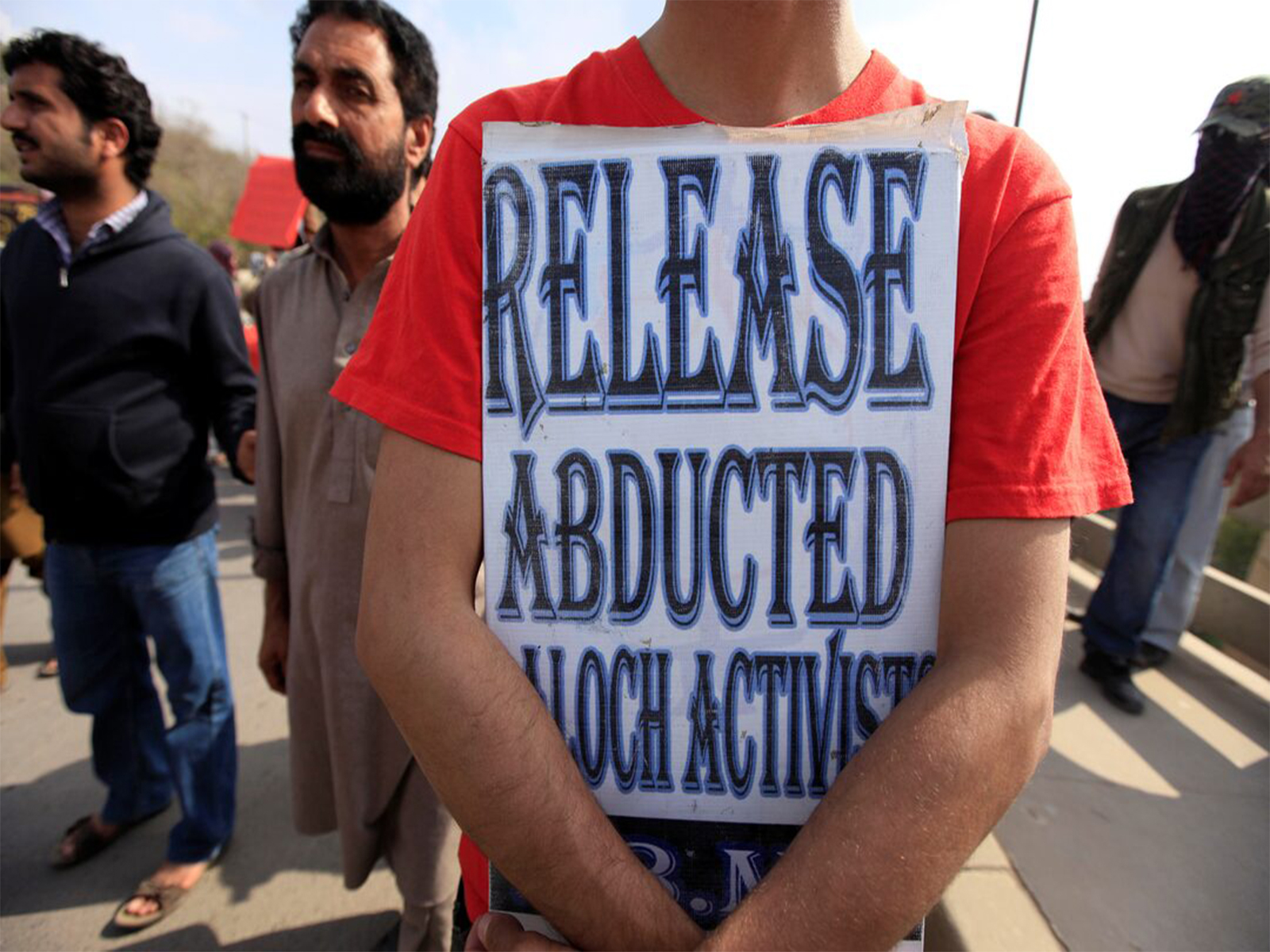
Balochistan [Pakistan] December 17 (ANI): The Baloch Yakjehti Committee (BYC) has alleged that the deputy commissioner of Quetta has behaved "like a dictator" following the enforced disappearance of four family members who reportedly attended a Human Rights Day seminar in the city, as stated in The Balochistan Post (TBP).
In their statement, the BYC mentioned that an awareness event took place on December 10 coinciding with International Human Rights Day, within a secure venue in Quetta. They asserted that the event did not obstruct any roads or interfere with government functions. Despite this, four family members were reportedly taken to the Sariab police station later that night due to suspicions of participating in the seminar and subsequently disappeared, according to the BYC report.
The statement highlighted that when a petition was filed in court the next morning seeking their recovery, the judge was told that the four individuals were being held at the deputy commissioner's office under Section 3 of the Maintenance of Public Order (3-MPO). The BYC claimed that no legal documentation was presented to justify this assertion.
The organisation stated that this occurrence exemplified the existence of "an undeclared military-style martial law" in Balochistan, asserting that judges and deputy commissioners were collaborating "with the military and intelligence agencies, serving as soldiers in civilian disguise." The BYC contended that organising an event on International Human Rights Day was a constitutional entitlement. They added that the abduction of four family members for this reason, combined with their detention under 3-MPO without any legal basis, indicated that the Pakistani state was treating Balochistan "like a colony," as referenced in the BYC report.
The group indicated that the level of oppression was becoming increasingly blatant, claiming that "the true offenders in today's society are the state and its apparatus," while individuals confined in prisons and torture facilities belonged to "oppressed and marginalised communities."
They urged every aware individual to oppose this "colonial system," warning that during "an extreme phase of fascism, individuals would continue to endure suffering in various forms." The BYC called on international human rights organisations to take "meaningful and practical measures" against what they identified as state repression. Remaining silent during this time, the group cautioned, would equate to "bolstering oppression itself."
In the meantime, Dr Sabiha Baloch, a leader of the BYC, expressed that the arrest and disappearance of the four men, including an elderly person and his two sons, demonstrated "the escalating authoritarian nature of the state." She remarked that their only "offence" was being suspected of attending a human rights conference. Dr Sabiha challenged the legal grounds for the detentions, questioning: "Which law in Pakistan makes attending a human rights conference a criminal act?" If no such law is in existence, she claimed, then the treatment of the family signified "collective punishment, abuse of power, and systematic cruelty," as reported by TBP.
She pointed out that this case illustrated a broader trend in which the law was "weaponised against citizens," where administrative authority replaced due process, and detention acted as punishment without trial. Such practices, she noted, violated constitutional safeguards as well as Pakistan's commitments under international law, which include protections against arbitrary detention and enforced disappearances, as stated in the TBP report.
Dr Sabiha called on international bodies and donor nations to reassess their relationships with Pakistan, cautioning that unconditional funding for security and governance sectors has been contributing to enforced disappearances, arbitrary detentions, and extrajudicial executions. She emphasised that all international support should be contingent upon measurable compliance with human rights standards, as reported by TBP. (ANI)
Get the App