"BRICS Declaration reflects India's concerns": JNU professor Srikanth Kondapalli amid ongoing Summit
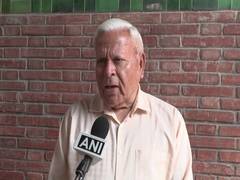
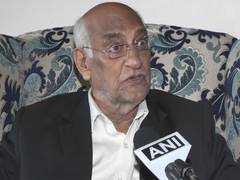
Chinese Studies expert at Jawaharlal Nehru University, Professor Srikanth Kondapalli, said the New Delhi Declaration addressed several key concerns of India and other Global South countries, including trade, currency, energy security, trade finance, climate finance and disaster relief.
ANI
Sep 13, 2026 10:09 IST

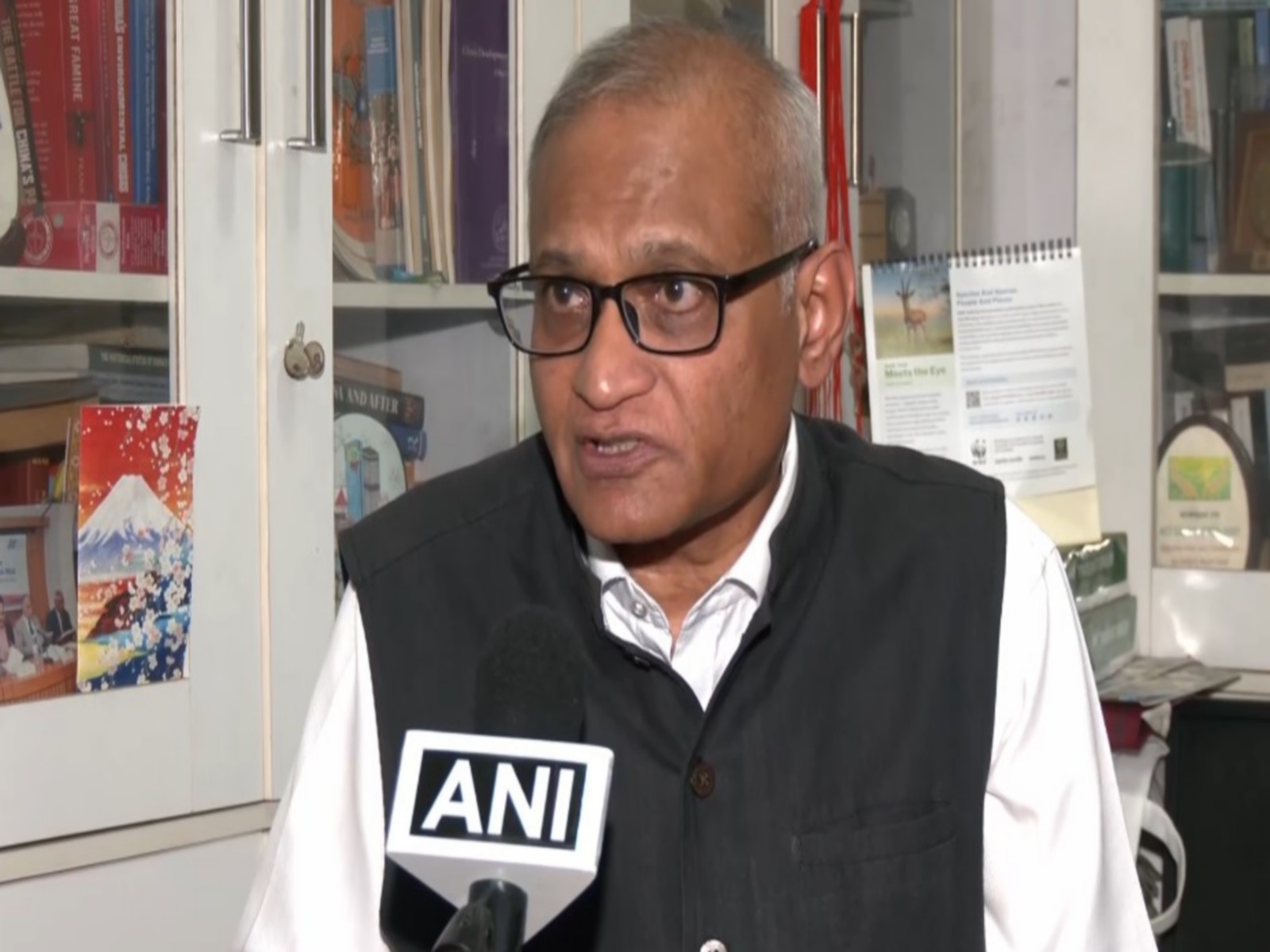
New Delhi [India], September 13 (ANI): Chinese Studies expert at Jawaharlal Nehru University, Professor Srikanth Kondapalli, said the New Delhi Declaration addressed several key concerns of India and other Global South countries, including trade, currency, energy security, trade finance, climate finance and disaster relief.
Speaking to ANI on Saturday, he said, "In order to maintain the 7.8 per cent GDP growth rate that India maintained in the first half of this year, there are several efforts within the New Delhi Declaration, which are very crucial for trade, for currency, for energy security, for the small and medium enterprises that need trade finance, climate finance, disaster relief and various other provisions within the Declaration."
"So overall, it satisfied many of the Indian concerns. It satisfied many of the concerns of the Global South countries, and so it kept its promise that it will cater for the emerging markets and developing countries EMDCs which is mentioned in the declaration," Kondapalli said.
He said BRICS' decision not to explicitly push for de-dollarisation was also significant from India's perspective, given the country's economic ties with Western markets and the importance of global financial stability.
"This is in continuation of the Rio declaration, which did not mention de-dollarisation. So Brazil, South Africa, and India were concerned about the effects of raising de-dollarisation because, unlike China, which has reached the second-largest economy status, these countries are still dependent on Western markets," he said.
He said developing economies could face financial and trade disruptions if BRICS were to make a direct push towards de-dollarisation.
"If BRICS would have made a statement regarding the de dollarization many developing countries will go through a lot of turmoil: financial turmoil, stock exchange turmoil and their trade, which is directed towards Western countries like the US and EU, they will be in turmoil," he said.
Kondapalli said discussions on digital currencies and local-currency transactions could provide an alternative mechanism without immediately disrupting existing global financial systems.
"In local currencies, the BRICS countries would like to see central bank digital currency transactions so that their state-owned banks centralized banks will be able to deal with any fallout. Even though that is not the permanent solution for transactions. Nevertheless, that is seen as a stopgap. So there was some discussion in terms of digital currencies," he said.
He also noted the significance of the Chinese yuan in intra-BRICS trade, saying, "Out of USD 1.7 trillion of the intra-BRICS trade. 47 per cent of this is done in the Chinese Yuan."
Kondapalli further said India's concerns over energy security and the impact of geopolitical tensions on developing economies remained important in the BRICS discussions.
"Due to the Russia-Ukraine conflict and the Iran conflict, oil prices have really gone up to almost USD 100 per barrel. And this has really pinched the GDPs of various developing countries. So they do not want to take any measures towards diversifying away from the US dollar," he said.
On the overall outcome of the summit, he said the New Delhi Declaration reflected considerable work by governments and civil society.
"Quite a lot of effort has been made by various committees, governmental committees, and civil society," Kondapalli said.
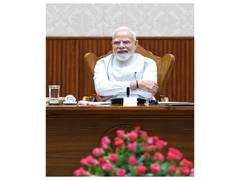
His remarks come as the second day of the New Delhi BRICS Summit will see participation of BRICS members and partners in an open session, with Prime Minister Narendra Modi also slated to hold bilateral meetings with leaders from seven countries.
Prime Minister Narendra Modi on Sunday is scheduled to meet with leaders of South Africa, Kazakhstan, the Philippines, Egypt, Burundi, Uganda and Nigeria.
The open session on Sunday will focus on the core pillars of the central theme, namely resilience, innovation, cooperation and sustainability.
The session, titled ‘Resilience, Innovation, Cooperation and Sustainability: Shaping the Future for Inclusive Global Growth’, will be held at the Summit Hall inside Bharat Mandapam in New Delhi.
The open session is part of the two-day BRICS Summit being hosted by India on September 12-13 under the chairship theme ‘Building for Resilience, Innovation, Cooperation and Sustainability’.
The session is expected to provide an opportunity for BRICS leaders to deliberate on areas of common interest and discuss ways to strengthen cooperation among member countries while advancing an inclusive approach to global growth.
Earlier, on Saturday, BRICS leaders unanimously adopted the New Delhi Declaration, with Prime Minister Narendra Modi describing the outcome as a reflection of a BRICS that is “wider in reach and stronger in purpose”.
PM Modi, who made a series of posts on X, said the declaration focuses on innovation, sustainability and people-to-people ties, with the aim of making cooperation “more practical, development-oriented and responsive to the aspirations of the BRICS nations”.
“I thank all the fellow BRICS nations and their leaders for its adoption,” the Prime Minister said.
The declaration expressed deep concern over the continued escalation of tensions in West Asia and called for exercising maximum restraint, as well as avoiding actions that could further aggravate the situation.
The New Delhi Declaration reaffirmed BRICS’ support for a lasting two-state solution to the Israeli-Palestinian conflict, while urging deeper international institutional support for Palestine and reaffirming Israel’s legal obligation to ensure the provision of humanitarian aid in Gaza.
The BRICS countries also called for an immediate end to unilateral economic sanctions and expressed grave concern over rising protectionist policies, warning that arbitrary tariff hikes and green-labelled trade barriers are disrupting global supply chains and hurting the developing world.
India’s presidency, which began on January 1, 2026, is guided by the theme “Building for Resilience, Innovation, Cooperation and Sustainability”, deploying a human-centric approach across its core pillars to reinforce institutional strength and support sustainable growth. (ANI)
Tags:
Get the App