 हिंदी खबर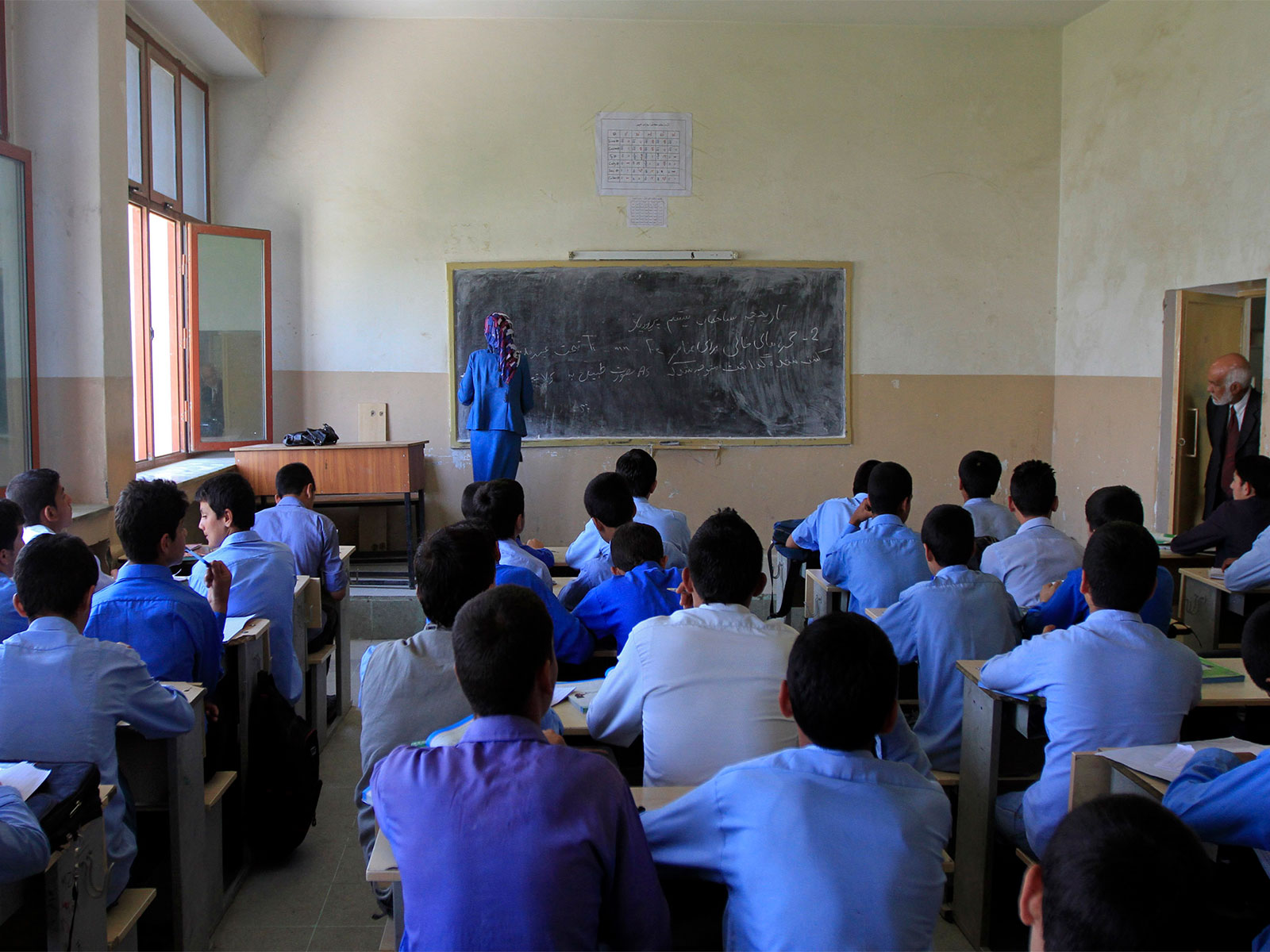

Kabul [Afghanistan], January 11 (ANI): Students in Kapisa province of Afghanistan are left with no option but to attend classes outdoors due to a lack of buildings, Tolo News reported.
Taliban's education sector's data says that out of 238 schools in Kapisa, 79 don't have buildings, and 100 remain dilapidated.
Ahmad Javid Forotan, Head of Quality Assurance at the Department of Education, said, "We have a total of 238 schools in Kapisa. Of those, 159 have buildings, while 79 schools are without proper structures. Students are studying under tents or in rented buildings."
Apart from the buildings, many of these students also don't have access to enough textbooks, Tolo News reported.
Hamza, a student in Kapisa, told Tolo News, "There are some problems like broken chairs, windows, and paint. We ask the government and aid organisations to address these issues."
Ebrahim, another student, narrated his ordeal to Tolo News, "There are many problems in our laboratory. In biology class, the teacher wanted to show us a microscope lens, but when we went to the lab, there was no microscope. Many other tools are also missing."
Parents and teachers have also called on the Taliban to address these issues.
Khalid Kakar, a school principal, said, "Students study under the open sky during the hot months of Jawza, Saratan, and Asad (June-August)."
Lajur Jan, a local elder, said, "Our children suffer during the heat because their schools have no shelter."
Women and girls are bereft of the opportunity of even learning under the sky, said Amina Mohammed, Deputy Secretary-General of the United Nations, on January 6, as reported by Tolo News, criticising the continued restrictions on women and girls in Afghanistan. She stated that the bans on work and education and the restrictions on women's presence in public spaces remain in place.
In a post on X, she stated that women's rights are human rights everywhere.
Amina Mohammed said: "Millions of women and girls in Afghanistan face severe restrictions on their basic rights: education, work, security and freedom of movement."
Taliban has recently made no statements regarding women's and girls' rights, especially the right to education. But, in the past, officials have said that women's and girls' rights in the country are ensured within the framework of Sharia law, as per Tolo News. (ANI)




