Bangladesh: Yunus's rise raises fears of Islamist surge and strategic realignment
Political tremors continue to ripple across South Asia following Bangladesh's dramatic leadership change last August, when mass protests led by a wide-ranging coalition of student groups, civil society activists, and radical Islamists forced Prime Minister Sheikh Hasina to resign.
ANI
Apr 17, 2025 18:41 IST

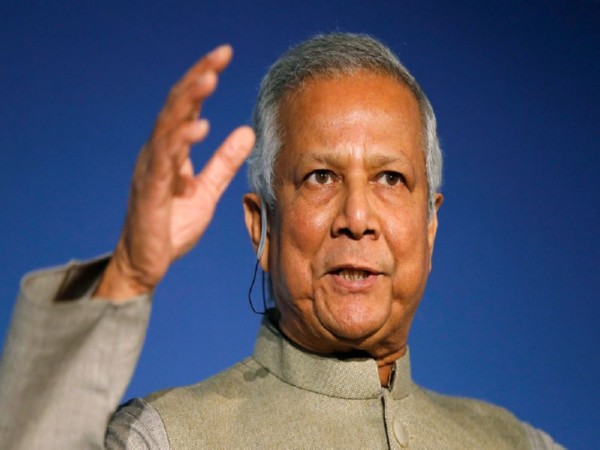
Dhaka [Bangladesh], April 17 (ANI): Political tremors continue to ripple across South Asia following Bangladesh's dramatic leadership change last August, when mass protests led by a wide-ranging coalition of student groups, civil society activists, and radical Islamists forced Prime Minister Sheikh Hasina to resign.
In her place emerged Nobel Peace Prize winner Mohammed Yunus, widely hailed for his work in microfinance, who was appointed as interim leader amid high hopes for reform and unity.
But those early hopes are now giving way to growing unease, both at home and abroad. Yunus's apparent tolerance of Islamist forces and a sharp pivot in foreign policy toward China and Pakistan have raised fears about Bangladesh's internal cohesion and its regional alliances--especially its historically close ties with India.
"Yunus seems either unwilling or incapable of reining in the Islamist zealots who are increasingly coming to the fore in Bangladesh," wrote Sumit Ganguly, a columnist at Foreign Policy and senior fellow at Stanford University's Hoover Institution. "At the same time, he is steering Bangladesh away from India and toward China and Pakistan -- two shifts that could destabilise the region."
Under Hasina, the Islamist party Jamaat-e-Islami was banned for alleged incitement to violence and its controversial role during the 1971 Liberation War, during which many of its leaders sided with the Pakistani military. Hasina's government had pursued a secular agenda, aiming to safeguard minority rights and maintain regional ties with India, especially in the face of rising religious nationalism.
Yunus, however, has reversed course, lifting the ban on Jamaat-e-Islami and adopting a markedly softer tone. Since then, Islamist groups have made inroads into public life, with rising instances of mob violence targeting both Hindu minorities and members of the Ahmadiyya Muslim sect. These developments are fueling fears of increasing religious intolerance within Bangladesh.
The Yunus government's failure to rein in Islamist zealotry could fuel Hindu-Muslim tensions and violence in northeastern India, with significant destabilising consequences for the whole region. Within Bangladesh, rising religious intolerance will almost inevitably lead to more violence and the possible flight of Hindus into India, Sumit Ganguly wrote in his article.
Equally concerning for New Delhi is Yunus's effort to realign Bangladesh's foreign policy. In a recent visit to Beijing, Yunus offered Chinese leadership strategic access to the Bay of Bengal via Bangladesh--a move seen as potentially undercutting India's maritime security in the region.
"Bangladesh is the guardian of ocean access," Yunus said in remarks that stunned Indian diplomats. His proposal comes as China continues to expand its influence across South Asia, including major infrastructure investments in Sri Lanka, Nepal, and Pakistan.
Indian officials fear that Bangladesh could fall into a similar "debt trap" that left Sri Lanka vulnerable after heavy borrowing from China. "Beijing's growing presence in Dhaka poses a direct challenge to India's strategic interests," said a South Asia policy analyst in New Delhi.
India's foreign policy establishment now faces a critical juncture. For decades, New Delhi has invested heavily in its relationship with Bangladesh, providing economic aid, infrastructure development, and political support. However, observers note that India has often failed to maintain consistent engagement, allowing rivals like China to fill the vacuum.
"If India continues with business as usual, it risks losing a vital partner," said one senior Indian diplomat. "There is an urgent need for renewed diplomatic outreach--through trade concessions, investment, and reaffirming security cooperation."
The evolving situation in Dhaka is more than a domestic political shift. It has the potential to reshape regional dynamics across South Asia. For India, the stakes could not be higher.
"If Bangladesh falls under greater Islamist influence and becomes a beachhead for Chinese interests," said Sumit Ganguly, adding, "India could find itself isolated in its own neighbourhood."
With political uncertainty mounting in Dhaka and regional rivalries intensifying, the coming months may prove decisive in determining whether Bangladesh remains a bridge of cooperation--or becomes a fault line of instability--in South Asia. (ANI)
Get the App