Bangladesh JeI chief issues "apology" for party's "past mistakes" ahead of elections in February
However, critics argue that the apology lacks specificity and sincerity, as it does not explicitly acknowledge the party's complicity in the genocide and atrocities committed during the 1971 Liberation War.
ANI
Nov 04, 2025 12:39 IST

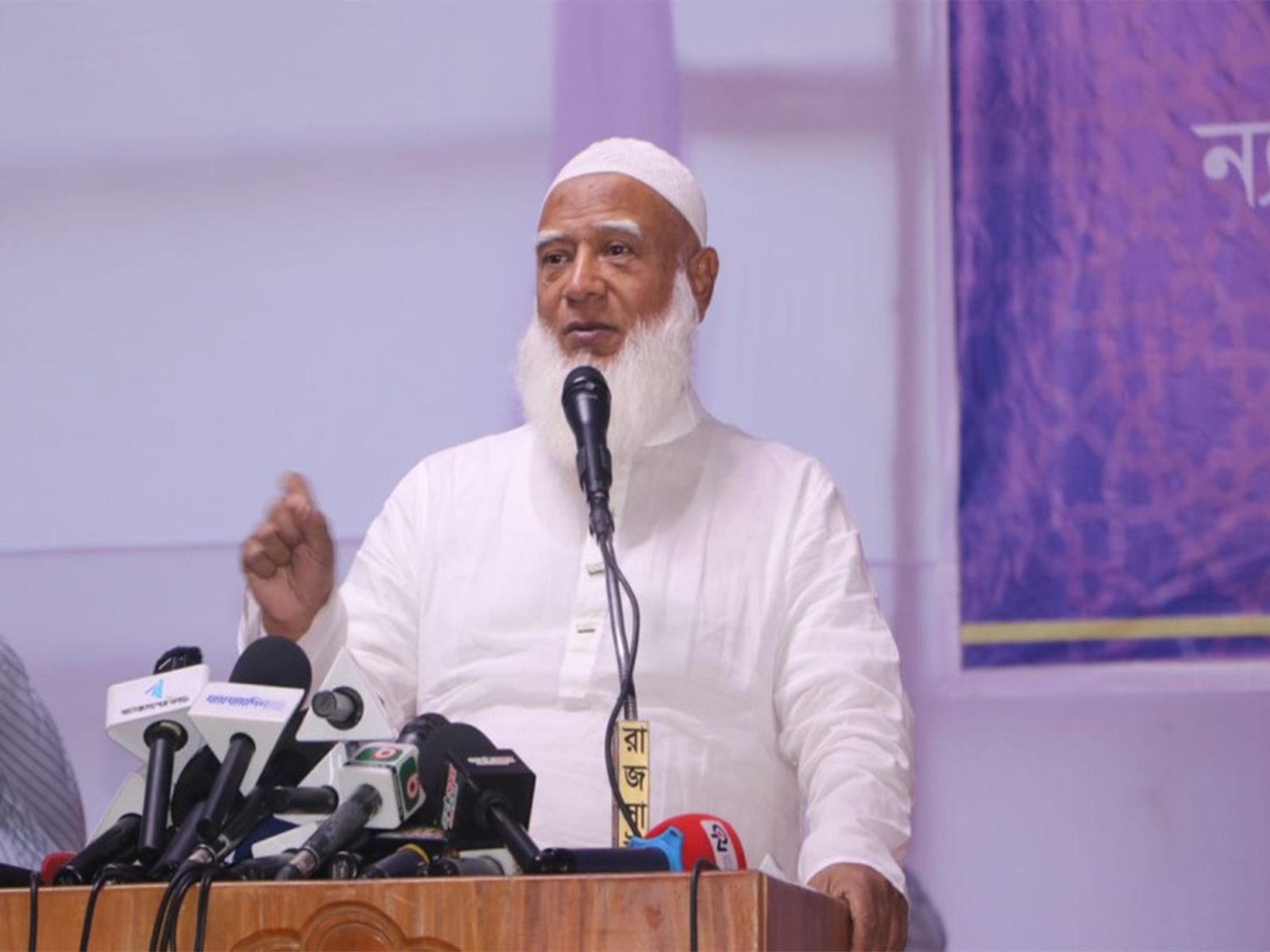
Dhaka [Bangladesh], November 4 (ANI): Bangladesh Jamaat-e-Islami chief Shafiqur Rahman has issued an unconditional apology for what he termed the party's "past mistakes," ahead of national elections in February, The Diplomat reported.
Speaking to reporters in New York on October 22, Rahman said, "From 1947 to today (October 22), whoever has suffered because of us, we seek their forgiveness, unconditionally."
However, critics argue that the apology lacks specificity and sincerity, as it does not explicitly acknowledge the party's complicity in the genocide and atrocities committed during the 1971 Liberation War.
The apology does not clearly state what the party is apologising for, which leads to scepticism about its genuineness.
"From 1947 to 2025, if on an unspecified day, an unspecified crime was committed," he said, "the apology was for that," added Rahman.
Reiterating his statement at the same event, Rahman added, "From 1947 until this moment of October 22, 2025...it is now 8:11 pm in New York--for all the suffering caused by us, on whomever, wherever--we apologised unconditionally," The Daily Star reported.
Notably, Jamaat-e-Islami collaborated with Pakistan during the Liberation War, and its leaders were involved in war crimes and human rights violations. Al-Badr, Al-Shams, and Razakar were associates of the Pakistani Army during the 1971 war. These were the militias that mercilessly killed freedom fighters, intellectuals, women, and ordinary people, and the Jamaat formed them, reported The Diplomat.
Addressing longstanding calls for acknowledgement, Rahman said, "Some people said, even if you haven't committed any specific crime, your political decision was not acceptable. You could at least offer an apology."
He also noted that Jamaat leaders had apologised before. "We had offered our apology at least three times. Professor Ghulam Azam apologised, Maulana Motiur Rahman apologised and I myself offered an apology," Rahman said.
The party's attempt to seek forgiveness may be seen as a tactical move to revive its political fortunes ahead of the national elections.
Referring to the recent release of party leader ATM Azharul Islam, he added, "Not only for 1971 but since 1947, if anyone had suffered or been harmed by Jamaat-e-Islami, I, on behalf of every individual and the organisation, offered an unconditional apology. Please forgive us."
Acknowledging that political organisations are not immune to mistakes, Rahman said, "Out of 100 decisions, 99 might have been right, but one could be wrong. That one wrong decision might have harmed the nation. So, if any of my decisions caused harm to the nation, what was the problem in asking forgiveness for that?"
Responding to criticism over his choice of words, he maintained, "After seeking forgiveness, some said it should not be in this language, or it should be in that language. I sought unconditional forgiveness, without any condition. What else was left?"
He further stated that neither he nor his predecessors had ever claimed to be beyond reproach. "If any party claimed to be above mistakes, the nation would surely reject that. Why should our claim be accepted?" he said.
Defending the intent behind his remarks, Rahman added, "For all the mistakes we had made, knowingly or unknowingly, we were grateful to those who corrected us. And to those who were harmed by our mistakes, we sought forgiveness from them. Was there anything more to say? This was very clear and loud."
When an audience member suggested limiting the apology to 1971, Rahman replied, "Had we made mistakes only in 1971? Not at other times? And those who told us to apologise, were they angels? We didn't raise these questions about others because the more we raised issues from the past, the more the nation would be divided."
Even today, countless families in Bangladesh carry the scars of 1971. It is said that millions of people were killed in that war.
Notably, during Sheikh Hasina's tenure (2009-2024), the Jamaat-e-Islami's top leaders were tried and executed for war crimes, and the High Court canceled its registration. A ban was imposed on the party in the final days of Hasina's government.
Following the fall of Sheikh Hasina's government on August 5, 2024, the ban on Jamaat-e-Islami was lifted, allowing the party to resume its political activities. Since then, the party has been actively engaging in the political arena, including participating in student union elections and forming alliances with other Islamic parties. (ANI)
Tags:
Get the App