"Ban was foolhardy, but real reason lies much deeper": Former Indian envoy to Nepal on Gen Z protests
Speaking with ANI, Ranjit Rae mentioned the people's frustration over the "corruption and scams" in high political office behind the outrage. He added that people believed families of top political leaders enjoyed a lavish, privileged lifestyle, while the government ignored the younger generation.
ANI
Sep 09, 2025 20:10 IST

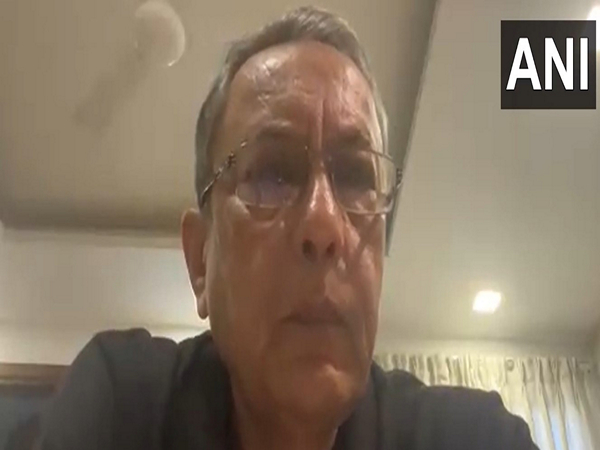
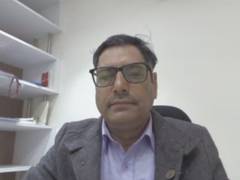
New Delhi [India], September 9 (ANI): Former Indian Ambassador to Nepal Ranjit Rae on Tuesday said that the ban on social media apps, which triggered the protests, was "a foolhardy decision" but he suggested that "real reason" for the outrage lies much deeper.
Speaking with ANI, Ranjit Rae mentioned the people's frustration over the "corruption and scams" in high political office behind the outrage. He added that people believed families of top political leaders enjoyed a lavish, privileged lifestyle, while the government ignored the younger generation.
"The ostensible reason has been that the government of former Prime Minister KP Oli, who has just resigned today. His government had banned social media apps because they were not complying with Nepali law. I think this was a foolhardy decision... But the real reasons are much deeper. There has been widespread frustration in Nepal over the corruption in high political offices. There have been a lot of scams," Ranjit Rae told ANI.
"Secondly, there was this sense that the families of the top political leaders are very privileged. It was viral in Nepal, where 'nepo kids '- the children of these leaders --are showing off their luxurious lifestyles on social media... There was a feeling that the political leadership is not listening to what the people feel, and the political leadership seemed to be cut off from the younger generation," he added.
Ranjit Rae said that rumours were going around in Nepal that KP Oli's CPN (UML) and Sher Bahadur Deuba's Nepal Congress were allied to sideline the corruption investigation against each other.
"One of the reasons for this is also that the two big parties got together to form a grand coalition, and the rumour in Nepal was that this coalition had been formed because leaders of both parties were under investigation for corruption by the previous government. So to stop those investigations, they formed this coalition," he said.
The former Indian diplomat said that the protests are a "homegrown issue" but also suggested that there might be an attempt to "exploit the instability" caused by the Gen-Z movement, which at the time look like a leaderless movement.
"There are very deep-seated root causes within Nepal as to why this is happening. So this is a homegrown issue. It should have been handled better by the political class in Nepal. But within Nepal, there could also be elements that are trying to exploit this for their own purposes. Whenever there is instability, there are always attempts to exploit that instability for whatever objectives people may have. But fundamentally, this is a homegrown situation. It is a movement of Gen Z, young people. It is a kind of leaderless movement. One doesn't really know who the leaders are. Although today, people like Balen Shah, the mayor of Kathmandu, have joined this movement. The former Chief Justice of Nepal has joined it. Former head of the Nepal Electricity Authority has also joined it," Ranjit Rae said.
Ranjit Rae expressed hope that Kathmandu will return to stability and calm following the resignation of Nepali Prime Minister KP Oli.
"I just hope that things stabilise. Things must stabilise in Nepal, which is a neighbouring country of India. We have open borders. It's very important for the people of Nepal themselves. I saw today that the mayor of Kathmandu, who is possibly the most popular politician in Nepal, has made an appeal, asking the people to stay calm and not take the law into their own hands, nor damage government property. Now that Prime Minister Oli has resigned, hopefully, there'll be movement towards some stability and calm," he said.
Over the past two days, these Gen Z demonstrations have escalated sharply, resulting in at least 19 deaths and more than 500 injuries in clashes around the Federal Parliament and other parts of Kathmandu.
The protests began on September 8, 2025, in Kathmandu and other major cities, including Pokhara, Butwal, and Birgunj, after the government imposed a ban on major social media platforms, citing tax revenue and cybersecurity concerns.
Protesters are demanding an end to institutionalised corruption and favouritism in governance. They want the government to be more accountable and transparent in its decision-making processes. The protesters are also demanding the revocation of the ban on social media platforms, which they see as an attempt to suppress free speech.
A curfew was imposed in several cities, including Kathmandu, to control the situation. The government imposed a ban on 26 major social media platforms, including Facebook, Instagram, WhatsApp, and YouTube, citing concerns over misinformation and the need for regulatory compliance. Citizens saw this as an attack on free speech and a way to suppress dissent.
The "Nepo Babies" trend on social media exposed the lavish lifestyles of politicians' children, highlighting the economic disparity between them and ordinary citizens. This fueled public frustration over corruption, nepotism, and economic inequality.
Nepal's ongoing jobs crisis, with nearly 5,000 young people leaving the country every day to seek work abroad, has added to the unrest. (ANI)
Get the App