

ADD ANI AS A TRUSTED SOURCE
googleads
Menu
Asia

Ban on opium cultivation can have adverse effects on Afghan economy: Report

Kabul [Afghanistan], April 15 (ANI): Amidst the worldwide disapproval of the Taliban's reign in Afghanistan, the probable ban on opium cultivation by them will have adverse effects on the Afghan economy, as per reports issued by Afghanistan Analysts Network (AAN).

ANI Apr 15, 2022 14:57 IST googleads

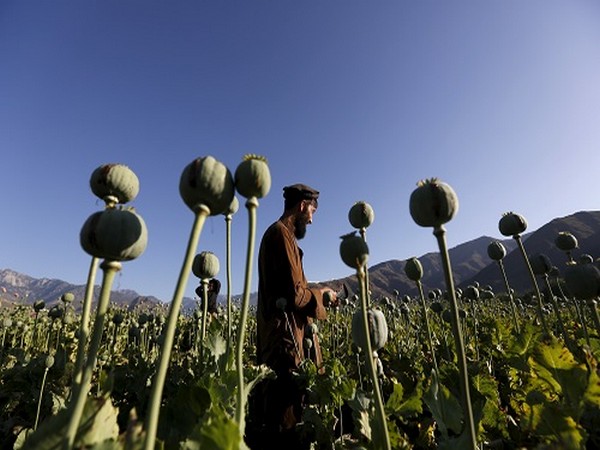
Representative image (file photo)

Kabul [Afghanistan], April 15 (ANI): Amidst the worldwide disapproval of the Taliban's reign in Afghanistan, the probable ban on opium cultivation by them will have adverse effects on the Afghan economy, as per reports issued by Afghanistan Analysts Network (AAN).
If the Taliban decides on banning poppy cultivation, it would cause a "grievous blow to the economy", AAN stated. Afghanistan is already reeling under immense economic pressure for losing almost every foreign income, both civilian and military, post-Taliban's rise to power, Tolo News reported.
The opium industry is the primary financial support Afghanistan has entitled in stabilizing the local currency. The United Nations Office on Drugs and Crime (UNODC) reported that in 2020 Afghanistan exported about 80 per cent of its opium production worldwide. Opium, heroin, and morphine production is responsible for "Afghanistan's largest illicit economy activity," UNODC said. Banning poppy production will hence account for major consequences all over the world.
"Although the Taliban have not announced a ban on the cultivation and trade of poppy so far, the people know that they won't forbid it, at least not this year," a farmer from Kandahar was reported saying.
Earlier, Taliban imposed a similar ban on opium cultivation in 2000, and the AAN report tries to find similarities between the two decisions. Just like in 2000, Afghanistan faced issues pertaining to drought, resistance to Taliban rule, and sanctions, similarly this year issues on women and human rights, and opposition of organizations like al-Qaeda are persistent.
"The Taliban's 2000 ban on opium was made in an edict by then-leader Mullah Muhammad Omar on 27 July 2000. According to David Mansfield, it was the Taliban's sixth attempt at banning opium. At the time, then head of UNODC research unit Sandeep Chawla praised the ban as "one of the most remarkable successes ever," but later clarified that "in drug control terms it was an unprecedented success, but in humanitarian terms a major disaster," the report said.
Taliban has also made it difficult for drug users in Afghanistan to find drugs. "I can't buy any drugs. The Taliban treat us badly. They don't let us sleep anywhere. They burn our tents and beat us," cited a drug user, mentioned in the report. (ANI)


Get the App

What to Read Next

US

Trump describes Michigan synagogue attack as "terrible"

Trump describes Michigan synagogue attack as

Speaking at a Women's History Month event at the White House, the US president said he had been fully briefed on the situation and described the incident as "terrible."

Read More
US

FBI Director Kash Patel on Michigan Synagogue incident

FBI Director Kash Patel on Michigan Synagogue incident

"FBI personnel are on the scene with partners in Michigan and responding to the apparent vehicle ramming and active shooter situation out of Temple Israel Synagogue in West Bloomfield Township, Michigan. @FBIDetroit," Patel posted on X, adding that the bureau's FBI Detroit Field Office was involved in the response.

Read More
US

"FBI personnel assisting local authorities": Kash Patel

In a post on X, Patel said, "FBI personnel are providing assistance and working with local authorities responding to the shooting at Old Dominion University. We will update as able."

Read More
Asia

PM Modi speaks to Iranian President Pezeshkian

PM Modi speaks to Iranian President Pezeshkian

"Had a conversation with Iranian President, Dr. Masoud Pezeshkian, to discuss the serious situation in the region. Expressed deep concern over the escalation of tensions and the loss of civilian lives as well as damage to civilian infrastructure," PM Modi posted on X.

Read More
Asia

MoCA closely monitoring air travel situation in West Asia

MoCA closely monitoring air travel situation in West Asia

The Ministry of Civil Aviation is closely monitoring the evolving situation in the West Asia region and its impact on air travel between India and countries in the region. Airlines are undertaking necessary operational adjustments in view of the prevailing conditions to ensure passenger safety and the orderly conduct of flight operations.

Read More
Home About Us Our Products Advertise Contact Us Terms & Condition Privacy Policy

Copyright © aninews.in | All Rights Reserved.
