"Apt, proportionate response": Pak government on military trail of civilians for May 9 violence
The military trial of civilians, who are accused of attacking sensitive installations in courts, are "apt and proportionate response" to the events of the May 9 incidents, the federal government said in a statement, Dawn reported.
ANI
Jul 17, 2023 20:48 IST

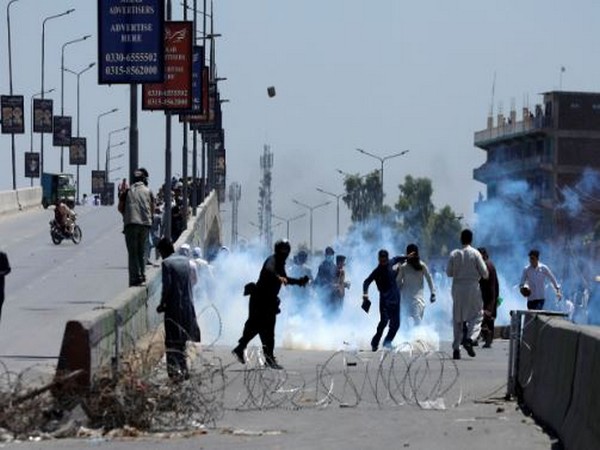
Islamabad [Pakistan], July 17 (ANI): The military trial of civilians, who are accused of attacking sensitive installations in courts, are "apt and proportionate response" to the events of the May 9 incidents, the federal government said in a statement, Dawn reported.
In the statement, which is submitted to the court, the central government said, "The trial of those accused of violence against the armed forces, as well as personnel and establishments thereof, under the Amry Act, is an apt and proportionate response, in accordance with the existing (and prevalent) constitutional framework and statutory regime of Pakistan."
The statement came ahead of the hearing of the challenges to the trial of civilians in military courts on Tuesday, by Attorney General for Pakistan (AGP) Mansoor Usman Awan.
During a previous hearing, the AGP had told the apex court that 102 civilians, arrested from various parts of the country in the wake of the May 9 violence, were in the military’s custody.
In the statement submitted today, the federal government said that the events of May 9 were “neither localised nor isolated” and indicated a “premeditated and intentional attempt to undermine the country’s armed forces and inhibit the country’s internal security”.
The government also stated that the attackers had damaged much governments properties worth Pakistani Rupees (Rs) 2,539.19 million, including Rs 1,982.95 million in losses to military establishments, equipment and vehicles, according to Dawn.
The government said that while some of the first information reports (FIRs) registered against the suspects did not explicitly mention provisions of the Army Act, the Supreme Court had previously held that the contents of the FIR and not the mentioning of a particular statutory provision determined the nature of the offences made out.
“Thus, the mere fact that the offences under the provisions of the Official Secrets Act, 1923 triable under the Pakistan Army Act, 1952 have not been mentioned in some of the FIRs registered regarding the events of May 9 does not imply that offences under the Army Act cannot be made out from the contents of said FIRs,” it stated.
The federal government further argued that the petitions against the military trial of civilians were not maintainable before the apex court in its “original jurisdiction” under Article 184(3) of the Constitution.
Article 184(3) of the Constitution sets out the SC’s original jurisdiction and enables it to assume jurisdiction in matters involving a question of “public importance” with reference to the “enforcement of any of the fundamental rights” of Pakistan’s citizens.
The government said that the challenges raised in the plea could only be heard by the high courts in their original constitutional jurisdiction under Article 199, reported Dawn.
Further, the government said that it was important to highlight that both the Army Act and the Official Secrets Act “not only predate the Constitution but were never, till date, challenged”.
The government said that the trial of the accused persons, whether military personnel or otherwise, could not be challenged for being in violation of fundamental rights. Highlighting the amendments made to the Army Act, the government said that offences made triable “do not have a direct nexus with the proper discharge of duties by members of the armed forces”.
The government said that trials under the country’s army laws were not being conducted against all the persons arrested, but only those who “strictly fall within the offences stipulated in the Official Secrets Act.”
The government said that trials under the Army Act were conducted “as closely as possible, per the orthodox practices of judicial proceedings, as set forth and established by the superior judiciary”.
In conclusion, the government said that the violence against military and defence installations and establishments was a “direct attack” on the country’s national security, as per Dawn. (ANI)
Get the App