Aiming to control country's deposits, China to invest in Afghanistan's Lithium sector
Beijing has sought to expand its economic presence in Afghanistan and gain control of its natural resources since the Taliban overtook Afghanistan.
ANI
May 06, 2023 16:05 IST

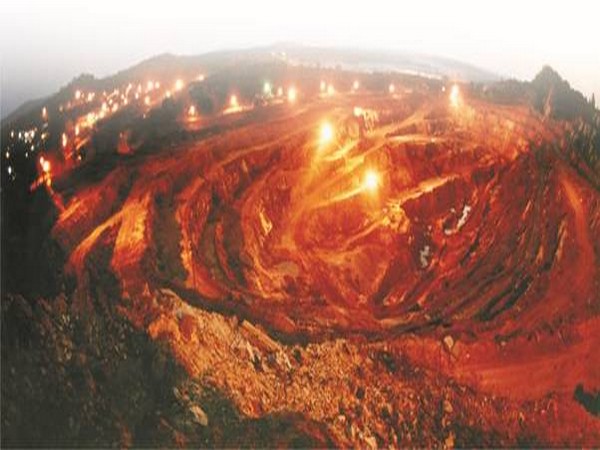
Kabul [Afghanistan], May 6 (ANI): The recent offer by the China-based Gochin Company to invest USD 10 billion in Afghanistan's lithium mining industry, which is valued at more than USD 1 trillion, appears to be part of a larger Chinese strategy to control the nation's mineral resources, especially its lithium deposits, which are crucial to global mineral supply chains, Khaama Press reported.
If it is awarded the lithium mining contract, the Chinese company has also promised to engage in a number of other Afghan infrastructure projects, including tunnels, hydroelectric dams, and highways, according to the Afghanistan Ministry of Mines and Petroleum.
Beijing has sought to expand its economic presence in Afghanistan and gain control of its natural resources since the Taliban overtook Afghanistan. To renegotiate and restart prior mining and oil contracts, Chinese businesses and authorities have been in contact with Taliban leaders.
The Taliban had inked a contract to collect oil from the Amu Darya basin with the Xinjiang Central Asia Petroleum and Gas Company (CAPEIC) on January 6. A whopping 150 million dollars will be invested in the agreement in the first year, and 540 million dollars will be invested over the next three years. China has the chance to increase its regional power and influence by expanding its presence in Afghanistan, according to Khaama Press.
Sayed Mehdi Munadi, a French-based international affairs analyst and former Afghan diplomat stationed in Beijing claim that China also illegally exploits Afghanistan's natural riches through bribery, smuggling, and other means. Recent allegations of the Taliban authorities detaining five persons, including two Chinese nationals, for reportedly attempting to smuggle an estimated 1,000 tonnes of lithium-bearing rocks out of the country through Pakistan support his assertion.
Senior Afghan Ministry of Mines and Petroleum official Mohammad Rasool Aqab claims that the rocks, which contained up to 30 per cent lithium, were stealthily removed from Nuristan and Kunar, two of the many Afghan regions bordering Pakistan.
China is rapidly increasing its demand for lithium and cobalt due to its sale of more than half of the world's electric automobiles. Nearly two-thirds of the world's lithium is processed and refined by Chinese enterprises, which could pose a supply chain danger for other nations. China is pushing up downstream expenditures to preserve its grip over lithium and other minerals because of its significant share of the global mineral processing industry. Chinese firms have made large investments in lithium mining in Latin America during the past five years, including Argentina, Bolivia, Mexico, and Chile, as per a report of Khaama Press.
Additionally, Chinese businesses are looking to Africa, including Zimbabwe, Namibia, and the Congo, for mineral assets. About two-thirds of the world's cobalt and 10 per cent of its copper are produced in Africa, and lithium resource discovery is still in its infancy. Chinese investors are eager to invest in the continent's mineral riches despite risks such as political instability, weak rules and regulations, corruption, poor infrastructure, and issues associated with early-stage exploration. They do this to gain an advantage over Western nations.
After Russia's invasion of Ukraine and the rise in Western-China tensions, concern over access to essential minerals is at an all-time high. China is seeking to establish a monopolistic position in rare earth metals, cobalt, and other minerals that are essential for the transition to the new generation of energy sources. Analysts note that Chinese firms invested in the supply of lithium in Latin America and Africa even when the price of lithium was low as part of their long-term plan to ensure the supply of rare earth elements. China is investing not just in home refineries but also in mines abroad to process the output, Khaama Press reported.
David Deckelbaum, MD for Sustainability and Energy Transition at New York-based Cowen Inc., estimates that China has invested between USD 60 and USD 100 billion in building its lithium industry over the past ten years by subsidising the production of inexpensive electric vehicles and encouraging businesses to invest in infrastructure for mining and refining the metal.
For other nations looking to transition to green energy, the Chinese approach, part of a long-term strategy to broaden its geoeconomic interests and seize market supremacy, presents a geopolitical and security problem. For instance, in 2019 China threatened to stop supplying the US with rare earths as part of its trade dispute with the US.
China is in charge of the world's lithium battery supply chain despite not having anything close to the greatest lithium reserves in the world. According to the International Energy Agency, China accounts for 58 per cent of the world's refining capacity. By 2025, UBS AG projects that mines under Chinese control will have increased lithium production from 194,000 tonnes in 2022 to 705,000 tonnes. This would increase China's share of a mineral essential to electric vehicle batteries from 24 per cent in 2021 to 32 per cent in the worldwide supply, as per Khaama Press.
Other countries may now need to lessen their reliance on the Chinese lithium supply and build a safe, independent supply of lithium before it is too late. This could increase supply chain risks for those nations. The possibility of China controlling the lithium market, as OPEC did with petroleum, is quite serious, Khaama Press reported. (ANI)
Tags:
Get the App