Afghanistan: Taliban imposes new severe restrictions on women, media in Balkh Province
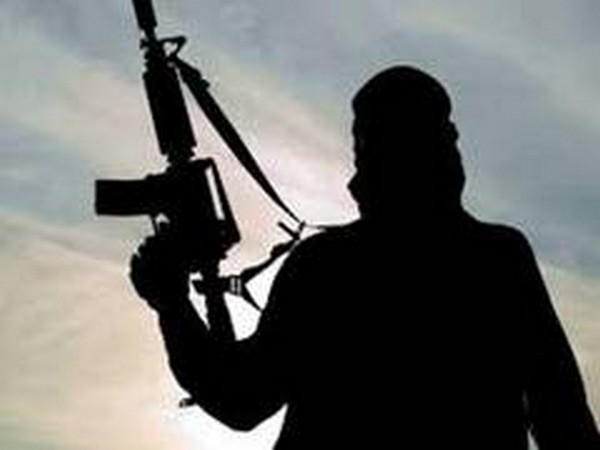
Balkh [Afghanistan], July 10 (ANI): Residents of Balkh were stupefied to receive distributed leaflets by the Taliban wherein they were ordered to follow strict rules that are similar to those they had imposed on Afghans when they last governed the country from 1996 to 2001.
ANI
Jul 10, 2021 01:15 IST

Balkh [Afghanistan], July 10 (ANI): Residents of Balkh were stupefied to receive distributed leaflets by the Taliban wherein they were ordered to follow strict rules that are similar to those they had imposed on Afghans when they last governed the country from 1996 to 2001.
Gul Rahim Niazman and Roshan Noorzai, writing in Voice of America (VOA) said that new severe restrictions were imposed on the local population in some of the districts that they have been recently captured by the Taliban.
A district in northern Balkh province that is located 20 kilometres north of the provincial capital, Mazar-e Sharif, confirmed to VOA that the Taliban have distributed leaflets to follow a strict interpretation of Sharia law.
"They want to impose the restrictions that were imposed on women under their rule," said Nahida, a 34-year-old resident of Balkh district, adding that the restrictions targeting women include "not leaving our houses without a male companion and wearing hijab."
Before their ouster by the United States in 2001, the Taliban mandated Afghans follow a strict interpretation of Sharia law, forcing women to cover themselves from head to foot and preventing them from leaving their houses without a male companion, reported VOA.
Many Afghans who hoped the Taliban would reform their extreme views amid ongoing talks with the Afghan government and the US troop withdrawal were disappointed by the new severe restrictions, wrote Niazman and Noorzai.
Nahida, who requested to be identified by her pseudonym due to safety concerns, said the group's new restrictions will be difficult for women to follow "since many of them are the breadwinners of their families and they have to work outside."
According to the Afghan government, about 30 per cent of the civil servants are now women who were not allowed to work outside their homes during the Taliban's rule, reported VOA.
Last year, following its peace agreement with the United States, the Taliban leadership initially appeared to recognize this new reality and hinted at an openness to changing policies. In interviews with news agencies and in published essays, the group's leaders hinted at an openness to changing policies.
But in this year's spring offensive, the Taliban's actions have indicated otherwise, writes Niazman and Noorzai.
Since May, when the United States and NATO began withdrawing their remaining troops, the Taliban captured about 100 of Afghanistan's more than 400 districts from government-allied forces. Afghan officials have since vowed to retake the lost districts.
Another resident of Balkh, who requested anonymity due to fears of retaliation by the militants, said "salons were ordered not to shave or trim beards" when the Taliban controlled the district last month.
In several districts of Takhar, Badakhshan, and Kunduz province that came under the Taliban control recently, local reports claim the Taliban issued similar restrictions on women and forced men to grow beards, reported VOA.
Heather Barr, a Human Rights Watch (HRW) senior researcher for women's rights in Asia, said that reports about the Taliban recent crackdown on women and media were "not very surprising" since her organization's investigation has found that "the Taliban's policies are not that different from what they were in 2001."
It is "very concerning indeed for human rights," Barr told VOA, adding that "some of these abusive attitudes are actually intensifying as they are feeling triumphant in gaining control of more and more territory."
This skepticism was also shared by Sher Jan Ahmadzai, the director of Center for Afghanistan Studies at the University of Nebraska.
"There is no evidence to substantiate their claims that they have changed their tactics of dealing with the local populace in the areas of their control," said Ahmadzai.
He added that local reports from the areas under the Taliban show the militants have forced residents to feed them and forced the women not to venture out of their houses without their partners or relatives from their families.
Meanwhile, Nawbahar, the only FM radio station in Balkh district, was forced to broadcast Taliban's Tarani (chants) and anti-government messages instead of music when the militants entered the district last month, according to local journalists, wrote Niazman and Noorzai.
"It is against the freedom of expression," lamented Abdul Aziz Danishjo, a journalist in Mazar-e Sharif, who said the Taliban had forced Nawbahar editor and other staff to go to the radio station and start broadcasting "what the Taliban want."
Nai, a local media watchdog, has reported that nearly 20 radio stations have ceased broadcasting in Afghanistan's northern provinces due to the Taliban's restrictions and ongoing fighting.
Some local journalists view the Taliban crackdown as a major blow to journalism in Afghanistan, a country ranked by Reporters Without Borders (RSF) at 122nd out of 180 nations for violations against journalists.
The RSF charged that violence against journalists and media outlets has increased "significantly" despite peace talks between the Taliban and the Afghan government, reported VOA. (ANI)
Tags:
Get the App