 हिंदी खबर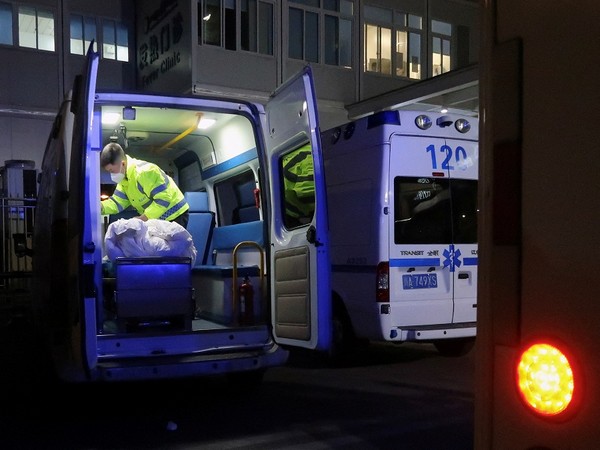

Hong Kong, December 28 (ANI): As China enters its third - and darkest - pandemic winter, zero-Covid is finally dead, but the fallout from its demise will haunt the country into the next year, reported CNN.
2022 was supposed to be a triumphant year for China and its leader Xi Jinping, as he began his second decade in power with a pledge to restore the nation to greatness.
Instead, China had its most difficult year under Xi's rule as it reeled from his costly zero-Covid policy - from months of overzealous enforcement that crushed the economy and stoked historic public discontent, to a wholesale abandonment so abrupt that left a fragile health system scrambling to cope with an explosion of cases, reported CNN.
The chaos and disarray is a stark contrast to the start of the year, when Beijing showcased the success of its Covid containment measures by keeping the coronavirus largely at bay from the Winter Olympics.
Over the span of a year, Xi's hallmark pandemic policy has turned from a source of legitimacy for the ruling Communist Party into a spiraling crisis that threatens to undermine it.
As an unprecedented wave of infections - and deaths - sweeps the country, many have questioned why after sacrificing so much under zero-Covid and waiting for so long to reopen, the government ultimately let the virus rip through a population with little prior warning or preparation, reported CNN.
COVID-19 variant Omicron seeped through the cracks of zero-Covid. By mid-March, China was battling its worst Covid outbreak since the initial wave of the pandemic, reporting thousands of new cases a day, from northern Jilin province to Guangdong in the south.
The financial hub of Shanghai soon became the epicenter. Local officials initially denied a citywide lockdown was necessary, but then imposed one after the city reported 3,500 daily infections.
The two-month lockdown became a glaring symbol of the economic and social costs of zero-Covid. In the country's wealthiest and most glamorous city, residents were subject to widespread food shortages, lack of emergency medical care, spartan makeshift isolation facilities and forced disinfection of their homes.
The draconian measures triggered wave after wave of outcry, severely eroding public trust in the Shanghai government, reported CNN.
The lockdown also wracked havoc on the economy. China's GDP shrunk by 2.6 per cent in the three months ending in June, while youth unemployment hit a record high of nearly 20 per cent.
But the costly lockdown did not prod China to shift away from its zero-tolerance approach. Rather, officials hailed it as a victory in the war against Covid, reported CNN.
As the party's all-important national congress approached, the pressure only grew. Having tied himself so closely to zero-Covid, Xi was stuck in a trap of his own making. He couldn't afford to move away from it, the potential surge of infections and deaths posing too great a risk to his authority before he secured his norm-shattering third term at congress.
And so instead of vaccinating the elderly and bolstering ICU capacity, authorities wasted the next crucial months building larger quarantine facilities, rolling out more frequent mass testing, and imposing wider lockdowns that at one point affected more than 300 million people, reported CNN.
But even the most stringent measures failed to tame Omicron's spread. By October, China was reporting thousands of daily infections again. Amid mounting public frustration, the People's Daily, the party's main mouthpiece, insisted zero-Covid is "sustainable" and the country's "best choice."
At the opening of the congress, Xi gave a sweeping endorsement of his Covid policy, saying it had "prioritized the people and their lives above all else."
He scored a big political victory, securing a third term and stacking the party's top ranks with staunch allies - including those who had loyally carried out his Covid policies.
Officials took the hint and became ever more zealous in enforcing zero-Covid, dashing hopes that the country could open up after the congress.
As restrictions tightened, more suffering and tragedy emerged from the unrelenting lockdowns. Migrant workers abandoned a locked-down Foxconn factory en masse, walking for miles to escape an outbreak at China's largest iPhone assembling site.
Then, in late November, a deadly apartment fire in the western city of Urumqi finally ignited public anger that had been simmering for months. Many believed lockdown measures had hampered rescue efforts, despite official denials, reported CNN.
Protests erupted across the country, on a scale unseen in decades. On university campuses and the streets of major cities, crowds gathered to call for an end to incessant Covid tests and lockdowns, with some decrying censorship and demanding greater political freedoms.
In Shanghai, protesters even demanded that Xi step down - an unimaginable act of political defiance toward the country's most powerful and authoritarian leader in decades.
The nationwide demonstrations posed an unprecedented challenge to Xi. By then, Omicron had seemingly spun out of control, with the country logging a daily record of more than 40,000 infections, and the economic strain becoming too severe, with local governments running out of cash to pay huge lockdown bills.
In an apparent effort to appease protesters, some cities began to loosen restrictions. Then, on December 7, the central government announced a drastic overhaul of approach, rolling back lockdowns, testing and allowing residents to isolate at home - effectively abandoning zero-Covid, reported CNN.
While the easing of stifling restrictions is a long-awaited relief for many, the abruptness and haphazardness of it have caught an unprepared public off guard and left them to fend for themselves.
Over-the-counter cold and fever medicines - which had been restricted from purchase under zero-Covid - sold out instantly at pharmacies and on online shopping sites.
Huge lines have formed outside fever clinics and hospital emergency rooms overflow with patients, many elderly. Crematoriums are struggling to keep up with an influx of bodies, reported CNN.
Amid the chaos, the government has stopped reporting the bulk of the country's Covid infections and narrowed its criteria of counting Covid deaths in a way that the World Health Organization warned would "very much underestimate the true death toll."
For nearly three years, China's low Covid caseload and death count compared with countries like the United States had been held up as a measure of the party's merit and legitimacy.
Now, the true scale of the outbreak and deaths could deal a serious blow to the credibility of a government that had justified years of painful restrictions on the grounds that they were necessary to save lives.
Some studies have estimated China's abrupt and under-prepared reopening could lead to nearly a million deaths - close to the Covid death toll in the US, reported CNN. (ANI)


