Mandaviya lauds passing of National Sports Governance Bill, says it will transform sports sector, establish athlete-centric approach
Union Sports Minister Mansukh Mandaviya has said that the National Sports Governance Bill will transform the sports sector, establish an athlete-centric approach and bring transparency to the working of the federations.
ANI
Aug 12, 2025 20:41 IST

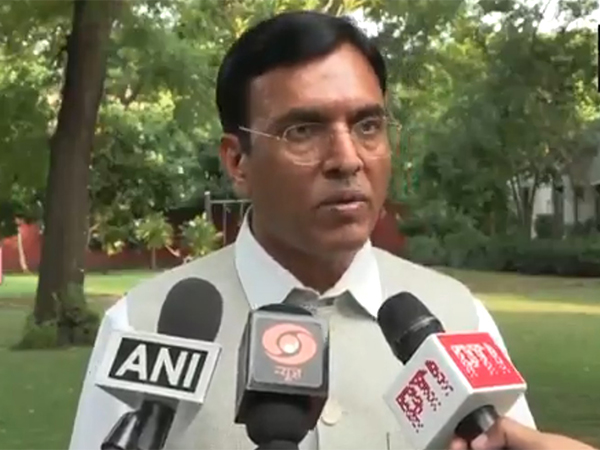
New Delhi [India], August 12 (ANI): Union Sports Minister Mansukh Mandaviya has said that the National Sports Governance Bill will transform the sports sector, establish an athlete-centric approach and bring transparency to the working of the federations.
The National Sports Governance Bill and the National Anti-Doping (Amendment) Bill were passed by the Rajya Sabha on Tuesday after a brief debate. The bills were passed by the Lok Sabha on Monday.
Mandaviya replied to the brief debate. He told reporters later that the bill will pave the way for India to become a great sporting nation. The Minister said that Prime Minister Narendra Modi is keen that India should be progress to be among the top five countries in the medals tally.
"Through the National Sports Governance Bill, an athlete-centric approach will be established in the country. Transparency will come to federations. Women and differently-abled individuals will get representation. The sports sector will transform. Prime Minister Modi's resolve is that by 2047, we will rank between 1 to 5 in the medal tally," Mandaviya said.
The National Sports Governance bill seeks to provide a robust legal framework for sports governance in India, promoting transparency, accountability, and athlete welfare.
It aims to provide for the development and promotion of sports, welfare measures for sportspersons, ethical practices based on basic universal principles of good governance, ethics and fair play of the Olympic and sports movement, Olympic Charter, Paralympic Charter and international best practices.
The Supreme Court and Delhi High Court had urged the Parliament to legislate a proper, comprehensive sports governance framework. With over 350 legal cases disrupting the work of sporting federations, this bill provides a single-window, legally sound mechanism to end confusion and bring order.
This bill aims to make the functioning of sports federations smoother and stronger, as India aspires to host the 2036 Olympics in a bid to rise as a sporting superpower.
The bill provides for National Sports Board (NSB), an independent regulatory authority replacing the ministry's direct oversight.
This will grant recognitions to NOC, NSFs, RSFs, NSPOs, and register all affiliates, including those at the state and district levels. The members chosen for this will be highly-skilled and expert people from the fields of sports, governance, law and public administration.
A National Sports Tribunal will be established to resolve all sports-related disputes, led by a retired/serving Supreme Court or Chief Justice. Speedy and affordable redressal of all sporting disputes is the top priority.
There will also be a National Sports Election Panel, a pool of qualified election officials to ensure transparent elections in sports federations. It also aims to end inflated payments and biased appointments and fees will be standardised by NSB.
The executive committee of sporting bodies will undergo an overhaul too, with a cap of 15 members for more efficiency. As a part of this, four women will be included mandatorily. Also, there will be two "sportspersons of outstanding merit" and two athletes' commission members who will be included in the federations. The office bearer's age has been capped at 70 (75 in special cases), with a member allowed a maximum of three terms and a cooling-off period.
This bill also features compulsory athletes' commissions for all NOCs, NPC and NSFs. There will be "formalised participation of athletes in governance and policy-making.
NSFs will also be required to form ethics committees. In cases where NSFs have not formed it, the NOC ethics committee will serve as the ethics committee of such NSFs. NSFs would also have to put in place a mandatory 'Safe Sports Policy' for the protection of women, minors and vulnerable athletes.
The sporting bodies will be designated as a public authority under the Right to Information (RTI) Act, and public access to functioning and finances will ensure clean governance.
As per this bill, in case a sporting body gets suspended, de-recognised or there is a governance failure, NSB may direct NOC to constitute an ad-hoc administrative body, which will consist of upto five eminent sports administrators, having served as presidents, secretary generals or treasurers in a National Sports Body or have been/are members in EC of the NOC, without conflict of interest. This will bring in continuity in governance of a sport, "without judicial intervention and aligns with international norms of normalisation".Under this bill, only recognised bodies can use the name "India" and the national flag/tricolour.
The bill is fully in line with the Olympic and Paralympic charters. The draft of the bill was shared with the International Olympic Committee, FIFA, the International Hockey Federation (FIH), World Athletics, the International Volleyball Federation (FIVB), among other international sports governing bodies.
The bill is also in compliance with international statutes, ensures protection from IOC derecognition risks and aims to boost India's global sporting integration.
Robust pre-legislative consultation and stakeholder consultation was carried out for this bill. Consultations were carried out with the Indian Olympic Association (IOA), NSFs, athletes, and legal experts. On an international level, various federations like the IOC, FIFA, FIVB, World Athletics, etc were consulted with. Over 700 responses were received from these consultations and incorporated into the bill. This bill also includes inputs from 16 ministries, including MEA, Law, Defence, NITI Aayog, WCD, DOPT, etc.
The National Anti-Doping (Amendment) Bill, 2025 seeks to amend the National Anti-Doping Act, 2022.
The bill empowers the Central government to constitute the Appeal Panel. The Act requires the National Board to constitute - a Disciplinary Panel to determine the consequences of rule violations, and an Appeal Panel to hear appeals against decisions of the Disciplinary Panel.
The Bill transfers the power to constitute the Appeal Panel from the Board to the central government. (ANI)
Tags:
Get the App