

ADD ANI AS A TRUSTED SOURCE
googleads
ANI Logo
Menu
Science

Women's brains appear three years younger than men's: Study

Washington D.C. [USA], Feb 5 (ANI): A new study from Washington University School of Medicine in St. Louis that women's brains appear to be about three years younger than men's of the same chronological age, metabolically speaking.

ANI Feb 05, 2019 20:17 IST googleads

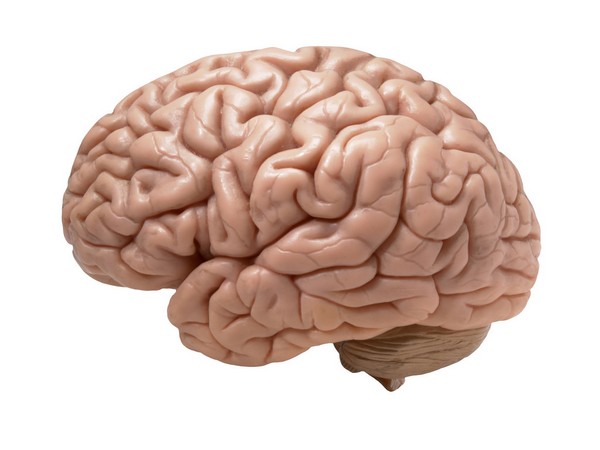
Representative image

Washington D.C. [USA], Feb 5 (ANI): A new study from Washington University School of Medicine in St. Louis that women's brains appear to be about three years younger than men's of the same chronological age, metabolically speaking.
It turns out that while the brain tends to shrink with age, men's diminish faster than women's. The brain's metabolism slows as people grow older, and this, too, may differ between men and women.
The study will be available online the week of February 4 in Proceedings of the National Academy of Sciences and could be one clue to why women tend to stay mentally sharp longer than men.
Senior author of the study Manu Goyal said, “We're just starting to understand how various sex-related factors might affect the trajectory of brain aging and how that might influence the vulnerability of the brain to neurodegenerative diseases.
"Brain metabolism might help us understand some of the differences we see between men and women as they age," Goyal said.
According to experts, the brain runs on sugar, however, how the brain uses sugar changes as people grow and age.
Babies and children use some of their brain fuel in a process called aerobic glycolysis that sustains brain development and maturation.
The rest of the sugar is burned to power the day-to-day tasks of thinking and doing. In adolescents and young adults, a considerable portion of brain sugar also is devoted to aerobic glycolysis, but the fraction drops steadily with age, leveling off at very low amounts by the time people are in their 60s.
However, researchers have understood little about how brain metabolism differs between men and women.
Goyal and colleagues, including Marcus Raichle, MD, the Alan A. and Edith L. Wolff Distinguished Professor of Medicine and a professor of radiology, and Andrei Vlassenko, MD, PhD, an associate professor of radiology, studied 205 people to figure out how their brains use sugar.
The study participants underwent PET scans to measure the flow of oxygen and glucose in their brains.
For each person, the researchers determined the fraction of sugar committed to aerobic glycolysis in various regions of the brain. They trained a machine-learning algorithm to find a relationship between age and brain metabolism by feeding it the men's ages and brain metabolism data. Then, the researchers entered women's brain metabolism data into the algorithm and directed the program to calculate each woman's brain age from its metabolism.
The algorithm yielded brain ages an average of 3.8 years younger than the women's chronological ages.
The researchers also performed the analysis in reverse: They trained the algorithm on women's data and applied it to men's. This time, the algorithm reported that men's brains were 2.4 years older than their true ages.
Goyal said, “The average difference in calculated brain age between men and women is significant and reproducible, but it is only a fraction of the difference between any two individuals."
He further added, "It is stronger than many sex differences that have been reported, but it's nowhere near as big a difference as some sex differences, such as height."
The relative youthfulness of women's brains was detectable even among the youngest participants, who were in their 20s.
Goyal added that it is not that men's brains age faster - they start adulthood about three years older than women, and that persists throughout life.
"What we don't know is what it means. I think this could mean that the reason women don't experience as much cognitive decline in later years is because their brains are effectively younger, and we're currently working on a study to confirm that," Goyal added.
Older women tend to score better than men of the same age on tests of reason, memory and problem solving. (ANI)

Get the App

What to Read Next

Science

Cancer cells of fat may enhance cancer treatment

Cancer cells of fat may enhance cancer treatment

A study by Van Andel Institute scientists suggests that restricting cancer cells' access to fat may enhance the effectiveness of certain cancer treatments.

Read More
Science

Alzheimer’s disease can damage brain in two phases

Alzheimer’s disease can damage brain in two phases

Alzheimer's disease may cause brain damage in two stages, according to new research supported by the National Institutes of Health (NIH) that uses sophisticated brain mapping methods.

Read More
Science

Medication increases radiation therapy's efficacy for lung cancer

Medication increases radiation therapy's efficacy for lung cancer

A group of researchers from the University of Cincinnati has discovered a possible novel approach to enhance the efficacy of radiation therapy and enhance the prognosis of patients with lung cancer metastasizing to the brain.

Read More
Science

Study: Role of tRNA modifying enzyme in brain function

Study: Role of tRNA modifying enzyme in brain function

A pioneering study undertaken by a Kumamoto University research team shed light on the crucial role of TRMT10A, a tRNA methylation enzyme, in sustaining brain function. The findings show how TRMT10A deficiency reduces specific transfer RNA (tRNA) levels in the brain, altering protein synthesis and affecting synapse structure and function.

Read More
Science

Study gives insights into possible cause of Alzheimer’s disease

Study gives insights into possible cause of Alzheimer’s disease

Researchers at Case Western Reserve University will investigate the possibility that specific brain proteins are involved in the onset of Alzheimer's disease.

Read More
Science

Researchers find treatment for a cause of pregnancy loss

Researchers find treatment for a cause of pregnancy loss

Approximately 20 per cent of women, who have recurrent pregnancy loss, test positive for a particular antibody that attacks the mother's own body.

Read More
Science

Fever promotes increased activity, mitochondrial damage

Fever promotes increased activity, mitochondrial damage

Researchers at Vanderbilt University Medical Centre showed that fever temperatures increase immune cell metabolism, proliferation, and activity, but they also promote mitochondrial stress, DNA damage, and cell death in a specific subgroup of T cells.

Read More
Science

Cancer cells may be using lipids to hide from immune system

Cancer cells may be using lipids to hide from immune system

Cancer cells rarely begin stealthily. Quite the contrary, they alert the immune system to their presence by displaying chemical red flags on their membranes. When detected, the body's defences can swoop in and destroy renegade cells before they can do significant damage. Lipids, fatty molecules traditionally thought to be largely a fuel supply for developing tumours, are at the heart of this early detection system.

Read More
Science

Researchers discover changes in the brain throughout pregnancy

Researchers discover changes in the brain throughout pregnancy

Pregnancy is a transforming period in a person's life during which the body undergoes rapid physiological adjustments to prepare for parenthood, as we all know. What the broad hormonal alterations caused by pregnancy do to the brain is still a mystery.

Read More
Science

Rare diseases highlight connections between metabolism, immunity

Rare diseases highlight connections between metabolism, immunity

A new study suggested that inherited immune and metabolism disorders are more similar than previously believed. The results provide fresh information that may help patients with these illnesses receive better care by highlighting a novel collection of metabolic genes that are critical for immune system T cell activity.

Read More
Home About Us Our Products Advertise Contact Us Terms & Condition Privacy Policy

Copyright © aninews.in | All Rights Reserved.




