
World's driest desert has spectacular blooms, but the secret is invisible to human eyes
Santiago [Chile], October 21 (ANI): The driest place on Earth is the Atacama desert, which is located along the western coast of South America's cone and stretches for about 1,600 kms. Some of the weather stations there have never recorded any rain in all of their years of operation.
ANI
Oct 21, 2022 19:35 IST

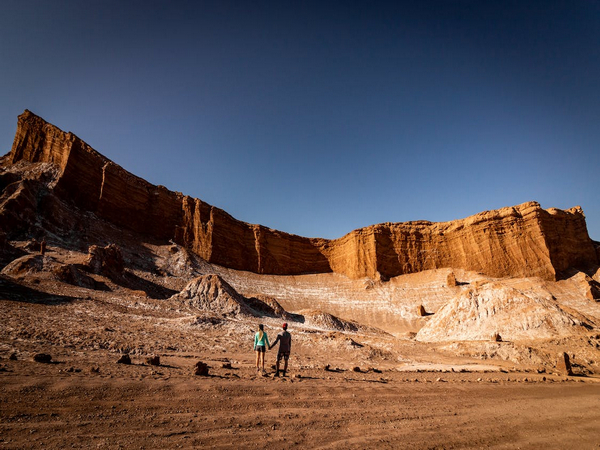
Santiago [Chile], October 21 (ANI): The driest place on Earth is the Atacama desert, which is located along the western coast of South America's cone and stretches for about 1,600 kms. Some of the weather stations there have never recorded any rain in all of their years of operation.
But it's far from lifeless; many species that are unique to this region and have adapted to its harsh conditions can be found here. Additionally, the Atacama hosts one of the most breathtaking natural phenomena on average once every five to ten years, from mid-September to mid-November: the "desierto florido" (literally, "blooming desert").
Following heavy rainfall earlier this year, one of these mass blooms, which is currently occurring in northern Atacama, is frequently covered by media from all over the world.
However, what physiological and evolutionary processes allow for the enormous variety of flower colours, shapes, and visual patterns found in desiertos floridos? And how do pollinators, primarily hymenopterans like solitary wasps and bees in the Atacama, who are the beneficiaries of this visual extravaganza, perceive all this variety? A recent study published in Frontiers in Ecology and Evolution addresses this issue.
"Our aim was to shed light on the ecological and evolutionary mechanisms that cause biological diversity in extreme environments like the Atacama desert," said first author Dr Jaime Martinez-Harms, a researcher at the Institute of Agricultural Research in La Cruz, Chile.
"Here we show that flowers of the pussypaw Cistanthe longiscapa, a representative species for desiertos floridos in the Atacama desert, are highly variable in the colour and patterns they present to pollinators. This variability probably results from different so-called 'betalain' pigments in the flower petals."
Model species
Late in 2021, a desierto Florido event was studied by Martnez-Harms and colleagues close to the northern Chilean city of Caldera. Even though it was smaller than the current event, satellites could clearly see it. A dominant species was the annual plant C. longiscapa (family Montiaceae), which bloomed in two distinct patches tens of kilometres apart and reached a height of 20 cm. To human eyes, these patches were composed of exclusively purple and yellow flowers. Numerous intermediate flowers of the same species--reddish, pinkish, and white--grew in between them, providing strong evidence that the purple and yellow morphs are heritable variations that are capable of interbreeding.
Visualizing flowers as insects see them
Insects, with their compound eyes and different sensitivities, see the world very differently than we do. For example, most hymenopterans have three types of photoreceptors, which are maximally sensitive to UV, blue, and green. Martinez-Harms et al used cameras sensitive to visible light and UV and spectrometers to measure the reflection, absorption, and transmission of different wavelengths by the petals of a total of 110 purple, yellow, red, pink, and white C. longiscapa flowers. This enabled them to produce composite images of these variants as seen by their many species of pollinators.
Diversity hidden from human eyes
The results show that just within this single plant species, the diversity perceptible to pollinators was greater than to us. For example, hymenopterans, just like us, can easily distinguish between red, purple, white, and yellow variants. But they can also distinguish between flowers with a high versus a low UV reflection among yellow and purple flowers. A UV 'bullseye pattern' at the heart of some flowers, which guides pollinators to the nectar and pollen, is invisible to us.
An exception is UV-reflecting pink and reddish C. longiscapa, which are quite distinct to human eyes, but probably appear similar to hymenopterans.
This visual diversity of C. longiscapa flowers is probably mainly due to differences between betalains - yellow, orange, and purple pigments that are a typical trait of the plant order Caryophyllales to which the pussypaws belong. Betalains don't just give colours to flowers: they also protect from drought, salt stress, and damage from reactive oxygen radicals under environmental stress - traits highly beneficial in deserts.
Pollinators drive the selection of new variants
The authors proposed that the observed standing diversity within C. longiscapa flowers is caused by variations in pollinator sensitivity to and preference for various colours and patterns--a current evolutionary experiment that largely goes unnoticed by humans.
"The great variation in flower colour within C. longiscapa can be explained if different species of pollinating insects, through their preference for particular flower colours and patterns, could cause these variants to become reproductively isolated from other individuals of the same plant species. This ongoing process could ultimately lead to the origin of new races or species," said Martinez-Harms.
"In our next studies, we will further investigate the chemical identity and the biological synthesis pathways of betalains and other flower pigments, as well as their relationship to traits such as the scents produced by the flowers. This should help us to understand their role in shaping the interactions between plants and their pollinators, and in the plants' tolerance to biotic and abiotic stressors under fluctuating climate conditions," said Martinez-Harms. (ANI)
Tags:
Get the App


