

ADD ANI AS A TRUSTED SOURCE
googleads
ANI Logo
Menu
Science

Wear, tear in brain areas lead to lesions, linked to cognitive decline: Study

New Jersey [US], December 21 (ANI): A research has recently explained the reason for the placement of lesions in the brain as well as how they develop in the first place.

ANI Dec 21, 2021 15:30 IST googleads

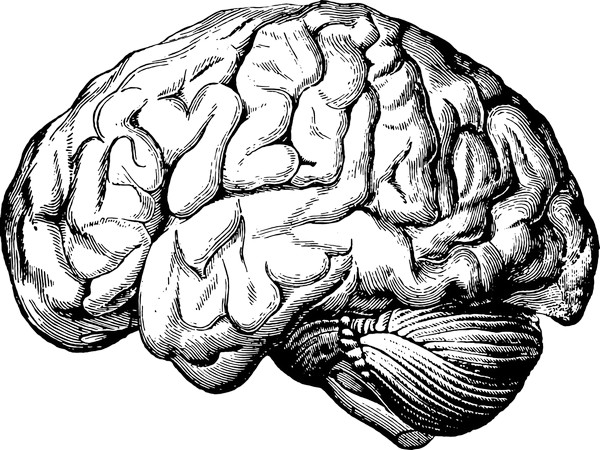
Representative image

New Jersey [US], December 21 (ANI): A research has recently explained the reason for the placement of lesions in the brain as well as how they develop in the first place.
The study has been published in the 'Scientific Reports Journal'.
The work, led by Johannes Weickenmeier, an assistant professor of mechanical engineering at Stevens Institute of Technology, highlighted the importance of viewing the brain as more than neural circuitry that underpinned how thoughts are formed, and memories created. It's also a physical object that's prone to glitches and mechanical failures.
"The brain is susceptible to wear and tear in vulnerable areas. Especially in an ageing brain, we need to look at its biomechanical properties to better understand how things can start to go wrong," Weickenmeier said
These lesions -- known as deep and periventricular white matter hyperintensities because they show up as bright white patches on MRI scans -- are poorly understood. But they are not uncommon: most people have some by the time they reach their 60s, and changes only increase with age. The more lesions that accumulate and the faster they grow, the more prone we become to cognitive impairments ranging from memory problems to motor disorders.
Using MRI scans from eight healthy subjects, Weickenmeier worked with Valery Visser, now a doctorate student at the University of Zurich, and Henry Rusinek, a radiologist at NYU Grossman School of Medicine, to develop an individualized computer model of each subject's brain. The team mapped the strain placed on ventricular walls, the linings of fluid-filled chambers deep in the brain, as waves of pressure pulse through the subject's cerebral spinal fluid, or CSF.
They found that hyperintensities tended to occur near areas that must stretch more to accommodate pressure changes of the circulating CSF because, as such areas wear thin, CSF can leak into the brain and cause lesions.
"The cell wall that lines the ventricles wears out over time, like a balloon that's repeatedly blown up and deflated. And the stresses aren't uniform -- they're defined by the geometry of the ventricle, so we can predict where these failures will occur," Weickenmeier said.
"The model provides a simple, physics-based explanation for the locations of these lesions, revealing that mechanical loads must be a major contributor to the onset of disease," added Weickenmeier.
The team's research used 2D imaging showing a cross-section of the brain, but Weickenmeier's team has since expanded its research to a full 3D model of the brain. Next, Weickenmeier hopes to use advanced MRI technologies developed at Stevens to study the movement of the ventricle wall directly.
In the long term, the team's findings might enable the development of new treatments for lesions. Ordinarily, pharmaceutical treatments struggle to cross the blood-brain barrier and reach affected areas, but the new research suggested that it might be possible to channel drugs to lesions directly through leaks in the ventricular wall.
"That's still a long way off, and we didn't study it directly. But it's an intriguing possibility," Weickenmeier cautioned.
The broader takeaway from the team's research, explained by Weickenmeier, is that the brain's ageing process is mediated by physical processes, including the pressure of circulating blood and CSF. That underscores the need for healthy behaviours -- such as getting enough exercise and avoiding harmful substances -- that can reduce those strains on the brain. (ANI)


Get the App

What to Read Next

Science

Amphibians bounce-back from Earth’s greatest mass extinction

Amphibians bounce-back from Earth’s greatest mass extinction

Researchers at the University of Bristol discovered that ancient frog ancestors survived the biggest mass extinction of species by eating on freshwater prey that evaded terrestrial predators.

Read More
Science

Scientists use AI to better understand nanoparticles: Study

Scientists use AI to better understand nanoparticles: Study

A group of scientists has created a way to illuminate the dynamic behavior of nanoparticles, which are essential components in the production of pharmaceuticals, electronics, and industrial and energy-conversion materials.

Read More
Science

New technology enhances gravitational-wave detection: Study

New technology enhances gravitational-wave detection: Study

A team of physicists led by Jonathan Richardson of the University of California, Riverside, demonstrated how new optical technology can extend the detection range of gravitational-wave observatories such as the Laser Interferometer Gravitational-Wave Observatory, or LIGO, and pave the way for future observatories.

Read More
Science

Astronomers find the smallest main-belt asteroids ever detected:

Astronomers find the smallest main-belt asteroids ever detected:

The majority of known asteroids orbit inside the main asteroid belt, which is positioned between Mars and Jupiter at an average distance of around 250 million km from Earth. Since the discovery of the first asteroid in 1801, about 750.000 asteroids have been identified, primarily in the last decade thanks to several optical surveys that examine the sky on clear nights.

Read More
Science

Study finds connection between quantum theory, information theory

Study finds connection between quantum theory, information theory

"Our results have no clear or direct application right now. It's basic research that lays the foundation for future technologies in quantum information and quantum computers. There's enormous potential for complete discoveries in many different research fields," said Guilherme B Xavier, a researcher in quantum communication at Linkoping University, Sweden.

Read More
Science

When devices can read human emotions without a camera: Study

When devices can read human emotions without a camera: Study

Tokyo Metropolitan University researchers employed long-term skin conductance measurements to distinguish between emotions. Volunteers were given videos representing frightening scenarios, family bonding, and humour, while their skin conductance was measured.

Read More
Science

'Nuroscience study results can be better predicted by AI'

'Nuroscience study results can be better predicted by AI'

Large language models, a type of AI that analyses text, can anticipate the results of proposed neuroscience studies more correctly than human experts, according to a new study led by UCL (University College London) researchers.

Read More
Science

Thermal imaging may help fruits, veggies stay fresher longer: Study

Thermal imaging may help fruits, veggies stay fresher longer: Study

Before your favourite produce arrives at the grocery store, it must be carefully harvested and stored for extended periods of time. A recent University of Georgia assessment argues that new temperature sensing devices could make that procedure considerably easier, as agricultural issues are exacerbated by changing climates.

Read More
Science

Study reveals how reminders can eliminate age-related memory loss

Study reveals how reminders can eliminate age-related memory loss

A recent study from UT Arlington showed that setting reminders can reverse some age-related memory deficits. The findings represent a significant breakthrough in tackling the cognitive issues that older persons confront, particularly in the context of prospective memory, which is the ability to remember to complete an intended activity at the appropriate time, such as taking medication or attending appointments.

Read More
Science

Alzheimer’s disease can damage brain in two phases

Alzheimer’s disease can damage brain in two phases

Alzheimer's disease may cause brain damage in two stages, according to new research supported by the National Institutes of Health (NIH) that uses sophisticated brain mapping methods.

Read More
Home About Us Our Products Advertise Contact Us Terms & Condition Privacy Policy

Copyright © aninews.in | All Rights Reserved.
