

ADD ANI AS A TRUSTED SOURCE
googleads
ANI Logo
Menu
Science

Washing clothes in machines releases microfibres that ultimately reach oceans: study

Washington DC [USA], Sept 28 (ANI): Researchers have found that even delicate wash cycles in washing machines account for release of microfibre plastics from clothes that ultimately reach the oceans.

ANI Sep 28, 2019 22:37 IST googleads

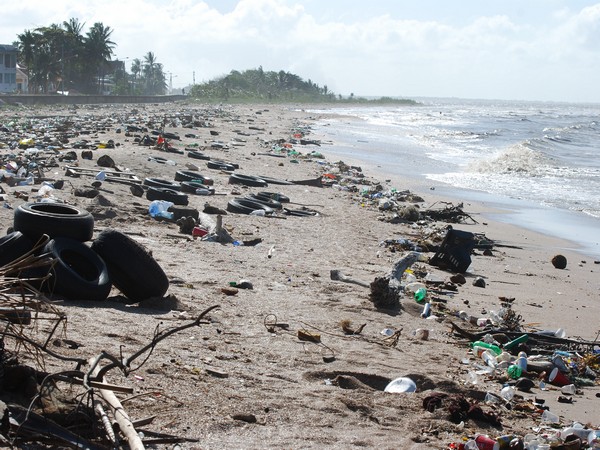
Representative image

Washington DC [USA], Sept 28 (ANI): Researchers have found that even delicate wash cycles in washing machines account for release of microfibre plastics from clothes that ultimately reach the oceans.
Millions of plastic microfibres are shed every time we wash clothes that contain materials such as nylon, polyester, and acrylic.
Because these fibres are so small, they drain out of our washing machines and can ultimately enter the marine environment.
Once in the ocean, they are ingested by the animals living there and two years ago Newcastle University scientists showed for the first time these fibres have now reached the deepest parts of our ocean.
Working with Procter & Gamble in Newcastle, the team measured the release of plastic microfibres from polyester clothing for a range of cycles and water volumes.
Counting the fibres released, the team found the higher the volume of water the more fibres released, regardless of the speed and abrasive forces of the washing machine.
In fact, they found that on average, 800,000 more fibres were released in a delicate wash than a standard cycle.
Publishing their findings in the academic journal -- Environmental Science and Technology -- PhD student Max Kelly, who led the research, explained that "Counterintuitively, we discovered that 'delicate' cycles release more plastic microfibres into the water, and then the environment, than standard cycles.
Previous research has suggested the speed the drum spins at, the number of times it changes spinning direction during a cycle and the length of pauses in the cycle -- all known as the machine agitation -- is the most important factor in the amount of microfibre released.
But we have shown here that even at reduced levels of agitation, microfibre release is still greatest with higher water-volume-to-fabric ratios.
This is because the high volume of water used in a delicate cycle which is supposed to protect sensitive clothing from damage actually 'plucks' away more fibres from the material.
Using a tergotometer -- a benchtop device comprising of eight (1000 mL) washing vessels that simulate full-scale domestic washing, the team was able to carry out tests under different conditions, making changes to water volume, spin speed, temperature and time.
A DigiEye camera -- digital colour imaging system -- was then used to accurately calculate the number of microfibres released.
To test whether the observations made using the tergotometers were reflective of full-size domestic washing machines, the team then tested the fabrics on a delicate wash cycle using identical washing machines in the test centre at Procter and Gamble (P&G).
The team showed that previous recommendations by groups to move towards high water volumes and low levels of agitation as a way of reducing the amount of microfibre released was actually making the problem worse. (ANI)

Get the App

What to Read Next

Science

Plastic pollution, seawater flooding effect on coastal plants

Plastic pollution, seawater flooding effect on coastal plants

Two of the planet's most urgent environmental stressors have the potential to affect the development and reproductive production of plants found along the world's coasts, according to new research.

Read More
Science

Study tracks air pollution, reveals demographic disparities

Study tracks air pollution, reveals demographic disparities

There are considerable variances in how much people are exposed to air pollution, according to a new study co-authored by MIT researchers that considers everyday mobility.

Read More
Science

Plastic waste can be converted to electronic devices

Plastic waste can be converted to electronic devices

The University of Delaware and the Argonne National Laboratory have developed a chemical process that converts Styrofoam into the high-value conducting polymer PEDOT:PSS. The researchers show how improved plastic trash may be successfully integrated into functional electronic devices such as silicon-based hybrid solar cells and organic electrochemical transistors.

Read More
Science

Climate policies and children's health

Climate policies and  children's health

A recent study suggests that efforts to limit carbon dioxide (CO2) emissions from motor vehicles, along with investments in electric vehicles and public transit, would reduce air pollution and have a significant impact on children's health. They'd also save money.

Read More
Science

Air pollution related to higher hospitalisations

Air pollution related to higher hospitalisations

Short and long-term exposure to fine particulate matter (PM2.5) air pollution is linked to an increased risk of hospitalisation for serious heart and lung problems, according to two major US studies published in The British Medical Journal.

Read More
Science

Study reveals air pollution hides increases in rainfall

Study reveals air pollution hides increases in rainfall

We know that greenhouse gas emissions, such as carbon dioxide, should increase rainfall. The emissions warm the atmosphere, resulting in a one-two punch: warmer oceans make it easier for water to evaporate, and warmer air can store more water vapour, allowing more moisture to fall as rain. However, for long of the twentieth century, the data did not clearly reveal a rise in precipitation.

Read More
Science

Study finds resin ingredient effective against coronaviruses

Study finds resin ingredient effective against coronaviruses

A recent study discovered that a resin element is highly effective against coronaviruses and significantly reduces their infectivity on plastic surfaces.

Read More
Science

Early nerve intervention lowers complications post amputation

Early nerve intervention lowers complications post amputation

A study published in the issue of Plastic and Reconstructive Surgery, the official medical journal of the American Society of Plastic Surgeons (ASPS), suggests that performing targeted muscle reinnervation (TMR) at the time of amputation can reduce pain scores and prevent complications related to abnormal nerve regrowth.

Read More
Science

AI predicts influence of microplastics on soil: Study

AI predicts influence of microplastics on soil: Study

Plastic waste and its accumulation in nature have recently become a major environmental concern. While plastic pollution in the oceans is certainly a concern, the presence of plastics in soils around the world is also known to pose major environmental and health issues.

Read More
Science

AI anticipates impact of microplastics on soil properties

AI anticipates impact of microplastics on soil properties

To address this gap in soil MP research, a group of scientists led by Prof. Yong Sik Ok employed machine learning (ML) algorithms to assess and forecast the influence of MPs on soil parameters.

Read More
Home About Us Our Products Advertise Contact Us Terms & Condition Privacy Policy

Copyright © aninews.in | All Rights Reserved.




