

ADD ANI AS A TRUSTED SOURCE
googleads
ANI Logo
Menu
Science

Want to know which bacteria lives on mosquitoes? Read here

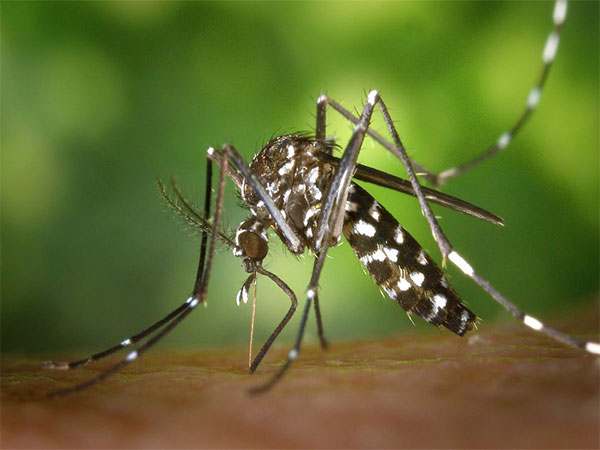
Avoiding mosquitoes to protect against bites is always a good idea. But a new North Carolina State University study shows that the bacteria-ridden exteriors of mosquitoes may be another reason to arm yourself with a swatter.

ANI Dec 17, 2022 16:56 IST googleads

Representative Image

North Carolina [US], December 17 (ANI): It's wise to stay away from mosquitoes to prevent bites. However, a recent study from North Carolina State University suggests that having a swatter handy may be another benefit of mosquitoes' bacteria-filled exteriors.
The groundbreaking research, which was released in PLOS ONE, looked at mosquitoes located in residences in the Ivory Coast region of Africa's Cote d'Ivoire.
"When you're exposed to mosquitoes, you worry about blood feeding," said R. Michael Roe, William Neal Reynolds Distinguished Professor of Entomology at NC State and co-corresponding author of the study. "Our hypothesis is that mosquitoes can physically transfer bacteria by landing on you or by defecating on household surfaces as flies do.
"They may not, but no one has studied it before."
Research collaborators at the Centre Suisse de Recherches Scientifiques collected 79 adult female Anopheles coluzzii mosquitoes from homes in a rice-producing province in Cote d'Ivoire. The mosquitoes were sent to NC State for analysis of the microbiome inside and on external body surfaces.
Some of the findings were surprising.
"We found greater bacterial diversity internally than externally, which didn't match what has been found with blow flies, for example," said Loganathan Ponnusamy, an NC State principal research scholar in entomology and co-corresponding author of the paper.
"At the same time, we found lots of external bacterial differences between homes, but not much difference internally between homes, which makes sense. Much of what is found internally relate to nectar or honey consumed as mosquitoes forage outdoors."
The researchers also found - for the first time in the academic literature - fructobacillus, which is generally found in nectar sources like flowers and beehives, pointing to mosquitoes visiting those plants or nectar sources, said Kaiying Chen, an NC State postdoctoral researcher and first author of the paper.
Perhaps more ominously, the researchers also found large amounts of Staphylococcus and two variants of Rickettsia. The genus of these bacteria is associated with human and animal diseases.
"This is another risk," Roe said. "Mosquitoes carry bacteria externally and internally and come into your home, possibly transferring pathogenic bacteria." (ANI)


Get the App

What to Read Next

Science

New method guides magnetism without magnets

New method guides magnetism without magnets

Researchers at Paul Scherrer Institute PSI have demonstrated an innovative method to control magnetism in materials using an energy-efficient electric field.

Read More
Science

New insights into how cancer evades the immune system: Study

New insights into how cancer evades the immune system: Study

Immunotherapy research primarily focuses on better recognition of cancer cells by the body's own immune system. Researchers at Amsterdam UMC and Moffitt Cancer Center have taken a different approach.

Read More
Science

New device could allow you to taste cake in virtual reality

New device could allow you to taste cake in virtual reality

The 'e-Taste' interface employs sensors and wireless chemical dispensers to enable remote taste perception, often known as gestation. Field testing done by researchers at The Ohio State University confirmed the device's ability to digitally simulate a range of taste intensities, while still offering variety and safety for the user.

Read More
Science

Strand Life Sciences launches portal for rare disease diagnosis

Strand Life Sciences launches portal for rare disease diagnosis

Marking Rare Disease Day, Strand Life Sciences, a subsidiary of Reliance Industries and a leading genomics research company, has launched the StrandOmics Portal, an innovative digital platform designed to assist doctors in diagnosing rare diseases more efficiently.

Read More
Science

Study reveals impact of animals as architects of Earth

Study reveals impact of animals as architects of Earth

A new study led by Professor Gemma Harvey from Queen Mary University of London has revealed how hundreds of species shape the landscapes we depend on, from termite mounds visible from space to beavers creating wetlands and hippos carving drainage systems.

Read More
Science

Opposing arrows of time emerge from certain quantum systems

Opposing arrows of time emerge from certain quantum systems

Researchers at the University of Surrey made a thought-provoking discovery. A new study reveals that opposing arrows of time can theoretically emerge from certain quantum systems.

Read More
Science

COVID-19 severity may be predicted by White Blood Cell Count

COVID-19 severity may be predicted by White Blood Cell Count

A COVID-19 diagnosis is no longer as frightening as it used to be, thanks to developments in treatment choices. However, a new study reveals that leukocyte (white blood cell) count may now be used to identify who is more likely to develop more significant disease symptoms.

Read More
Science

Seals can essentially act as 'smart sensors': Study

Seals can essentially act as 'smart sensors': Study

A new study by marine biologists reports that seals can essentially act as 'smart sensors' for monitoring fish populations in the ocean's eerily dim 'twilight zone.'

Read More
Science

New technology enhances gravitational-wave detection: Study

New technology enhances gravitational-wave detection: Study

A team of physicists led by Jonathan Richardson of the University of California, Riverside, demonstrated how new optical technology can extend the detection range of gravitational-wave observatories such as the Laser Interferometer Gravitational-Wave Observatory, or LIGO, and pave the way for future observatories.

Read More
Science

Discovery of unexpected collagen structure to influence research

Discovery of unexpected collagen structure to influence research

Collagen, the body's most abundant protein, has long been considered a predictable structural component of tissues.

Read More
Home About Us Our Products Advertise Contact Us Terms & Condition Privacy Policy

Copyright © aninews.in | All Rights Reserved.


