

ADD ANI AS A TRUSTED SOURCE
googleads
ANI Logo
Menu
Science

Tree diversity is influenced by large herbivores: Study

According to the study, areas with a high concentration of large herbivores in various environments tend to have a more diverse tree cover, which is predicted to enhance biodiversity in general.

ANI Nov 03, 2023 21:48 IST googleads

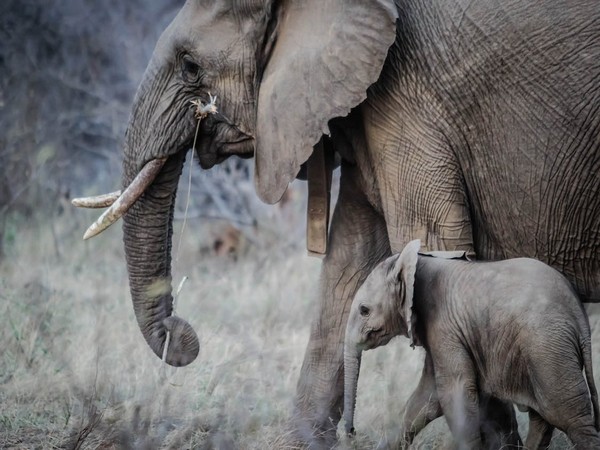
Representative image

California [US], November 3 (ANI): A study team has mapped the tree cover of the world's protected regions using global satellite data.
According to the study, areas with a high concentration of large herbivores in various environments tend to have a more diverse tree cover, which is predicted to enhance biodiversity in general.
Preserving biodiversity and reducing climate change requires the maintenance of ecosystems that are resilient and rich in species. Megafauna or the portion of an area's animal population made up of the largest creatures, is crucial in this situation.
An international research team, including Lund University, has examined the complex interactions between the variety of trees and the number of ravenous herbivores in the world's protected regions in a new study that was published in the scientific journal One Earth.
"Our findings reveal a fascinating and complex story of how large herbivorous animals shape the world's natural landscapes. The tree cover in these areas is sparser, but the diversity of the tree cover is much higher than in areas without large herbivores," said Lanhui Wang, a researcher in physical geography and ecosystem science at Lund University.
"In our global analysis, we find a substantial association between the biomass of large herbivores and varied tree cover in protected areas, notably for browsers and mixed-feeders such as elephants, bison and moose and in non-extreme climates", explained the study's senior author, Jens-Christian Svenning, professor at Aarhus University.
Hereby, the study supports that large wild herbivores promote a diverse vegetation structure, creating a rich habitat for many other species. This is due to the animals' consumption of vegetation as well as physical disturbances.
According to Lanhui Wang, these new research findings highlight the need to integrate large herbivores into restoration and conservation strategies. Not only for the sake of the animals themselves but also for the vital role they play in shaping landscapes and influencing biodiversity.
The researchers argue that this aspect is not sufficiently considered within the framework of sustainable land management and ecosystem restoration.
"At a time when global initiatives are intensely focused on combating climate change and biodiversity loss, our findings highlight the need for a broader and more nuanced discussion about ecosystem management and conservation measures. It is of utmost importance to integrate understanding of the ecological impact of megafauna into this," said Lanhui Wang.
The UN has declared the 2020s as the decade of ecosystem restoration. In total, 115 countries have agreed to restore up to 100,000 square kilometres of nature in total. To achieve this, more wild-living large herbivores are needed worldwide, said Lanhui Wang.
"I believe that we will need to protect and conserve large herbivores to achieve the UN goals. Megafauna are crucial for tree cover, which in turn promotes carbon sequestration and a diversity of habitats," said Lanhui Wang. (ANI)


Get the App

What to Read Next

Science

Large, small galaxies may grow in ways more similar

 Large, small galaxies may grow in ways more similar

A team of astronomers led by University of Arizona researcher Catherine Fielder captured the most precise photographs of a small galaxy and its surroundings, revealing features typically found in much larger galaxies.

Read More
Science

'Nuroscience study results can be better predicted by AI'

'Nuroscience study results can be better predicted by AI'

Large language models, a type of AI that analyses text, can anticipate the results of proposed neuroscience studies more correctly than human experts, according to a new study led by UCL (University College London) researchers.

Read More
Science

Study finds biodiversity is key to better mental health

Study finds biodiversity is key to better mental health

A study by King's College London found that spaces with a variety of natural features are associated with better mental health than spaces with less natural diversity.

Read More
Science

Climate change disrupts vital ecosystems in Alps: Study

Climate change disrupts vital ecosystems in Alps: Study

Reduced snow cover and altering vegetation patterns in the Alps, both caused by climate change, are having significant combined effects on biodiversity and ecosystem functioning in the high mountains, according to a new study.

Read More
Science

Gardeners can help to identify possibly invasive plants: Research

Gardeners can help to identify possibly invasive plants: Research

Researchers from the University of Reading and the Royal Horticultural Society have discovered that gardeners play a vital role in identifying 'future invaders' - ornamental plants that could become invasive species.

Read More
Science

Language, culture can alter how brain processes emotional faces

Language, culture can alter how brain processes emotional faces

Understanding body language is an important aspect of communication. Humans are frequently considered to be able to perceive other people's emotions innately, but there is rising evidence that this ability is impacted by people's culturally shared knowledge of emotions.

Read More
Science

Study finds temperature influence microbial competition in rivers

Study finds temperature influence microbial competition in rivers

The finding suggests that rivers may offer a kind of defence against the spread of ARGs in wastewater. It was also contrary to what the researchers expected.

Read More
Science

Temperature can influence microbial competition in rivers: Study

Temperature can influence microbial competition in rivers: Study

Researchers reported this week in mSphere that ARGs penetrate and initially join natural biofilms after being introduced to a river.

Read More
Science

Climate change may reduce butterflies' spots: Study

Climate change may reduce butterflies' spots: Study

According to new research, female Meadow Brown butterflies have less spots when they grow up in warmer environments, so climate change may reduce their spottiness.

Read More
Science

Stress has tendency to increase inflammation in body

Stress has tendency to increase inflammation in body

Lifestyle and genetics, as well as a range of other factors both within and outside of our control, have all been connected to the development of metabolic syndrome, a set of conditions that increase the risk of serious health problems.

Read More


