

ADD ANI AS A TRUSTED SOURCE
googleads
ANI Logo
Menu
Science

Three drugs identified as possible therapeutics for Covid-19 by UTHSC researchers

Washington [US], November 22(ANI): In recent research, scientists have identified three drugs as promising therapeutics for the COVID-19, the illness caused by the SARS-CoV-2 virus in its early stages.

ANI Nov 22, 2020 23:02 IST googleads

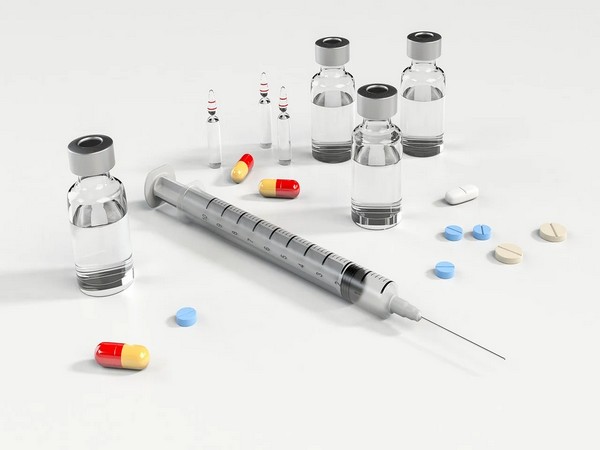
Representative image

Washington [US], November 22(ANI): In recent research, scientists have identified three drugs as promising therapeutics for the COVID-19, the illness caused by the SARS-CoV-2 virus in its early stages.
The finding is a product of work by researchers at the University of Tennessee Health Science Center (UTHSC) collaborating with those at the University of New Mexico.
Based on virtual and in vitro antiviral screening that began in the earlier months of the Covid-19 pandemic, the researchers led at UTHSC by Colleen Jonsson, PhD, identified zuclopenthixol, nebivolol, and amodiaquine as promising therapeutics for the virus in its early stages.
Dr. Jonsson is a professor and the Endowed Van Vleet Chair of Excellence in Virology in the College of Medicine at UTHSC. She also directs the UTHSC Regional Biocontainment Laboratory (RBL), where this research was conducted. The university's RBL is one of roughly a dozen federally funded labs authorized to safely study contagious pathogens.
In a paper published in ACS Pharmacology and Translational Science, the researchers propose the drugs as possible candidates for testing in future clinical trials to improve immune response to the virus. Amodiaquine is an older antimalarial, zuclopenthixol is an antipsychotic, and nebivolol is a blood pressure medication.
"Particularly in the context of this pandemic, there is a stringent need for high-quality studies that can provide critical knowledge concerning the COVID-19 disease and reliable treatment proposals," the paper states.
"With these caveats in mind, we conceived a computational workflow that included independent in vitro validation, followed by assessing emerging candidates in the context of available clinical pharmacology data with the aim of proposing suitable candidates for clinical studies for early-stage (incubation and symptomatic phases) patients infected by SARS-CoV-2," the paper further states.
"Given the need for improved efficacy and safety, we propose zuclopenthixol, nebivolol, and amodiaquine as potential candidates for clinical trials against the early phase of the SARS-CoV-2 infection," the researchers wrote.
Comparing the drugs to hydroxychloroquine, the anti-malarial drug most-frequently studied in clinical trials for use as a COVID-19 therapeutic, the researchers examined 4,000 approved drugs and found these three to act similarly to the hydroxychloroquine, and in some cases, more safely.
The research indicates they may also improve efficacy when combined in lower doses with remdesivir, an anti-viral given an emergency use authorization by the United States Food and Drug Administration as a therapeutic for COVID-19.
"Think of it as a whack-a-mole game. Instead of having one hammer, you have two hammers, which is more effective. We're trying to give the scientific community two hammers, instead of one," said Tudor Oprea, MD, PhD, professor of Medicine and Pharmaceutical Sciences, chief of the UNM Division of Translational Informatics, and corresponding author on the paper.
"This is a very exciting discovery and we are following up on the potential use of zuclopenthixol, nebivolol, and amodiaquine in additional research studies," Dr Jonsson added. (ANI)


Get the App

What to Read Next

Science

New method guides magnetism without magnets

New method guides magnetism without magnets

Researchers at Paul Scherrer Institute PSI have demonstrated an innovative method to control magnetism in materials using an energy-efficient electric field.

Read More
Science

Amphibians bounce-back from Earth’s greatest mass extinction

Amphibians bounce-back from Earth’s greatest mass extinction

Researchers at the University of Bristol discovered that ancient frog ancestors survived the biggest mass extinction of species by eating on freshwater prey that evaded terrestrial predators.

Read More
Science

New insights into how cancer evades the immune system: Study

New insights into how cancer evades the immune system: Study

Immunotherapy research primarily focuses on better recognition of cancer cells by the body's own immune system. Researchers at Amsterdam UMC and Moffitt Cancer Center have taken a different approach.

Read More
Science

Scientists use AI to better understand nanoparticles: Study

Scientists use AI to better understand nanoparticles: Study

A group of scientists has created a way to illuminate the dynamic behavior of nanoparticles, which are essential components in the production of pharmaceuticals, electronics, and industrial and energy-conversion materials.

Read More
Science

New device could allow you to taste cake in virtual reality

New device could allow you to taste cake in virtual reality

The 'e-Taste' interface employs sensors and wireless chemical dispensers to enable remote taste perception, often known as gestation. Field testing done by researchers at The Ohio State University confirmed the device's ability to digitally simulate a range of taste intensities, while still offering variety and safety for the user.

Read More
Science

Opposing arrows of time emerge from certain quantum systems

Opposing arrows of time emerge from certain quantum systems

Researchers at the University of Surrey made a thought-provoking discovery. A new study reveals that opposing arrows of time can theoretically emerge from certain quantum systems.

Read More
Science

COVID-19 severity may be predicted by White Blood Cell Count

COVID-19 severity may be predicted by White Blood Cell Count

A COVID-19 diagnosis is no longer as frightening as it used to be, thanks to developments in treatment choices. However, a new study reveals that leukocyte (white blood cell) count may now be used to identify who is more likely to develop more significant disease symptoms.

Read More
Science

New technology enhances gravitational-wave detection: Study

New technology enhances gravitational-wave detection: Study

A team of physicists led by Jonathan Richardson of the University of California, Riverside, demonstrated how new optical technology can extend the detection range of gravitational-wave observatories such as the Laser Interferometer Gravitational-Wave Observatory, or LIGO, and pave the way for future observatories.

Read More
Science

Microbes help detoxify our atmosphere, says study 

Microbes help detoxify our atmosphere, says study 

Melbourne researchers have uncovered important new information on how microbes absorb huge amounts of carbon monoxide (CO) and assist in reducing levels of this deadly gas.

Read More
Science

Weather change linked to heightened risk of Salmonella outbreaks

Weather change linked to heightened risk of Salmonella outbreaks

According to new research from the University of Surrey, climate change has an impact on Salmonella spread. This study builds on prior work by the researchers, which discovered that weather change is contributing to the spread of deadly diarrhoeal illnesses.

Read More
Home About Us Our Products Advertise Contact Us Terms & Condition Privacy Policy

Copyright © aninews.in | All Rights Reserved.
