

ADD ANI AS A TRUSTED SOURCE
googleads
ANI Logo
Menu
Science

Temperature change raises risk of pesticides to bees: Study

According to a new study, temperature influences how badly pesticides affect bee behaviour, implying that the effects of climate change are unpredictable.

ANI Mar 22, 2023 18:26 IST googleads

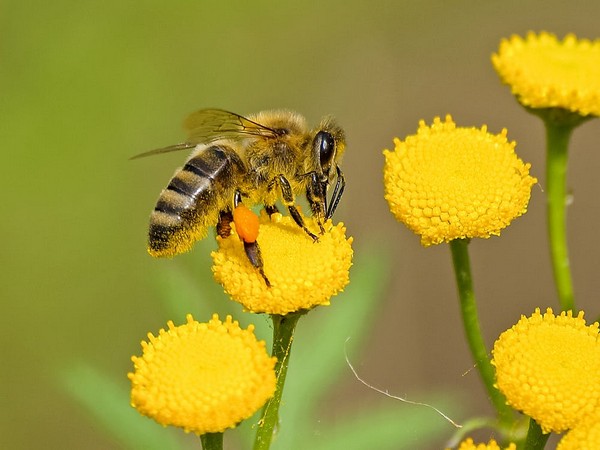
Representative Image

Washington [US], March 22 (ANI): According to a new study, temperature influences how badly pesticides affect bee behaviour, implying that the effects of climate change are unpredictable.
The findings indicate that future extreme temperature events under climate change could increase the impact of pesticides on bee populations and their pollination services.
Certain pesticides, particularly a class called neonicotinoids, are known to impact bees and other important insects, and are thought to be contributing to population declines. However, bees' reported responses to this threat across the world often seem to vary, suggesting other interacting factors are at play.
Now, researchers from Imperial College London have shown that environmental temperature can influence the degree to which pesticides can alter a suite of bumblebee behaviours important for their survival and ability to pollinate crops. The study is published today in Global Change Biology.
The team studied six bumblebee behaviours under the influence of two pesticides (the neonicotinoid imidacloprid and the sulfoximine sulfoxaflor) at three temperatures (21, 27 and 30°C).
Four of the behaviours - responsiveness, likelihood of movement, walking rate, and food consumption rate - were affected by imidacloprid more strongly at the lower temperature. This suggests cold snaps could increase pesticide toxicity on behaviours important for nest duties.
However, a key behaviour - how far the bees could fly- was most strongly affected by imidacloprid at the highest temperature. This relationship showed a strong drop-off, with flight distance measuring the same between 21 and 27°C, before falling sharply when reaching 30°C.
Lead researcher Dr Richard Gill, from the Department of Life Sciences (Silwood Park) at Imperial, said: "The drop-off in flight performance at the highest temperature suggests a 'tipping point' has been reached in the bees' ability to tolerate the combined temperature and pesticide exposure. This seeming cliff-edge effect happens over the span of just three degrees, which changes our perception of pesticide risk dynamics given such temperature changes can commonly occur over the space of a day.
"Furthermore, the frequency to which bees will be exposed to pesticides and extreme temperatures under climate change are predicted to increase. Our work can help to inform the right concentrations and application times of pesticides across different climatic regions of the world to help safeguard pollinators, such as bees.
Pollination problems
Flight distance is key for pollination, as it underpins foraging potential and contributes to food security through crop pollination
Although the tropics are hotter in general, it is possible that insect pollinator populations in the more temperate latitudes, including the UK, feel pesticide effects more strongly, as the temperature ranges are larger.
Bees are responsible for pollinating many important cereal crops as well as legumes and fruit trees. As we diversify our food supply, demand for their pollination services will increase - but so may the stresses bees face, from climate change and increased insecticide use.
This work quantifying the relationships between temperature and pesticide impact should help towards modelling the risks of pesticides across different regions of the world as the climate shifts, say the researchers. First author Daniel Kenna, from the Department of Life Sciences (Silwood Park) at Imperial, said: "Our findings show that environmental context is crucial when assessing pesticide toxicity, particularly when projecting bee responses under future climate change."
Co-author Dr Peter Graystock, from the Department of Life Sciences (Silwood Park) at Imperial, said: "These results are important for developing a toxicity forecast framework, allowing us to predict how bee populations will respond to climate change whilst living in intense agricultural landscapes."
The team next want to do more comprehensive studies across the temperature gradient to determine how toxicity effects scale with temperature, and precisely where tipping points may lie across a range of species. (ANI)


Get the App

What to Read Next

Science

New device could allow you to taste cake in virtual reality

New device could allow you to taste cake in virtual reality

The 'e-Taste' interface employs sensors and wireless chemical dispensers to enable remote taste perception, often known as gestation. Field testing done by researchers at The Ohio State University confirmed the device's ability to digitally simulate a range of taste intensities, while still offering variety and safety for the user.

Read More
Science

Weather change linked to heightened risk of Salmonella outbreaks

Weather change linked to heightened risk of Salmonella outbreaks

According to new research from the University of Surrey, climate change has an impact on Salmonella spread. This study builds on prior work by the researchers, which discovered that weather change is contributing to the spread of deadly diarrhoeal illnesses.

Read More
Science

Thermal imaging may help fruits, veggies stay fresher longer: Study

Thermal imaging may help fruits, veggies stay fresher longer: Study

Before your favourite produce arrives at the grocery store, it must be carefully harvested and stored for extended periods of time. A recent University of Georgia assessment argues that new temperature sensing devices could make that procedure considerably easier, as agricultural issues are exacerbated by changing climates.

Read More
Science

Researchers find how cells recognize, repair DNA damage

Researchers find how cells recognize, repair DNA damage

When cells divide, there is a substantial risk of genetic harm. After all, the cell must repeat its whole genetic material, including billions of genetic letters, before it can divide. This repeatedly produces "reading errors" in the genome. Other factors, including as exposure to sunlight, alcohol, and cigarettes, are also responsible for the buildup of DNA damage over a person's lifetime.

Read More
Science

Sleep apnea may increase abdominal aortic aneurysms risk

Sleep apnea may increase abdominal aortic aneurysms risk

Obstructive sleep apnea may increase the chance of developing abdominal aortic aneurysms, according to experts from the University of Missouri School of Medicine and NextGen Precision Health.

Read More
Science

Surrogacy linked with higher risk of severe pregnancy results

Surrogacy linked with higher risk of severe pregnancy results

According to new research, individuals who are gestational carriers (also known as "surrogates") may be more susceptible to severe complications during pregnancy and the early postpartum period, hypertension during pregnancy, and postpartum hemorrhage than those who conceive naturally or through IVF.

Read More
Science

Obesity in mothers doubles risk of autism in babies

Obesity in mothers doubles risk of autism in babies

The University of South Australia has published new research showing that children born to obese mothers both before and during pregnancy are more likely to experience neuropsychiatric and behavioural disorders, such as attention deficit hyperactivity disorder (ADHD) and autism spectrum disorder (ASD).

Read More
Science

Fever promotes increased activity, mitochondrial damage

Fever promotes increased activity, mitochondrial damage

Researchers at Vanderbilt University Medical Centre showed that fever temperatures increase immune cell metabolism, proliferation, and activity, but they also promote mitochondrial stress, DNA damage, and cell death in a specific subgroup of T cells.

Read More
Science

Study: Connection between gene variants, breast, ovarian cancer

Study: Connection between gene variants, breast, ovarian cancer

Researchers have identified thousands of genetic variants in a gene that could raise an individual's risk of ovarian and breast cancer, opening the door to more accurate risk assessment and individualised treatment.

Read More
Science

Researchers give more insight into heat perception in humans

Researchers give more insight into heat perception in humans

The Medical University of Vienna's research has significantly advanced our knowledge of how humans perceive heat. A group of scientists has discovered a particular type of cell structure involved in heat recognition.

Read More
Home About Us Our Products Advertise Contact Us Terms & Condition Privacy Policy

Copyright © aninews.in | All Rights Reserved.
