

ADD ANI AS A TRUSTED SOURCE
googleads
ANI Logo
Menu
Science

Technique to turn plastic waste trash into carbon dioxide sorbent discovered by scientists

Houston (Texas) [US], April 9 (ANI): A new chemical technique to turn waste plastic into an effective carbon dioxide (CO2) sorbent for the industry has been discovered by scientists at Rice University.

ANI Apr 09, 2022 23:32 IST googleads

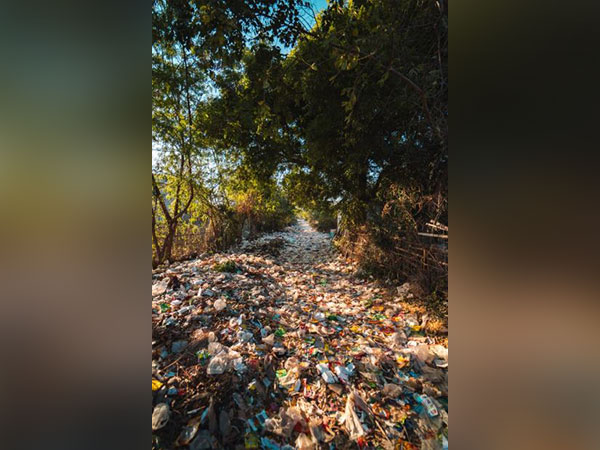
Representative image

Houston (Texas) [US], April 9 (ANI): A new chemical technique to turn waste plastic into an effective carbon dioxide (CO2) sorbent for the industry has been discovered by scientists at Rice University.
The study was published in the journal, 'ACS Nano'.
Rice chemist James Tour and co-lead authors Rice alumnus Wala Algozeeb, graduate student Paul Savas and postdoctoral researcher Zhe Yuan reported that heating plastic waste in the presence of potassium acetate produced particles with nanometer-scale pores that trap carbon dioxide molecules.
These particles can be used to remove CO2 from flue gas streams, they reported.
"Point sources of CO2 emissions like power plant exhaust stacks can be fitted with this waste-plastic-derived material to remove enormous amounts of CO2 that would normally fill the atmosphere," Tour said.
"It is a great way to have one problem, plastic waste, address another problem, CO2 emissions," he added.
A current process to pyrolyze plastic known as chemical recycling produces oils, gases and waxes, but the carbon byproduct is nearly useless, he said.
However, pyrolyzing plastic in the presence of potassium acetate produces porous particles able to hold up to 18 per cent of their own weight in CO2 at room temperature.
In addition, while typical chemical recycling doesn't work for polymer wastes with low fixed carbon content in order to generate CO2 sorbent, including polypropylene and high- and low-density polyethene, the main constituents in municipal waste, those plastics work especially well for capturing CO2 when treated with potassium acetate.
The lab has estimated the cost of carbon dioxide capture from a point source like post-combustion flue gas would be USD 21 a ton, far less expensive than the energy-intensive, amine-based process in common use to pull carbon dioxide from natural gas feeds, which costs USD 80 - USD 160 a ton.
Like amine-based materials, the sorbent can be reused. Heating it to about 75 degrees Celsius (167 degrees Fahrenheit) releases trapped carbon dioxide from the pores, regenerating about 90 per cent of the material's binding sites.
Because it cycles at 75 degrees Celsius, polyvinyl chloride vessels are sufficient to replace the expensive metal vessels that are normally required.
The researchers noted the sorbent is expected to have a longer lifetime than liquid amines, cutting downtime due to corrosion and sludge formation.
To make the material, waste plastic is turned into powder, mixed with potassium acetate and heated at 600 C (1,112 F) for 45 minutes to optimize the pores, most of which are about 0.7 nanometers wide.
Higher temperatures led to wider pores. The process also produces a wax byproduct that can be recycled into detergents or lubricants, the researchers said. (ANI)


Get the App

What to Read Next

Science

Microbes help detoxify our atmosphere, says study 

Microbes help detoxify our atmosphere, says study 

Melbourne researchers have uncovered important new information on how microbes absorb huge amounts of carbon monoxide (CO) and assist in reducing levels of this deadly gas.

Read More
Science

Plastic pollution, seawater flooding effect on coastal plants

Plastic pollution, seawater flooding effect on coastal plants

Two of the planet's most urgent environmental stressors have the potential to affect the development and reproductive production of plants found along the world's coasts, according to new research.

Read More
Science

Chemists design novel method for generating sustainable fuel

Chemists design novel method for generating sustainable fuel

Tuning this environment by controlling how the CoPc catalyst was distributed on the carbon nanotube surface allowed carbon dioxide to be as much as eight times more likely to produce methanol, a discovery that could increase the efficiency of other catalytic processes and have a widespread impact on other fields, said Robert Baker, co-author of the study and a professor in chemistry and biochemistry at The Ohio State University.

Read More
Science

Plastic waste can be converted to electronic devices

Plastic waste can be converted to electronic devices

The University of Delaware and the Argonne National Laboratory have developed a chemical process that converts Styrofoam into the high-value conducting polymer PEDOT:PSS. The researchers show how improved plastic trash may be successfully integrated into functional electronic devices such as silicon-based hybrid solar cells and organic electrochemical transistors.

Read More
Science

AI technique accurately predicts deadly heart rhythms: Study

AI technique accurately predicts deadly heart rhythms: Study

Ventricular arrhythmia (VA) is a cardiac rhythm disorder that originates in the bottom chambers (ventricles), where the heart beats so quickly that blood pressure decreases, leading to loss of consciousness and abrupt death if not treated promptly

Read More
Science

Climate policies and children's health

Climate policies and  children's health

A recent study suggests that efforts to limit carbon dioxide (CO2) emissions from motor vehicles, along with investments in electric vehicles and public transit, would reduce air pollution and have a significant impact on children's health. They'd also save money.

Read More
Science

Study reveals air pollution hides increases in rainfall

Study reveals air pollution hides increases in rainfall

We know that greenhouse gas emissions, such as carbon dioxide, should increase rainfall. The emissions warm the atmosphere, resulting in a one-two punch: warmer oceans make it easier for water to evaporate, and warmer air can store more water vapour, allowing more moisture to fall as rain. However, for long of the twentieth century, the data did not clearly reveal a rise in precipitation.

Read More
Science

Study finds resin ingredient effective against coronaviruses

Study finds resin ingredient effective against coronaviruses

A recent study discovered that a resin element is highly effective against coronaviruses and significantly reduces their infectivity on plastic surfaces.

Read More
Science

Rising sea levels may lead to more methane emitted from wetlands

Rising sea levels may lead to more methane emitted from wetlands

Global warming is causing sea levels to rise, which is altering ecosystems. Scientists assumed that the tidal wetlands present in estuaries could create less methane, a strong greenhouse gas because the increased influx of seawater renders these habitats less hospitable to methane-producing microorganisms.

Read More
Science

Study finds novel therapeutic method for cytokine storm

Study finds novel therapeutic method for cytokine storm

Researchers at Osaka University have developed a new therapy technique for cytokine storm, a devastating inflammatory disease caused by an infection or severe burn.

Read More
Home About Us Our Products Advertise Contact Us Terms & Condition Privacy Policy

Copyright © aninews.in | All Rights Reserved.


