

ADD ANI AS A TRUSTED SOURCE
googleads
ANI Logo
Menu
Science

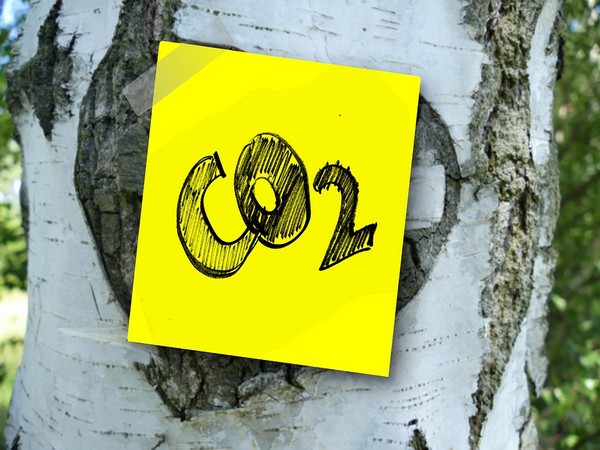
Targeted reimbursement: A fair price for CO2

Postdam, [Germany], September 30 (ANI): If properly designed, a CO2 tax can be both extremely effective and socially just. This is the conclusion of a new study on Global Commons and Climate Change conducted by the Potsdam Institute for Climate Impact Research (PIK) and the Mercator Research Institute (MCC).

ANI Sep 30, 2022 19:41 IST googleads

Representative Image

Postdam, [Germany], September 30 (ANI): If properly designed, a CO2 tax can be both extremely effective and socially just. This is the conclusion of a new study on Global Commons and Climate Change conducted by the Potsdam Institute for Climate Impact Research (PIK) and the Mercator Research Institute (MCC).
At the heart of the concept is a targeted return of CO2 pricing revenues, particularly to poorer people who require relatively significant amounts of energy but have little control over it. So far, political concerns about social hardship and potential outrage have stymied CO2 price increases.
This study has been published in the Journal of Environmental Economics and Management (JEEM).
"It is crucial that the revenues from CO2 pricing are returned, and in a targeted manner: Distributing them back in shotgun mode is only the second-best solution," explains Martin Hansel, an economist at PIK and lead author of the study.
"It makes the most sense to support the most affected groups with direct transfers. In the study, we identify these particularly affected groups for the first time: Because they are not simply the poorer segments of the population. Rather, within each income group, there are households with very high energy expenditures - people who rely on their cars to drive to work because they live in the countryside, people who have old oil-based heating, tenants with little to no influence on insulation, and so on. These are the groups that the government needs to identify and compensate for. That's the fairest and economically most sensible solution looking at society as a whole," he adds.
According to Max Franks, who is also an economist in Potsdam and author of the study, "Especially in the current crisis, with rising energy costs for everyone, people keep saying that a CO2 price is not politically feasible. Yet the opposite is true, and it is precisely now that we need political control here. Science is long clear that polluting the atmosphere won't stop if it doesn't cost anyone anything. We've now looked at the question of how best to do that, precisely so that it doesn't hit the poor hardest - and we see: There are socially just solutions."
It is not as simple for government agencies to distribute cash payments to persons in need as it may appear. They need to know which families are particularly energy-intensive before they can provide such payments, but they can do very little to change that in the short term.
"There are already ideas here about how that might work. But we also looked at solutions that entail less bureaucracy. It turns out that cash transfers where everyone gets the same amount can do the job if they are combined with moderate support for renewable energies. This policy package lowers energy prices, reduces the number of hardship cases, and ultimately results in a reduction in the unequal burden," says Matthias Kalkuhl, who conducts research on CO2 pricing and tax reforms at the MCC and is co-author of this study.
Ottmar Edenhofer, Director of both PIK and MCC and also the author of the study, says: "For this study, we have broadened the economic view. We are not looking at people on the basis of what they earn, as is usually the case. Instead, we look at how much they are affected by energy price changes. This makes the model we've built very applicable also to the current energy crisis. Because here, too, relief needs to arrive before additional burdens hit the citizens, and the relief needs to come in a targeted way. To achieve this, it is crucial to take people's different starting points into account. Ultimately, we need the CO2 price as a market-based lever to effectively reduce emissions. It won't solve all the problems, but without it, the climate problem cannot be solved." (ANI)


Get the App

What to Read Next

Science

Microbes help detoxify our atmosphere, says study 

Microbes help detoxify our atmosphere, says study 

Melbourne researchers have uncovered important new information on how microbes absorb huge amounts of carbon monoxide (CO) and assist in reducing levels of this deadly gas.

Read More
Science

Chemists design novel method for generating sustainable fuel

Chemists design novel method for generating sustainable fuel

Tuning this environment by controlling how the CoPc catalyst was distributed on the carbon nanotube surface allowed carbon dioxide to be as much as eight times more likely to produce methanol, a discovery that could increase the efficiency of other catalytic processes and have a widespread impact on other fields, said Robert Baker, co-author of the study and a professor in chemistry and biochemistry at The Ohio State University.

Read More
Science

Study reveals positive effect of midazolam after cardiac arrest

Study reveals positive effect of midazolam after cardiac arrest

When the patient required anesthesia following successful resuscitation, midazolam increased the likelihood of adequate oxygen saturation and CO2 levels in the blood. The risk of a subsequent decline in blood pressure or circulatory arrest did not increase.

Read More
Science

Climate policies and children's health

Climate policies and  children's health

A recent study suggests that efforts to limit carbon dioxide (CO2) emissions from motor vehicles, along with investments in electric vehicles and public transit, would reduce air pollution and have a significant impact on children's health. They'd also save money.

Read More
Science

Study reveals air pollution hides increases in rainfall

Study reveals air pollution hides increases in rainfall

We know that greenhouse gas emissions, such as carbon dioxide, should increase rainfall. The emissions warm the atmosphere, resulting in a one-two punch: warmer oceans make it easier for water to evaporate, and warmer air can store more water vapour, allowing more moisture to fall as rain. However, for long of the twentieth century, the data did not clearly reveal a rise in precipitation.

Read More
Science

Rising sea levels may lead to more methane emitted from wetlands

Rising sea levels may lead to more methane emitted from wetlands

Global warming is causing sea levels to rise, which is altering ecosystems. Scientists assumed that the tidal wetlands present in estuaries could create less methane, a strong greenhouse gas because the increased influx of seawater renders these habitats less hospitable to methane-producing microorganisms.

Read More
Science

Ice age may help predict oceans’ response to global warming

Ice age may help predict oceans’ response to global warming

A team of scientists led by a Tulane University oceanographer discovered that deposits deep beneath the ocean floor provide a means to estimate ocean oxygen levels and their relationship to carbon dioxide in the Earth's atmosphere during the last ice age, which ended more than 11,000 years ago.

Read More
Science

Climate change threatens global forest carbon sequestration

Climate change threatens global forest carbon sequestration

A new analysis of U.S. Forest Service data shows that climate change is changing forests differently across the country. With increasing temperatures, intensifying droughts, wildfires, and disease outbreaks wreaking havoc on trees, researchers warn that forests in the American West are facing the brunt of the repercussions.

Read More
Science

Study explores origins of life using ancient hot springs

Study explores origins of life using ancient hot springs

Researchers use historic hot springs to investigate the beginnings of life on Earth.

Read More
Science

Lowering inequality is essential in dealing with climate crisis

Lowering inequality is essential in dealing with climate crisis

Researchers argue in a new analysis published in the journal Nature Climate Change that reducing inequality is critical in getting the world towards Net-Zero because inequality limits who can afford to adopt low-carbon habits.

Read More
Home About Us Our Products Advertise Contact Us Terms & Condition Privacy Policy

Copyright © aninews.in | All Rights Reserved.


