

ADD ANI AS A TRUSTED SOURCE
googleads
ANI Logo
Menu
Science

Sustainability is the key to save water

Jaisalmer (Rajasthan) [India], Aug 4 (ANI): Like many other places, villages around Thar Desert have also been pushed to extreme conditions due to lack of water and soaring temperatures.

ANI Aug 04, 2019 12:48 IST googleads

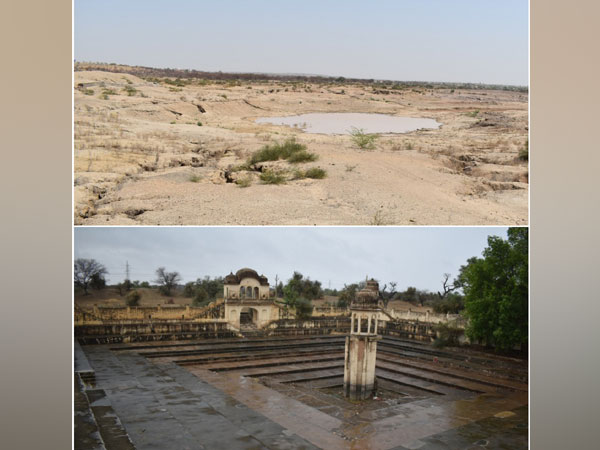
Dry traditional water sources

Jaisalmer (Rajasthan) [India], Aug 4 (ANI): Like many other places, villages around Thar Desert have also been pushed to extreme conditions due to lack of water and soaring temperatures.
The severity has left people in rural areas disturbed, but not distracted, making Thar the only desert in the world with an abundant density of life.
In areas near the desert, salty water is extracted from beneath the earth and sweet waterfalls from the sky. However, the dense rainfall makes the desert a swamp with the entire area becoming prone to turning into a saline lake.
Luckily, people around the region have moulded their lives according to the available resources, by mutually cooperating with other species as well. They have created unique treasures of water storage for themselves, their animals (especially cattle) and for future generations in order to move ahead smoothly.
Surprisingly, in some parts of the country, even where there is more rainfall than Thar Desert, people face scarcity of drinking water as they waste the source in abundance while people of the desert avoid the situation by judiciously utilising water.
For instance, people from other areas pull underground water from heavy capacity-powered pumps developing the culture of tap water and ultimately forgetting the value of water. Whereas, residents of villages around the Thar Desert walk miles and miles just to fetch a jar of water.
Who is to be blamed for the wastage? People or the government, who in the last five to six decades provided water to the people, making them forget the traditional water sources as well as making them eyewitnesses to their own methods of wasting water.
Other than wasting water at homes, people also ruined natural or traditional water sources. In cities of Rajasthan such as Barmer, Jaisalmer, Bikaner, Churu, Nagaur, Jodhpur, Pali and Jalore traditionally harvested rainwater storage, ponds, rivers, streams, Kunds (small ponds), Baavdis (stepwell), pure artistic ponds made of lime and stone had been all destroyed by the villagers by filling them with soil and garbage.
Unfortunately, they have now become places of illegal mining. The courtyard of the house well known for its cleanliness is now used to get rid of dead animals and trash.
An eyewitness, who saw the construction process of ponds, other water sources and the wastage caused due to it, took to his book 'Aaj Bhi Khare Hai Talaab' to share some of his experiences.
"Hundreds and thousands of ponds did not appear from oblivion. There were some who commissioned work for these ponds and there were many who actually constructed hundreds and thousands of them. But in the last two hundred years they have been turned into zero by those who have learned a little from the new education," wrote late Anupam Mishra.
Perhaps this is a time shift. The new generation that measures the world with a snap of a finger has seen these water sources being turned into garbage dumps in villages; they have seen water only out of taps or in bottles. They are least concerned about these water sources, nor do they drink water from them. Due to the lack of communication between the two generations in regard to knowledge and culture, the gap between them has widened
Time has changed; nature is changing and weather patterns are changing too. In the desert, there is no crisis of water. The method of harvesting rainwater is in the doldrums. There could be a crisis of water when there is disruption in the supply of water through canals and pipelines.
There is no reason why old water sources can't be restored; it is only a lack of will. Lately, the government, civil society organisations, and media establishments have started taking care of traditional old water sources, harvesting rainwater, organising the society to spread awareness on water issues and are driving a campaign to build a unit, ten units, hundreds of thousands of units of these water sources.
The government has created the Ministry of Water Resources. By combining manpower and hydropower, society has the opportunity to revive the traditional water sources. To rejuvenate these sources, to hand over these priceless treasures into the hands of the future generation, there is a need to raise thousands of hands again so that the coming seven generations can live with four million species of living beings.
The views expressed in the above article are that of Dilip Bidawat of Charkha Development Communication Network. (ANI)

Get the App

What to Read Next

Science

New technology enhances gravitational-wave detection: Study

New technology enhances gravitational-wave detection: Study

A team of physicists led by Jonathan Richardson of the University of California, Riverside, demonstrated how new optical technology can extend the detection range of gravitational-wave observatories such as the Laser Interferometer Gravitational-Wave Observatory, or LIGO, and pave the way for future observatories.

Read More
Science

Study finds connection between quantum theory, information theory

Study finds connection between quantum theory, information theory

"Our results have no clear or direct application right now. It's basic research that lays the foundation for future technologies in quantum information and quantum computers. There's enormous potential for complete discoveries in many different research fields," said Guilherme B Xavier, a researcher in quantum communication at Linkoping University, Sweden.

Read More
Science

Bacterial vaccine demonstrates potential as cancer treatment

Bacterial vaccine demonstrates potential as cancer treatment

Columbia researchers developed probiotic bacteria that train the immune system to eliminate cancer cells, paving the way for a new class of cancer vaccinations that take advantage of bacteria's innate tumour-targeting abilities. These microbial cancer vaccines can be tailored to each person's specific original tumour and metastases, perhaps preventing future recurrences.

Read More
Science

Study reveals type of childhood leukaemia originates

Study reveals type of childhood leukaemia originates

Acute myeloid leukaemia is the second most prevalent type of acute leukaemia in childhood, and it can be detected within a few months of life. The disease's early beginning raised the possibility that the cancer originated before birth. However, validating this notion has been difficult due to the scarcity of prenatal or newborn samples.

Read More
Science

Study reveals novel therapeutic target for traumatic brain injury

Study reveals novel therapeutic target for traumatic brain injury

Health outcomes vary greatly among the approximately 1.5 million Americans who survive a traumatic brain injury each year. Not only can these injuries cause loss of coordination, depression, impulsivity, and difficulties concentrating, but they also increase the risk of getting dementia in the future.

Read More
Science

Study shows older adults want to express themselves with emojis

Study shows older adults want to express themselves with emojis

A new study from the University of Ottawa sheds light on how different generations interpret the use of emojis in their communications, with older persons unclear how to use them as frequently as younger adults, despite recognizing their meaning.

Read More
Science

Gardeners can help to identify possibly invasive plants: Research

Gardeners can help to identify possibly invasive plants: Research

Researchers from the University of Reading and the Royal Horticultural Society have discovered that gardeners play a vital role in identifying 'future invaders' - ornamental plants that could become invasive species.

Read More
Science

Researchers create method to detect landslides tsunamis

Researchers create method to detect landslides tsunamis

Researchers have developed a method for remotely detecting massive landslides within minutes of their occurrence and determining whether they are near open water and pose a tsunami hazard.

Read More
Science

Study reveals air pollution hides increases in rainfall

Study reveals air pollution hides increases in rainfall

We know that greenhouse gas emissions, such as carbon dioxide, should increase rainfall. The emissions warm the atmosphere, resulting in a one-two punch: warmer oceans make it easier for water to evaporate, and warmer air can store more water vapour, allowing more moisture to fall as rain. However, for long of the twentieth century, the data did not clearly reveal a rise in precipitation.

Read More
Science

Study reveals proteins guide electrons to right place

Study reveals proteins guide electrons to right place

Cells require energy to function. Researchers at the University of Gothenburg can now explain how energy travels through the cell by minute atomic movements to its target in the protein. Imitating the structural changes of the proteins may lead to more efficient solar cells in the future.

Read More
Home About Us Our Products Advertise Contact Us Terms & Condition Privacy Policy

Copyright © aninews.in | All Rights Reserved.




