

ADD ANI AS A TRUSTED SOURCE
googleads
ANI Logo
Menu
Science

Study: Warmer oceans lead to release of methane from Seabeds

Washington [US], August 3 (ANI): Warmer oceans can lead to large amounts of methane being released from the seabeds which may amplify climate warming. A new study develops a method for increasing emissions of methane from seabeds.

ANI Aug 03, 2022 08:34 IST googleads

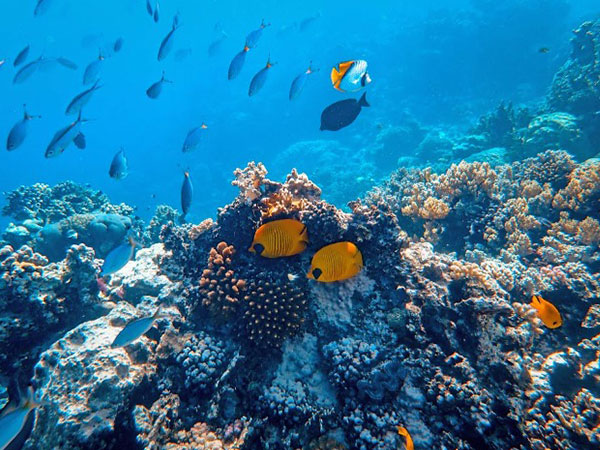
Representative Image

Washington [US], August 3 (ANI): Warmer oceans can lead to large amounts of methane being released from the seabeds which may amplify climate warming. A new study develops a method for increasing emissions of methane from seabeds.
Vast reservoirs of the potent greenhouse gas methane are stored beneath the sea in a solid ice-like combination with water. This solid is known as methane hydrate. For over three decades, various concerns have been raised that warming the seafloor may cause this methane to be rapidly released, perhaps even reaching the atmosphere where it would cause further climate warming. Happily, this methane hydrate is mostly located beneath the seafloor and under hundreds of meters of seawater. Even if warming melts, this methane hydrates and releases methane gas, the natural microbial filters present in the seafloor were expected to destroy most of the methane before it ever reaches the open seawater.
However, there have been some gaps in our knowledge of the relevant seafloor processes. In particular, can seafloor warming be rapid enough that methane hydrate could melt so fast that the released methane would overwhelm and ultimately bypass the natural microbial filters? "The microbial filter layer in the sediment -- we call it the 'sulfate-methane transition', where methane is removed -- is somewhat delicate," explains Assistant Professor Christian Stranne at the Department of Geological Sciences, Stockholm University. "The filter layer takes many years to form and reach peak methane-consuming efficiency. The filter is a living thing, made of microorganisms that consume methane under anaerobic (no-oxygen) conditions. The filter also moves up and down within the sediment, depending on the rate at which methane is reaching it."
In a new study, just published in Communications Earth and Environment, Stranne and colleagues from Stockholm University and Linnaeus University have combined a new model of the biological behaviour and vertical movements of this microbial filter with existing models of seafloor sediments' physical behaviour. The physical parts of the model include processes such as how cracks form and methane can move up through the sediment after methane hydrates melt.
Christian Stranne explains: "Imagine that the amount of methane rising through the sediment suddenly increases, as might happen if methane hydrate begins to melt faster. It can take decades for the filter to adjust itself to consume methane at the new rate. Our new study shows that during the time that the filter is not reestablished, substantial methane can leak past the filter, and into the ocean water."
Despite this "window of opportunity," methane from melting hydrates that reaches the seawater faces further methane-destroying processes. These processes make it nearly impossible for substantial methane from methane hydrate melting to reach the atmosphere. However, methods, as demonstrated in this study, can be applied to other regions where seafloor-released methane is much shallower and is more likely to reach the atmosphere, such as the Arctic continental shelves, according to Christian Stranne.
"Methane hydrates are a massive storehouse of carbon, so it remains important to understand how they interact with ocean changes, and potentially, the atmosphere, over long and, in the case of our study, rather short timescales. We now know that there is indeed a possible process for melting methane hydrates to temporarily bypass what was previously thought to be a strong filter in the sediment," says Christian Stranne.
The warming rate is, however, of great importance: "Our results suggest that if our oceans warm at a pace significantly lower than 1 °C per 100 years, the filter can keep up with the pace and remain highly efficient. Unfortunately, we see higher warming rates than that in some of our oceans." (ANI)


Get the App

What to Read Next

Science

Amphibians bounce-back from Earth’s greatest mass extinction

Amphibians bounce-back from Earth’s greatest mass extinction

Researchers at the University of Bristol discovered that ancient frog ancestors survived the biggest mass extinction of species by eating on freshwater prey that evaded terrestrial predators.

Read More
Science

New insights into how cancer evades the immune system: Study

New insights into how cancer evades the immune system: Study

Immunotherapy research primarily focuses on better recognition of cancer cells by the body's own immune system. Researchers at Amsterdam UMC and Moffitt Cancer Center have taken a different approach.

Read More
Science

Scientists use AI to better understand nanoparticles: Study

Scientists use AI to better understand nanoparticles: Study

A group of scientists has created a way to illuminate the dynamic behavior of nanoparticles, which are essential components in the production of pharmaceuticals, electronics, and industrial and energy-conversion materials.

Read More
Science

New device could allow you to taste cake in virtual reality

New device could allow you to taste cake in virtual reality

The 'e-Taste' interface employs sensors and wireless chemical dispensers to enable remote taste perception, often known as gestation. Field testing done by researchers at The Ohio State University confirmed the device's ability to digitally simulate a range of taste intensities, while still offering variety and safety for the user.

Read More
Science

Strand Life Sciences launches portal for rare disease diagnosis

Strand Life Sciences launches portal for rare disease diagnosis

Marking Rare Disease Day, Strand Life Sciences, a subsidiary of Reliance Industries and a leading genomics research company, has launched the StrandOmics Portal, an innovative digital platform designed to assist doctors in diagnosing rare diseases more efficiently.

Read More
Science

Study reveals impact of animals as architects of Earth

Study reveals impact of animals as architects of Earth

A new study led by Professor Gemma Harvey from Queen Mary University of London has revealed how hundreds of species shape the landscapes we depend on, from termite mounds visible from space to beavers creating wetlands and hippos carving drainage systems.

Read More
Science

Opposing arrows of time emerge from certain quantum systems

Opposing arrows of time emerge from certain quantum systems

Researchers at the University of Surrey made a thought-provoking discovery. A new study reveals that opposing arrows of time can theoretically emerge from certain quantum systems.

Read More
Science

'Creation of black holes without singularities through gravity'

'Creation of black holes without singularities through gravity'

Traditional black holes, as predicted by Albert Einstein's theory of General Relativity, contain what are known as singularities, i.e. points where the laws of physics break down. Identifying how singularities are resolved in the context of quantum gravity is one of the fundamental problems in theoretical physics. Now, a team of experts has described the creation of regular black holes from gravitational effects without the need for the existence of exotic matter required by some previous models.

Read More
Science

New technology enhances gravitational-wave detection: Study

New technology enhances gravitational-wave detection: Study

A team of physicists led by Jonathan Richardson of the University of California, Riverside, demonstrated how new optical technology can extend the detection range of gravitational-wave observatories such as the Laser Interferometer Gravitational-Wave Observatory, or LIGO, and pave the way for future observatories.

Read More
Science

Discovering the genetics of climate adaptation 

Discovering the genetics of climate adaptation 

As climate change accelerates, plants are under increasing pressure to adapt to changing habitats and environmental conditions.

Read More
Home About Us Our Products Advertise Contact Us Terms & Condition Privacy Policy

Copyright © aninews.in | All Rights Reserved.


