

ADD ANI AS A TRUSTED SOURCE
googleads
ANI Logo
Menu
Science

Study uses magnetoresistance of MXene to predict distribution of molecules

MXene is a two-dimensional nanomaterial with alternating layers of metal and carbon that exhibits strong electrical conductivity and may be mixed with different metal compounds. As a result, it can be used in a variety of sectors, including semiconductors, electronic devices, and sensors.

ANI Sep 23, 2023 18:50 IST googleads

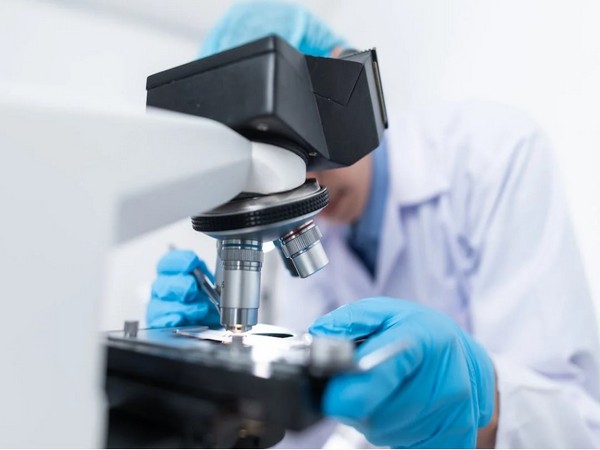
Representative Image  (Image source: Pexels)

Washington [US], September 23 (ANI): The magnetoresistance property of MXene has been utilised by researchers to develop a way to predict the distribution of molecules on the surface.
MXene is a two-dimensional nanomaterial with alternating layers of metal and carbon that exhibits strong electrical conductivity and may be mixed with different metal compounds. As a result, it can be used in a variety of sectors, including semiconductors, electronic devices, and sensors.
With the use of this method, it is able to quickly determine the molecular distribution of MXene, allowing for quality control throughout production and, ultimately, paving the way for hitherto impractical mass production.
Knowing the type and quantity of molecules covered on the surface of MXene is crucial for its effective use; if the molecules are fluorine, the material's electrical conductivity and effectiveness as an electromagnetic wave shield both diminish.
However, even with a high-performance electron microscope, it takes several days to analyse the molecules on the surface because it is just 1 nm (nanometer - billionth of a metre) thick, making mass production up to now impractical.
The research team developed a two-dimensional material property prediction program based on the idea that electrical conductivity or magnetic properties change depending on the molecules attached to the surface.
As a result, they calculated the magnetic transport properties of MXene and succeeded in analyzing the type and amount of molecules adsorbed on the surface of MXene at atmospheric pressure and room temperature without any additional devices.
By analyzing the surface of the MXene with the developed property prediction program, it was predicted that the Hall scattering factor, which affects magnetic transport, changes dramatically depending on the type of surface molecules.
The Hall Scattering Factor is a physical constant that describes the charge-carrying properties of semiconductor materials, and the team found that even when the same MXene was prepared, the Hall Scattering Factor had a value of 2.49, the highest for fluorine, 0.5 for oxygen, and 1 for hydroxide, allowing them to analyze the distribution of the molecules.
The Hall scattering coefficient has different applications based on the value of 1. If the value is lower than 1, it can be applied to high-performance transistors, high-frequency generators, high-efficiency sensors, and photodetectors, and if the value is higher than 1, it can be applied to thermoelectric materials and magnetic sensors.
Considering that the size of the maxin is a few nanometers or less, the size of the applicable device and the amount of power required can be dramatically reduced.
"Unlike previous studies that focused on the production and properties of pure MXene, this study is significant in that it provides a new method for to easily classify manufactured MXene," said Seung-Cheol Lee, director of IKIST.
"By combining this result with experimental studies, we expect to be able to control the production process of MXene, which will be used to mass produce MXene with uniform quality." (ANI)


Get the App

What to Read Next

Science

Researchers discover molecular mechanism for bacterial infection

Researchers discover molecular mechanism for bacterial infection

Researchers at Virginia Tech have discovered how bacteria change molecules in order to infect their host.

Read More
Science

Cancer cells may be using lipids to hide from immune system

Cancer cells may be using lipids to hide from immune system

Cancer cells rarely begin stealthily. Quite the contrary, they alert the immune system to their presence by displaying chemical red flags on their membranes. When detected, the body's defences can swoop in and destroy renegade cells before they can do significant damage. Lipids, fatty molecules traditionally thought to be largely a fuel supply for developing tumours, are at the heart of this early detection system.

Read More
Science

Chemists design novel method for generating sustainable fuel

Chemists design novel method for generating sustainable fuel

Tuning this environment by controlling how the CoPc catalyst was distributed on the carbon nanotube surface allowed carbon dioxide to be as much as eight times more likely to produce methanol, a discovery that could increase the efficiency of other catalytic processes and have a widespread impact on other fields, said Robert Baker, co-author of the study and a professor in chemistry and biochemistry at The Ohio State University.

Read More
Science

Plant receptors that regulate growth have common origin: Study

Plant receptors that regulate growth have common origin: Study

As in animals, plants have immune responses that help them defend against pathogens such as viruses, bacteria, fungi, and oomycetes. Before invaders can be stopped, they must first be detected, and this is accomplished by pattern recognition receptors located on the surface of plant cells

Read More
Science

New study on water molecules contradicts textbook models

New study on water molecules contradicts textbook models

A team of researchers discovered that water molecules on the top of salt water are organised differently than previously assumed.

Read More
Science

New way of boosting chemical reactions using electricity

New way of boosting chemical reactions using electricity

Research revealed a way to use electricity to improve a kind of chemical reaction often employed in the manufacture of innovative pharmaceutical medicine candidates.

Read More
Science

Scientists harness electricity to boost chemical reactions

Scientists harness electricity to boost chemical reactions

A study conducted by chemists at the University of Chicago discovered a technique to use electricity to enhance a sort of chemical reaction commonly used in the synthesis of novel pharmaceutical medication candidates.

Read More
Science

Sniffing women's tears lessens aggressive behaviour in men: Study

Sniffing women's tears lessens aggressive behaviour in men: Study

According to new research published in the open-access journal PLOS Biology, tears from women contain molecules that reduce violence in men. The study, directed by Shani Agron of Israel's Weizmann Institute of Science, discovered that smelling tears reduces brain activity connected to aggression, resulting in less aggressive behaviour.

Read More
Science

Yeast cells might produce medicines for psychotic diorders

Yeast cells might produce medicines for psychotic diorders

An international team of experts has produced new promising outcomes in basic research by producing biological molecules for medicine using genetically altered yeast cells. In 2022, the researchers drew international notice by programming the longest-ever biosynthetic pathway - or 'assembly line' - into a microbial cell factory and designing it to generate biological components for cancer therapies.

Read More
Science

Wearable devices may help astronauts avoid being 'lost' in space

Wearable devices may help astronauts avoid being 'lost' in space

The sky is no longer the limit - but flying is risky. We lose many of the clues we need to orient ourselves when we leave the Earth's surface, and this spatial disorientation can be fatal. Astronauts typically require extensive training to protect themselves against it. However, scientists have discovered that wearable devices that vibrate to provide orientation cues may considerably improve the efficacy of this training, making spaceflight slightly safer.

Read More
Home About Us Our Products Advertise Contact Us Terms & Condition Privacy Policy

Copyright © aninews.in | All Rights Reserved.


