

ADD ANI AS A TRUSTED SOURCE
googleads
ANI Logo
Menu
Science

Study targets mouse's own cells to treat pneumonia

Washington [US], November 16 (ANI): Researchers at the National Institutes of Health have discovered a therapy that targets host cells rather than bacterial cells in treating bacterial pneumonia in rodents.

ANI Nov 16, 2021 16:16 IST googleads

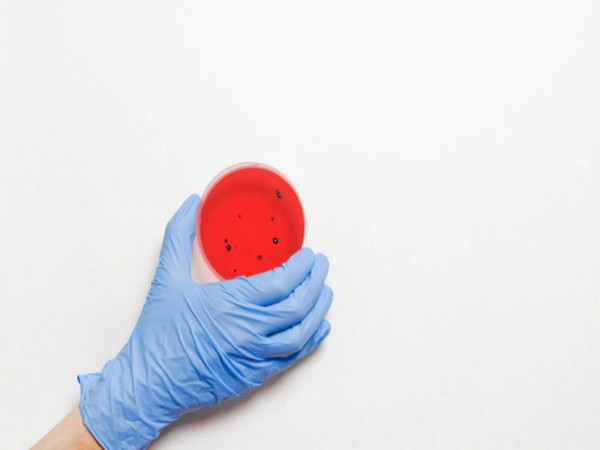
Representative image

Washington [US], November 16 (ANI): Researchers at the National Institutes of Health have discovered a therapy that targets host cells rather than bacterial cells in treating bacterial pneumonia in rodents.
The findings of the study were published in the 'Journal of Clinical Investigation'.
According to the World Health Organization, pneumonia caused by Streptococcus pneumoniae, or pneumococcal pneumonia, is the leading cause of pneumonia deaths worldwide each year.
While physicians usually prescribe antibiotics to treat this severe lung infection, treatment is not always successful, and in some cases, the bacteria become resistant.
The method involves white blood cells of the immune system called macrophages that eat bacteria, and a group of compounds that are naturally produced in mice and humans called epoxyeicosatrienoic acids or EETs.
Matthew Edin, PhD, a scientist at the National Institute of Environmental Health Sciences (NIEHS), part of NIH, wanted to find a way to augment the body's immune system to resolve the infection.
To keep tissues healthy, EETs work to limit inflammation, but during infections caused by S. pneumoniae and other microorganisms, inflammation ramps up after lung cells induce certain substances that prompt macrophages to gobble up the bacteria.
Edin and colleagues found that one way to get macrophages to eat more bacteria is to decrease the ability of EETs to do what they normally do, which is limit inflammation.
Edin led the team that found infection induces a protein called soluble epoxide hydrolase (sEH) that degrades EETs. In contrast, when sEH is blocked, EET levels skyrocket, hampering the macrophages' ability to sense and eat bacteria. As a result, the bacteria continue to reproduce in the lung, which leads to severe lung infection and death.
At the other end of the spectrum, blocking EETs using a synthetic molecule called EEZE boosted the eating capacity of the macrophages, leading to reduced numbers of bacteria in the lungs of mice.
The scientists saw the same result when they placed bacteria and macrophages harvested from lung and blood samples of human volunteers in test tubes at the NIEHS Clinical Research Unit.
"EEZE is safe and effective in mice, but scientists could develop similar compounds to give to humans. These new molecules could be used in an inhaler or pill to promote bacterial killing and make the antibiotics more effective," said Edin, who is co-lead author of the paper.
NIEHS Scientific Director Darryl Zeldin, MD, corresponding author of the research, has spent several years studying EETs and their impact on the human body. He and his research group determined that EETs provide beneficial cardiovascular effects, such as lowering blood pressure and inflammation and improving cell survival after a stroke or heart attack.
He stressed, however, that the involvement of EETs in the process of inflammation can be good or bad depending on the context.
"EETs can suppress the inflammatory response, which is good, but if they block it too much, they're going to make it so the macrophages can't eat the bacteria, which is bad," said Zeldin.
Edin added that some researchers have tested sEH inhibitors -- compounds that prevent sEH from degrading EETs -- in clinical trials to see if they could help with pain, chronic obstructive pulmonary disease, and high blood pressure. He cautioned that the scientists performing these studies consider the influence of sEH inhibitors on bacterial clearance.
"They should be careful and stop using them if the individual develops pneumonia. Our study demonstrated that blocking sEH means EETs may hamstring macrophages, making a lung infection worse," said Edin.
Co-author Stavros Garantziotis, MD, medical director of the NIEHS Clinical Research Unit, was instrumental in collecting human macrophages for the research.
"Since our study utilised lung immune cells from healthy volunteers, we have confidence that our findings are relevant to human health," said Garantziotis. (ANI)


Get the App

What to Read Next

Science

New method guides magnetism without magnets

New method guides magnetism without magnets

Researchers at Paul Scherrer Institute PSI have demonstrated an innovative method to control magnetism in materials using an energy-efficient electric field.

Read More
Science

Amphibians bounce-back from Earth’s greatest mass extinction

Amphibians bounce-back from Earth’s greatest mass extinction

Researchers at the University of Bristol discovered that ancient frog ancestors survived the biggest mass extinction of species by eating on freshwater prey that evaded terrestrial predators.

Read More
Science

New insights into how cancer evades the immune system: Study

New insights into how cancer evades the immune system: Study

Immunotherapy research primarily focuses on better recognition of cancer cells by the body's own immune system. Researchers at Amsterdam UMC and Moffitt Cancer Center have taken a different approach.

Read More
Science

Scientists use AI to better understand nanoparticles: Study

Scientists use AI to better understand nanoparticles: Study

A group of scientists has created a way to illuminate the dynamic behavior of nanoparticles, which are essential components in the production of pharmaceuticals, electronics, and industrial and energy-conversion materials.

Read More
Science

New device could allow you to taste cake in virtual reality

New device could allow you to taste cake in virtual reality

The 'e-Taste' interface employs sensors and wireless chemical dispensers to enable remote taste perception, often known as gestation. Field testing done by researchers at The Ohio State University confirmed the device's ability to digitally simulate a range of taste intensities, while still offering variety and safety for the user.

Read More
Science

Study reveals impact of animals as architects of Earth

Study reveals impact of animals as architects of Earth

A new study led by Professor Gemma Harvey from Queen Mary University of London has revealed how hundreds of species shape the landscapes we depend on, from termite mounds visible from space to beavers creating wetlands and hippos carving drainage systems.

Read More
Science

Opposing arrows of time emerge from certain quantum systems

Opposing arrows of time emerge from certain quantum systems

Researchers at the University of Surrey made a thought-provoking discovery. A new study reveals that opposing arrows of time can theoretically emerge from certain quantum systems.

Read More
Science

COVID-19 severity may be predicted by White Blood Cell Count

COVID-19 severity may be predicted by White Blood Cell Count

A COVID-19 diagnosis is no longer as frightening as it used to be, thanks to developments in treatment choices. However, a new study reveals that leukocyte (white blood cell) count may now be used to identify who is more likely to develop more significant disease symptoms.

Read More
Science

Seals can essentially act as 'smart sensors': Study

Seals can essentially act as 'smart sensors': Study

A new study by marine biologists reports that seals can essentially act as 'smart sensors' for monitoring fish populations in the ocean's eerily dim 'twilight zone.'

Read More
Science

New technology enhances gravitational-wave detection: Study

New technology enhances gravitational-wave detection: Study

A team of physicists led by Jonathan Richardson of the University of California, Riverside, demonstrated how new optical technology can extend the detection range of gravitational-wave observatories such as the Laser Interferometer Gravitational-Wave Observatory, or LIGO, and pave the way for future observatories.

Read More
Home About Us Our Products Advertise Contact Us Terms & Condition Privacy Policy

Copyright © aninews.in | All Rights Reserved.
