

ADD ANI AS A TRUSTED SOURCE
googleads
ANI Logo
Menu
Science

Study suggests teeth may preserve antibodies for hundreds of years

A new study suggests that teeth may be capable of retaining antibodies for hundreds of years, allowing scientists to delve into the history of infectious human illnesses.

ANI Aug 19, 2023 20:34 IST googleads

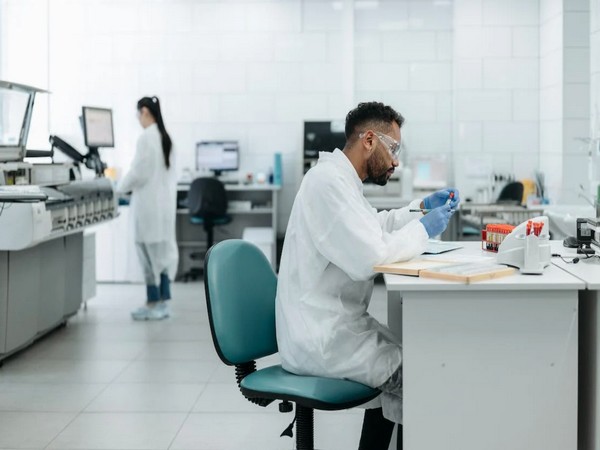
Representative Image

Washington DC [US], August 19 (ANI): A new study suggests that teeth may be capable of retaining antibodies for hundreds of years, allowing scientists to delve into the history of infectious human illnesses.
Antibodies are proteins produced by the immune system as a natural response to infectious organisms like viruses and bacteria. Their job is to recognise those microbes so that the immune system can attack them and clear them from the body. I
n the new paper, published by iScience, antibodies extracted from 800 year-old medieval human teeth were found to be stable and still able to recognise viral proteins.
The study, led by Professor Robert Layfield and research technician Barry Shaw from the School of Life Sciences, University of Nottingham, in collaboration with Professor Anisur Rahman and Dr Thomas McDonnell from the Department of Medicine at University College London, expands the study of ancient proteins, referred to as palaeoproteomics, potentially allowing experts to analyse how human antibody responses developed through history.
Palaeoproteomics can reach back into deep time with ancient proteins already successfully recovered and identified after preservation in 1.7-million year old dental enamel from an ancient rhinoceros and an ostrich eggshell more than 6.5 million years old. In this new study, the authors also found preliminary evidence that, like the medieval human teeth, mammoth bones nearly 40,000 years old appear to preserve stable antibodies.
This science has previously been applied by the Nottingham team to the analysis of other disease-associated proteins recovered from archaeological human bones and teeth to allow identification of an unusual ancient form of the skeletal disorder Paget’s disease.
Professor Layfield explained: “In discovery science we come to expect the unexpected, but the realisation that intact, functional antibodies can be purified from skeletal remains in the archaeological record was quite astonishing. Some ancient proteins were known to be stable, but these tend to be ‘structural’ proteins such as collagens and keratins, that are pretty inert.”
Professor Rahman added: “Antibodies are different because we are able to test whether they can still do their job of recognising viruses or bacteria even after hundreds of years. In this case we found that antibodies from medieval teeth were able to recognise Epstein-Barr virus, which causes glandular fever. In future it could be possible to look at how antibodies from ancient specimens react to diseases present during those periods, such as the Black Death.” (ANI)


Get the App

What to Read Next

Science

Amphibians bounce-back from Earth’s greatest mass extinction

Amphibians bounce-back from Earth’s greatest mass extinction

Researchers at the University of Bristol discovered that ancient frog ancestors survived the biggest mass extinction of species by eating on freshwater prey that evaded terrestrial predators.

Read More
Science

Researchers shed light on possible endosymbiosis

Researchers shed light on possible endosymbiosis

Endosymbiosis is a remarkable biological phenomenon in which one creature resides within another. Such an unconventional partnership is usually advantageous to both parties. Even in human bodies, we find evidence of such cohabitation: mitochondria, the cells' powerhouses, originated from an ancient endosymbiosis. Bacteria long ago invaded and colonized other cells. This coexistence created the groundwork for mitochondria, which are found in the cells of plants, animals, and fungi.

Read More
Science

Researchers discover molecular mechanism for bacterial infection

Researchers discover molecular mechanism for bacterial infection

Researchers at Virginia Tech have discovered how bacteria change molecules in order to infect their host.

Read More
Science

Weight loss could reduce chances of severe infections in people

Weight loss could reduce chances of severe infections in people

According to new research, weight loss therapies may lower the risk of severe flu cases and other infections in patients with diabetes.

Read More
Science

Immune cells prevent lung healing following viral infection

Immune cells prevent lung healing following viral infection

Researchers found a mechanism by which immune cells impede the regeneration of the lungs' defensive barrier following viral infections such as COVID-19.

Read More
Science

Study finds how macrophages play critical role in immune system

Study finds how macrophages play critical role in immune system

Macrophages are essential to the immune system because they combat infections and help heal damaged tissue. It's critical to comprehend how these cells are triggered in various contexts in order to design novel medical interventions. The complexity of these cells and their reactions has made it difficult to identify and research macrophage activation.

Read More
Science

Key protein helps prevent excessive bone loss in osteoporosis

Key protein helps prevent excessive bone loss in osteoporosis

Osteoporosis, a disorder characterised by porous and weak bones, is a major hazard to skeletal health. As the foundation of the human body, bones provide critical structural support. When bone mass decreases, it not only weakens this support but also lowers general function, resulting in a lower quality of life.

Read More
Science

'Cloaked' proteins deliver cancer-killing therapeutics into cells

'Cloaked' proteins deliver cancer-killing therapeutics into cells

Researchers at Cornell University have created a generalized method to "cloak" proteins, which may allow for the recycling of materials like antibodies for biological research and therapeutic applications.

Read More
Science

Study finds novel therapeutic avenues in bone repair

Study finds novel therapeutic avenues in bone repair

Birmingham researchers have proven PEPITEM, a naturally occurring peptide (small protein) has potential as a novel therapy for osteoporosis and other illnesses that entail bone loss, with specific advantages over conventional medications.

Read More
Science

Novel immune cell therapy can fight hepatitis B infections

Novel immune cell therapy can fight hepatitis B infections

Researchers found out how chronic infection with the hepatitis B virus (HBV) causes gradual liver damage, and eradicating the virus remains a daunting challenge.

Read More
Home About Us Our Products Advertise Contact Us Terms & Condition Privacy Policy

Copyright © aninews.in | All Rights Reserved.


