

ADD ANI AS A TRUSTED SOURCE
googleads
ANI Logo
Menu
Science

Study suggests new virus found may have coevolved with human lineage

Washington D.C. [USA], July 13 (ANI): In 2014, a virus called crAssphage that infects bacteria was discovered as part of the body's intestinal environment. Now, a recent study investigated its origin and evolution, which may have coevolved with human lineage.

ANI Jul 13, 2019 20:20 IST googleads

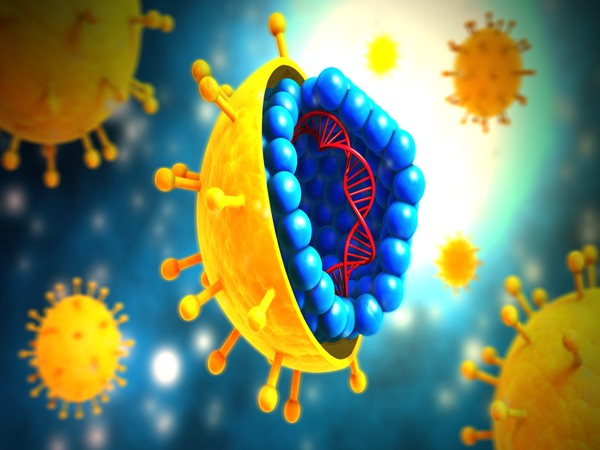
Representative image

Washington D.C. [USA], July 13 (ANI): In 2014, a virus called crAssphage that infects bacteria was discovered as part of the body's intestinal environment. Now, a recent study investigated its origin and evolution, which may have coevolved with human lineage.
The study published in the journal Nature Microbiology showed that the virus was found in the sewage of more than one-third of the world's countries. Additionally, the makeup of the virus can vary depending on which country and city someone resides.
"The virus is both highly abundant in the human gut and represents an entirely new viral family. With this study, we were able to expand our understanding of the diversity and evolutionary history of the human microbiome globally. Our team at Notre Dame has been evaluating the potential uses of this newly identified virus and is developing it as an alternative to E. coli or other fecal indicator bacteria that are not specific to humans, as an indicator of fecal pollution," said Kyle Bibby, co-author of the study.
The research was completed through a global collaboration of more than 115 scientists from 65 countries, allowing for the collection of a significant amount of sequencing data. This information was sampled from a variety of volunteers and from sewage samplings around the world. Genetic material data were also collected from primates as well as three pre-Columbian Andean mummies and a Tyrollean glacier mummy, which had 5,300-year-old intestinal content.
"We are in debt to all the amazing colleagues around the world who helped us explore the global diversity of this unique virus. This is truly a world-first in the global scope and nature of the project," said project lead, Robert Edwards. (ANI)

Get the App

What to Read Next

Science

When devices can read human emotions without a camera: Study

When devices can read human emotions without a camera: Study

Tokyo Metropolitan University researchers employed long-term skin conductance measurements to distinguish between emotions. Volunteers were given videos representing frightening scenarios, family bonding, and humour, while their skin conductance was measured.

Read More
Science

'Nuroscience study results can be better predicted by AI'

'Nuroscience study results can be better predicted by AI'

Large language models, a type of AI that analyses text, can anticipate the results of proposed neuroscience studies more correctly than human experts, according to a new study led by UCL (University College London) researchers.

Read More
Science

Gut microbes play role in regulating stress responsiveness

Gut microbes play role in regulating stress responsiveness

A groundbreaking study has revealed the critical role of gut bacteria in regulating stress responses through interactions with the body's circadian rhythms.

Read More
Science

Alternate method to study changes during DNA replication process

Alternate method to study changes during DNA replication process

Researchers at Colorado State University discovered an alternative way for studying alterations during the DNA replication process in lab settings using genetically modified yeast. The novel methodology provides a clearer picture than current pharmacological methods for understanding cell cycle arrest, a fundamental mechanism critical to cancer treatment and genetic concerns.

Read More
Science

Alzheimer’s disease can damage brain in two phases

Alzheimer’s disease can damage brain in two phases

Alzheimer's disease may cause brain damage in two stages, according to new research supported by the National Institutes of Health (NIH) that uses sophisticated brain mapping methods.

Read More
Science

Study finds new ways to prevent, treat type 2 diabetes

Study finds new ways to prevent, treat type 2 diabetes

Pancreatic cells, like human cells, have a limit to how much stress they can handle before they start to break down. Through overstimulation of these cells, certain stresses like inflammation and hyperglycemia lead to the onset of type 2 diabetes.

Read More
Science

Researchers shed light on possible endosymbiosis

Researchers shed light on possible endosymbiosis

Endosymbiosis is a remarkable biological phenomenon in which one creature resides within another. Such an unconventional partnership is usually advantageous to both parties. Even in human bodies, we find evidence of such cohabitation: mitochondria, the cells' powerhouses, originated from an ancient endosymbiosis. Bacteria long ago invaded and colonized other cells. This coexistence created the groundwork for mitochondria, which are found in the cells of plants, animals, and fungi.

Read More
Science

Study: Role of tRNA modifying enzyme in brain function

Study: Role of tRNA modifying enzyme in brain function

A pioneering study undertaken by a Kumamoto University research team shed light on the crucial role of TRMT10A, a tRNA methylation enzyme, in sustaining brain function. The findings show how TRMT10A deficiency reduces specific transfer RNA (tRNA) levels in the brain, altering protein synthesis and affecting synapse structure and function.

Read More
Science

Researchers discover changes in the brain throughout pregnancy

Researchers discover changes in the brain throughout pregnancy

Pregnancy is a transforming period in a person's life during which the body undergoes rapid physiological adjustments to prepare for parenthood, as we all know. What the broad hormonal alterations caused by pregnancy do to the brain is still a mystery.

Read More
Science

Researchers give more insight into heat perception in humans

Researchers give more insight into heat perception in humans

The Medical University of Vienna's research has significantly advanced our knowledge of how humans perceive heat. A group of scientists has discovered a particular type of cell structure involved in heat recognition.

Read More




