

ADD ANI AS A TRUSTED SOURCE
googleads
ANI Logo
Menu
Science

Study suggests melting glaciers will produce new salmon habitat

Washington [US], December 14 (ANI): For decades, climate change has had detrimental impacts on Pacific salmon populations. Spawning streams are overheating and droughts are drying up salmon habitats entirely, impacting many food webs from the Rocky Mountains and Coast Ranges to the Pacific Ocean.

ANI Dec 14, 2021 08:27 IST googleads

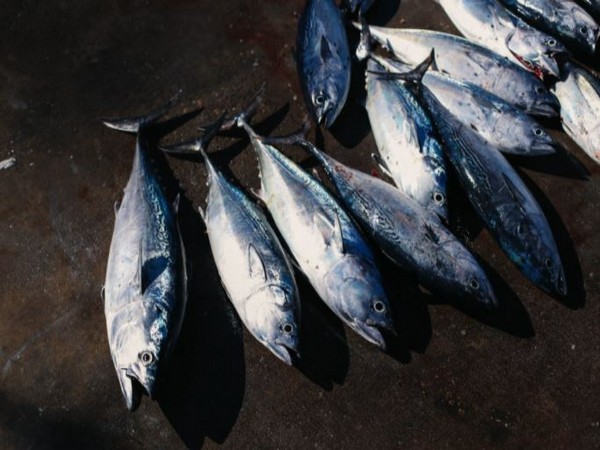
Representative Image

Washington [US], December 14 (ANI): For decades, climate change has had detrimental impacts on Pacific salmon populations. Spawning streams are overheating and droughts are drying up salmon habitats entirely, impacting many food webs from the Rocky Mountains and Coast Ranges to the Pacific Ocean.
But in a new study published in Nature Communications, led by researchers from the University of Montana's Flathead Lake Biological Station, scientists discovered warming trends may offer one silver lining, if only for a while: The retreat of glaciers in the Pacific mountains of western North America potentially could produce more than 6,000 kilometres of new Pacific salmon habitat by the year 2100.
"Climate change alters the shape and dynamics of stream ecosystems," said Diane Whited, an FLBS scientist whose role in the study focused on spatial modelling of potentially accessible stream habitat once glaciers have receded. "This information is crucial for managing the future of salmon habitat and productivity."
Researchers modelled glacial retreat under different climate change scenarios. To accomplish this, they used computer models to peel back the ice of 46,000 glaciers between southern British Columbia and south-central Alaska to look at how much potential salmon habitat would be created when the underlying bedrock is exposed and new streams flow over the landscape.
According to the team, the desirable stream habitat for salmon is connected to the ocean, maintains a low-gradient slope of 10 per cent or less and has retreating glaciers at its headwaters. By the end of the study, the researchers found 315 of the glaciers examined could fit those requirements.
Under a moderate climate scenario, the loss or reduction of those glaciers may reveal around 6,150 kilometres of potential new salmon habitat throughout the Pacific mountains of western North America by the year 2100 - a distance nearly equal to the length of the Mississippi River.
The researchers caution that while the newly created habitat may be a ray of light for salmon in some locations, overall climate change poses grave challenges for salmon populations. Additionally, if current warming trends continue, the newly emerging salmon habitats would eventually overheat and ultimately disappear the same way that current salmon habitats are today.
"On one hand, this amount of new salmon habitat will provide local opportunities for some salmon populations," said SFU spatial analyst Kara Pitman, the lead author of the study. "On the other hand, climate change and other human impacts continue to threaten salmon survival via warming rivers, changes in stream flows and poor ocean conditions."
The complete study is titled 'Glacier retreat creating new Pacific salmon habitat in western North American' and is available online. (ANI)


Get the App

What to Read Next

Science

New method guides magnetism without magnets

New method guides magnetism without magnets

Researchers at Paul Scherrer Institute PSI have demonstrated an innovative method to control magnetism in materials using an energy-efficient electric field.

Read More
Science

Amphibians bounce-back from Earth’s greatest mass extinction

Amphibians bounce-back from Earth’s greatest mass extinction

Researchers at the University of Bristol discovered that ancient frog ancestors survived the biggest mass extinction of species by eating on freshwater prey that evaded terrestrial predators.

Read More
Science

New insights into how cancer evades the immune system: Study

New insights into how cancer evades the immune system: Study

Immunotherapy research primarily focuses on better recognition of cancer cells by the body's own immune system. Researchers at Amsterdam UMC and Moffitt Cancer Center have taken a different approach.

Read More
Science

Scientists use AI to better understand nanoparticles: Study

Scientists use AI to better understand nanoparticles: Study

A group of scientists has created a way to illuminate the dynamic behavior of nanoparticles, which are essential components in the production of pharmaceuticals, electronics, and industrial and energy-conversion materials.

Read More
Science

New device could allow you to taste cake in virtual reality

New device could allow you to taste cake in virtual reality

The 'e-Taste' interface employs sensors and wireless chemical dispensers to enable remote taste perception, often known as gestation. Field testing done by researchers at The Ohio State University confirmed the device's ability to digitally simulate a range of taste intensities, while still offering variety and safety for the user.

Read More
Science

Strand Life Sciences launches portal for rare disease diagnosis

Strand Life Sciences launches portal for rare disease diagnosis

Marking Rare Disease Day, Strand Life Sciences, a subsidiary of Reliance Industries and a leading genomics research company, has launched the StrandOmics Portal, an innovative digital platform designed to assist doctors in diagnosing rare diseases more efficiently.

Read More
Science

Study reveals impact of animals as architects of Earth

Study reveals impact of animals as architects of Earth

A new study led by Professor Gemma Harvey from Queen Mary University of London has revealed how hundreds of species shape the landscapes we depend on, from termite mounds visible from space to beavers creating wetlands and hippos carving drainage systems.

Read More
Science

Opposing arrows of time emerge from certain quantum systems

Opposing arrows of time emerge from certain quantum systems

Researchers at the University of Surrey made a thought-provoking discovery. A new study reveals that opposing arrows of time can theoretically emerge from certain quantum systems.

Read More
Science

COVID-19 severity may be predicted by White Blood Cell Count

COVID-19 severity may be predicted by White Blood Cell Count

A COVID-19 diagnosis is no longer as frightening as it used to be, thanks to developments in treatment choices. However, a new study reveals that leukocyte (white blood cell) count may now be used to identify who is more likely to develop more significant disease symptoms.

Read More
Science

Seals can essentially act as 'smart sensors': Study

Seals can essentially act as 'smart sensors': Study

A new study by marine biologists reports that seals can essentially act as 'smart sensors' for monitoring fish populations in the ocean's eerily dim 'twilight zone.'

Read More
Home About Us Our Products Advertise Contact Us Terms & Condition Privacy Policy

Copyright © aninews.in | All Rights Reserved.


