

ADD ANI AS A TRUSTED SOURCE
googleads
Menu
Science

Study suggests how neonatal stem cells from heart help in Crohn’s disease treatment

Crohn's disease-like ileitis, a condition marked by chronic intestinal inflammation and progressive tissue damage, researchers from Ann & Robert H. Lurie Children's Hospital of Chicago discovered that direct injection of neonatal mesenchymal stem cells, derived from heart tissue removed during surgery, reduces intestinal inflammation and promotes wound healing.

ANI Jul 29, 2023 22:59 IST googleads

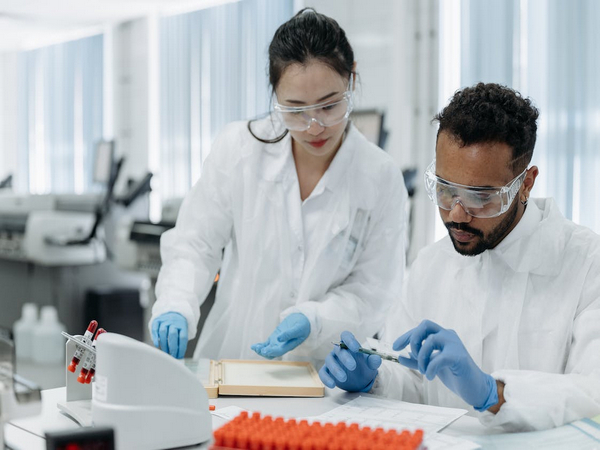
Representative Image

Chicago [US], July 29 (ANI): Crohn's disease-like ileitis, a condition marked by chronic intestinal inflammation and progressive tissue damage, researchers from Ann & Robert H Lurie Children's Hospital of Chicago discovered that direct injection of neonatal mesenchymal stem cells, derived from heart tissue removed during surgery, reduces intestinal inflammation and promotes wound healing in a mouse model. 
The research, which was written up in the journal Advanced Therapeutics, presents a promising new and different method to treating Crohn's disease that avoids the drawbacks of existing drugs for the condition, such as their waning efficacy, harsh side effects, and elevated risk of gastrointestinal dysfunction.
“Neonatal cardiac-derived mesenchymal stem cells have been used  in a clinical trial to repair an injured heart, but this is the first time these potent cells have been studied in an inflammatory intestinal disease model,” said senior author Arun Sharma, PhD, from Stanley Manne Children’s Research Institute at Lurie Children’s who is the Director of Pediatric Urological Regenerative Medicine and Surgical Research, and Research Associate Professor of Urology and Biomedical Engineering at Northwestern University Feinberg School of Medicine and the McCormick School of Engineering, Northwestern University.
“Our results are encouraging and definitely provide a new platform to potentially treat aspects of chronic inflammatory bowel diseases.”  
Dr Sharma notes that his team needs to get beyond a challenge with how the stem cells are delivered before it would be practical to utilise them therapeutically to treat Crohn's disease.
The stem cells were directly injected into the inflammatory lesions in the small intestine in the current animal model investigation, which necessitates surgical procedures. The next stage is to create a secure method for injecting them into the body via a vein, much like drawing blood from a patient's arm. Before moving further with clinical trials, more animal investigations on this unique therapeutic strategy will be required.
“Ultimately our goal is to utilize this cell type as treatment, but also as a preventive measure, before signs and symptoms of Crohn’s disease develop,” said Dr. Sharma. “We also might be able to apply this approach to other inflammatory diseases. The potential is enormous, and we are excited to move forward.” (ANI)


Get the App

What to Read Next

Science

Amphibians bounce-back from Earth’s greatest mass extinction

Amphibians bounce-back from Earth’s greatest mass extinction

Researchers at the University of Bristol discovered that ancient frog ancestors survived the biggest mass extinction of species by eating on freshwater prey that evaded terrestrial predators.

Read More
Science

New insights into how cancer evades the immune system: Study

New insights into how cancer evades the immune system: Study

Immunotherapy research primarily focuses on better recognition of cancer cells by the body's own immune system. Researchers at Amsterdam UMC and Moffitt Cancer Center have taken a different approach.

Read More
Science

Scientists use AI to better understand nanoparticles: Study

Scientists use AI to better understand nanoparticles: Study

A group of scientists has created a way to illuminate the dynamic behavior of nanoparticles, which are essential components in the production of pharmaceuticals, electronics, and industrial and energy-conversion materials.

Read More
Science

New device could allow you to taste cake in virtual reality

New device could allow you to taste cake in virtual reality

The 'e-Taste' interface employs sensors and wireless chemical dispensers to enable remote taste perception, often known as gestation. Field testing done by researchers at The Ohio State University confirmed the device's ability to digitally simulate a range of taste intensities, while still offering variety and safety for the user.

Read More
Science

Strand Life Sciences launches portal for rare disease diagnosis

Strand Life Sciences launches portal for rare disease diagnosis

Marking Rare Disease Day, Strand Life Sciences, a subsidiary of Reliance Industries and a leading genomics research company, has launched the StrandOmics Portal, an innovative digital platform designed to assist doctors in diagnosing rare diseases more efficiently.

Read More
Home About Us Our Products Advertise Contact Us Terms & Condition Privacy Policy

Copyright © aninews.in | All Rights Reserved.


