

ADD ANI AS A TRUSTED SOURCE
googleads
ANI Logo
Menu
Science

Study suggests disease-causing proteins that leads to chronic metabolic diseases

Many new proteins have been found to potentially play a role in the development of prevalent, chronic metabolic illnesses like type 2 diabetes, opening up new therapeutic avenues.

ANI Feb 27, 2023 15:23 IST googleads

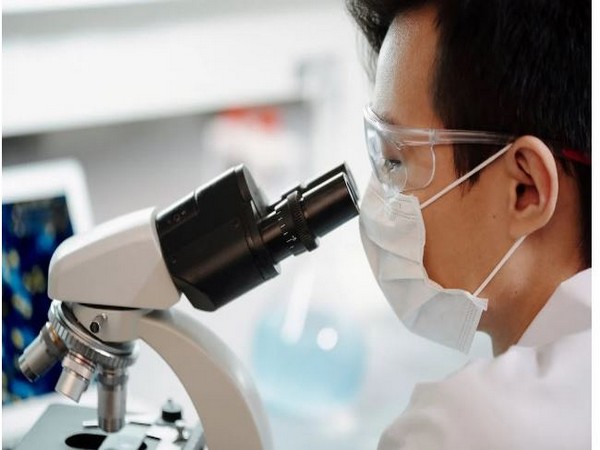
Representative Image

London [UK], February 27 (ANI): Many new proteins have been found to potentially play a role in the development of prevalent, chronic metabolic illnesses like type 2 diabetes, opening up new therapeutic avenues.
The study, published in Nature Metabolism, was led by an international research team from the Medical Research Council (MRC) Epidemiology Unit, University of Cambridge, the Precision Healthcare University Research Institute (PHURI) at Queen Mary University of London, and the Berlin Institute of Health at Charite (BIH) at Universitatsmedizin Berlin in Germany.
The researchers successfully linked more than 900 regions in the human genome to almost 3000 proteins in our blood, with many of these not previously identified. The team then applied these findings to existing genetic studies for hundreds of diseases and found more than 500 gene-protein-disease links.
For example, the team showed for the first time that people with high levels of a hormone called GRP are less likely to develop type 2 diabetes, most likely because it decreases the chances of becoming overweight. This 'proteogenomic' evidence supports GRP as a potential target for the prevention and/or treatment of diabetes.
The study has led to a greater scientific understanding of hundreds of genome regions, which open the door to more targeted and ultimately successful treatment options in the future as proteins are essential functional units of the human body and the most common target of drugs that exist today.
Senior author Professor Claudia Langenberg, director of the Precision Healthcare University Research Institute (PHURI) at Queen Mary University of London and MRC Investigator and program lead at the MRC Epidemiology Unit at the time of the study, said: "Thousands of regions in our genome have been identified to increase our risk for developing different diseases, but for most of them we have a poor understanding of why this is.
"By measuring and integrating information on thousands of proteins in human plasma, we were able to create robust links between the genes that encode these proteins to many different diseases and demystify about 200 regions. This really narrows down the potential therapeutic targets at each genomic region, often a bottleneck for translation of genomic discoveries."
Senior author Professor Maik Pietzner, Professor at the PHURI and group leader at the Berlin Institute of Health at Charite (BIH), said "In an additional promising example, we identified a protein, called DKKL1, to be involved in multiple sclerosis that reinforces the depletion of certain immune cells - B-cells - as intervention.
"These early-stage results are exciting and show the potential of such technologies for drug discovery, not just for metabolic diseases."
Mine Koprulu lead author of the study, Gates scholar and PhD student at the MRC Epidemiology Unit, said: "The biological mechanisms underlying diseases are not always very well understood. To address this issue, we systematically linked genetic variation, blood protein levels and disease risks in this study to be able to differentiate proteins which are likely to cause a disease, for example diabetes, from those which may only be a result of diseases. Identifying causal proteins is important because only interventions on causal proteins will lead to safe and effective treatments. We are hugely grateful to the EPIC Norfolk volunteers and team who made this research possible." (ANI)


Get the App

What to Read Next

Science

Amphibians bounce-back from Earth’s greatest mass extinction

Amphibians bounce-back from Earth’s greatest mass extinction

Researchers at the University of Bristol discovered that ancient frog ancestors survived the biggest mass extinction of species by eating on freshwater prey that evaded terrestrial predators.

Read More
Science

New insights into how cancer evades the immune system: Study

New insights into how cancer evades the immune system: Study

Immunotherapy research primarily focuses on better recognition of cancer cells by the body's own immune system. Researchers at Amsterdam UMC and Moffitt Cancer Center have taken a different approach.

Read More
Science

Scientists use AI to better understand nanoparticles: Study

Scientists use AI to better understand nanoparticles: Study

A group of scientists has created a way to illuminate the dynamic behavior of nanoparticles, which are essential components in the production of pharmaceuticals, electronics, and industrial and energy-conversion materials.

Read More
Science

New device could allow you to taste cake in virtual reality

New device could allow you to taste cake in virtual reality

The 'e-Taste' interface employs sensors and wireless chemical dispensers to enable remote taste perception, often known as gestation. Field testing done by researchers at The Ohio State University confirmed the device's ability to digitally simulate a range of taste intensities, while still offering variety and safety for the user.

Read More
Science

Strand Life Sciences launches portal for rare disease diagnosis

Strand Life Sciences launches portal for rare disease diagnosis

Marking Rare Disease Day, Strand Life Sciences, a subsidiary of Reliance Industries and a leading genomics research company, has launched the StrandOmics Portal, an innovative digital platform designed to assist doctors in diagnosing rare diseases more efficiently.

Read More
Science

Study reveals impact of animals as architects of Earth

Study reveals impact of animals as architects of Earth

A new study led by Professor Gemma Harvey from Queen Mary University of London has revealed how hundreds of species shape the landscapes we depend on, from termite mounds visible from space to beavers creating wetlands and hippos carving drainage systems.

Read More
Science

Opposing arrows of time emerge from certain quantum systems

Opposing arrows of time emerge from certain quantum systems

Researchers at the University of Surrey made a thought-provoking discovery. A new study reveals that opposing arrows of time can theoretically emerge from certain quantum systems.

Read More
Science

'Creation of black holes without singularities through gravity'

'Creation of black holes without singularities through gravity'

Traditional black holes, as predicted by Albert Einstein's theory of General Relativity, contain what are known as singularities, i.e. points where the laws of physics break down. Identifying how singularities are resolved in the context of quantum gravity is one of the fundamental problems in theoretical physics. Now, a team of experts has described the creation of regular black holes from gravitational effects without the need for the existence of exotic matter required by some previous models.

Read More
Science

New technology enhances gravitational-wave detection: Study

New technology enhances gravitational-wave detection: Study

A team of physicists led by Jonathan Richardson of the University of California, Riverside, demonstrated how new optical technology can extend the detection range of gravitational-wave observatories such as the Laser Interferometer Gravitational-Wave Observatory, or LIGO, and pave the way for future observatories.

Read More
Science

Discovering the genetics of climate adaptation 

Discovering the genetics of climate adaptation 

As climate change accelerates, plants are under increasing pressure to adapt to changing habitats and environmental conditions.

Read More
Home About Us Our Products Advertise Contact Us Terms & Condition Privacy Policy

Copyright © aninews.in | All Rights Reserved.


