

ADD ANI AS A TRUSTED SOURCE
googleads
ANI Logo
Menu
Science

Study shows young generations are severely threatened by climate change

Brussels [Belgium], September 27 (ANI): Researchers have found that today's children will be hit much harder by climate extremes than today's adults.

ANI Sep 27, 2021 14:34 IST googleads

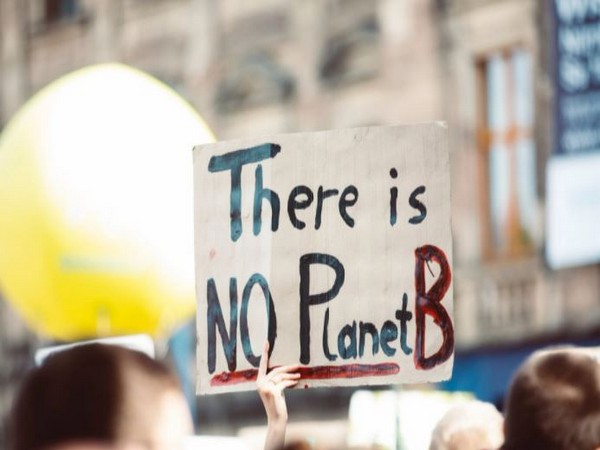
Representative image

Brussels [Belgium], September 27 (ANI): Researchers have found that today's children will be hit much harder by climate extremes than today's adults.
The findings of the study were published in the journal 'Science'.
During their lifetime, a child born in 2021 will experience on average twice as many wildfires, between two and three times more droughts, almost three times more river floods and crop failures, and seven times more heatwaves compared to a person who's for instance 60 years old today, the researchers found based on data from the Inter-sectoral Impact Model Intercomparison Project (ISIMIP).
This is under a scenario of current greenhouse gas emission reduction pledges by governments which will be a topic at the upcoming world climate summit COP26 in Glasgow.
"Our results highlight a severe threat to the safety of young generations and call for drastic emission reductions to safeguard their future," said lead-author Wim Thiery from Vrije Universiteit Brussel.
"We even have strong reasons to think that our calculations underestimate the actual increases that young people will face," added Thiery.
Regarding droughts, heatwaves, river floods and crop failures, people under the age of 40 today will live what the researchers call "an unprecedented life".
"The good news: we can indeed take much of the climate burden from our childrens' shoulders if we limit warming to 1.5 degrees Celsius by phasing out fossil fuel use," said Katja Frieler, who is coordinating ISIMIP, she's a leading scientist at the Potsdam Institute for Climate Impact Research and co-author of the study.
"If we increase climate protection from current emission reduction pledges and get in line with a 1.5-degree target, we will reduce young people's potential exposure to extreme events on average by 24 per cent globally," explained Frieler.
"For North America, it's minus 26 per cent, for Europe and Central Asia minus 28 per cent, and in the Middle East and North Africa even minus 39 per cent. This is a huge opportunity," added Frieler.
For instance, under a scenario of current insufficient climate policies, dangerous heatwaves that affect 15 per cent of the global land area today could increase to 46 per cent, hence triple by the end of the century.
Yet limiting warming to 1.5 degrees, which is the ambition of the Paris Climate Agreement signed by almost all countries worldwide, would reduce the affected land area to 22 per cent. This is more than today but significantly less than with unmitigated warming.
The analysis is the first of its kind. To assess age-dependent extreme event exposure, the researchers took a collection of multi-model climate impact projections from the ISIMIP project building on the work of dozens of research groups worldwide.
The researchers combined this with country-scale life-expectancy data, population data and temperature trajectories from the Intergovernmental Panel on Climate Change (IPCC). (ANI)


Get the App

What to Read Next

Science

New method guides magnetism without magnets

New method guides magnetism without magnets

Researchers at Paul Scherrer Institute PSI have demonstrated an innovative method to control magnetism in materials using an energy-efficient electric field.

Read More
Science

Amphibians bounce-back from Earth’s greatest mass extinction

Amphibians bounce-back from Earth’s greatest mass extinction

Researchers at the University of Bristol discovered that ancient frog ancestors survived the biggest mass extinction of species by eating on freshwater prey that evaded terrestrial predators.

Read More
Science

New insights into how cancer evades the immune system: Study

New insights into how cancer evades the immune system: Study

Immunotherapy research primarily focuses on better recognition of cancer cells by the body's own immune system. Researchers at Amsterdam UMC and Moffitt Cancer Center have taken a different approach.

Read More
Science

Scientists use AI to better understand nanoparticles: Study

Scientists use AI to better understand nanoparticles: Study

A group of scientists has created a way to illuminate the dynamic behavior of nanoparticles, which are essential components in the production of pharmaceuticals, electronics, and industrial and energy-conversion materials.

Read More
Science

New device could allow you to taste cake in virtual reality

New device could allow you to taste cake in virtual reality

The 'e-Taste' interface employs sensors and wireless chemical dispensers to enable remote taste perception, often known as gestation. Field testing done by researchers at The Ohio State University confirmed the device's ability to digitally simulate a range of taste intensities, while still offering variety and safety for the user.

Read More
Science

Study reveals impact of animals as architects of Earth

Study reveals impact of animals as architects of Earth

A new study led by Professor Gemma Harvey from Queen Mary University of London has revealed how hundreds of species shape the landscapes we depend on, from termite mounds visible from space to beavers creating wetlands and hippos carving drainage systems.

Read More
Science

Opposing arrows of time emerge from certain quantum systems

Opposing arrows of time emerge from certain quantum systems

Researchers at the University of Surrey made a thought-provoking discovery. A new study reveals that opposing arrows of time can theoretically emerge from certain quantum systems.

Read More
Science

COVID-19 severity may be predicted by White Blood Cell Count

COVID-19 severity may be predicted by White Blood Cell Count

A COVID-19 diagnosis is no longer as frightening as it used to be, thanks to developments in treatment choices. However, a new study reveals that leukocyte (white blood cell) count may now be used to identify who is more likely to develop more significant disease symptoms.

Read More
Science

Seals can essentially act as 'smart sensors': Study

Seals can essentially act as 'smart sensors': Study

A new study by marine biologists reports that seals can essentially act as 'smart sensors' for monitoring fish populations in the ocean's eerily dim 'twilight zone.'

Read More
Science

New technology enhances gravitational-wave detection: Study

New technology enhances gravitational-wave detection: Study

A team of physicists led by Jonathan Richardson of the University of California, Riverside, demonstrated how new optical technology can extend the detection range of gravitational-wave observatories such as the Laser Interferometer Gravitational-Wave Observatory, or LIGO, and pave the way for future observatories.

Read More


