

ADD ANI AS A TRUSTED SOURCE
googleads
ANI Logo
Menu
Science

Study shows walking fewer than 5,000 steps, lower risk of death

The research, released in the European Journal of Preventive Cardiology, found that walking 2337 steps a day cut the risk of dying from cardiovascular disease in half and that walking at least 3967 steps a day started to lower the risk of dying from any cause. In addition, the analysis indicates that as little as 4,000 steps a day are needed to significantly reduce deaths from any cause, and "even fewer to reduce deaths from cardiovascular disease.”

ANI Aug 09, 2023 22:23 IST googleads

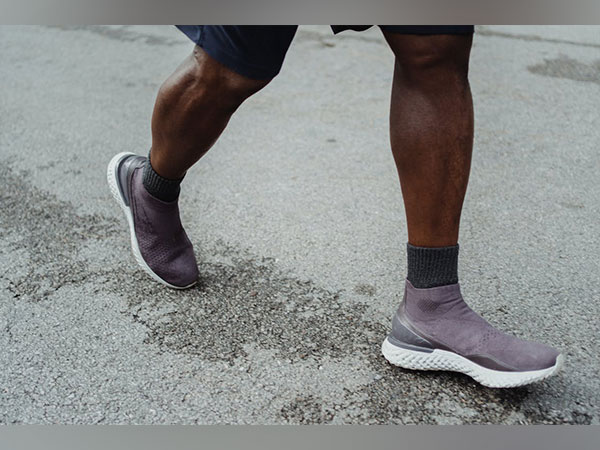
Representative Image

Washington [US], August 9 (ANI): A study suggests that one needs to walk fewer steps per day than previously believed to start experiencing health advantages.
The research, released in the European Journal of Preventive Cardiology, found that walking">walking 2337 steps a day cut the risk of dying from cardiovascular disease in half and that walking">walking at least 3967 steps a day started to lower the risk of dying from any cause.
However, a recent review of 226,889 participants from 17 different research conducted all over the world revealed that the health advantages increase with the amount of walking">walking. With every 500 to 1000 more steps you take, your chance of dying from any cause or from cardiovascular disease is dramatically reduced.
Researchers at the Medical University of Lodz in Poland and the Ciccarone Centre for the Prevention of Cardiovascular Disease at Johns Hopkins University School of Medicine, led by Maciej Banach, found that the health advantages increased even if people took as many as 20,000 steps each day. They haven't yet discovered an upper bound.
“Our study confirms that the more you walk, the better,” said Prof. Banach.
“We found that this applied to both men and women, irrespective of age, and irrespective of whether you live in a temperate, sub-tropical or sub-polar region of the world, or a region with a mixture of climates. In addition, our analysis indicates that as little as 4,000 steps a day are needed to significantly reduce deaths from any cause, and even fewer to reduce deaths from cardiovascular disease.”
Strong data suggests that living a sedentary lifestyle may raise the risk of cardiovascular disease and shorten lifespan. More than a quarter of the world's population suffers from inadequate physical exercise, according to studies.
There are more women than males, and individuals in wealthy nations engage in less physical exercise than those in developing nations. With 3.2 million deaths annually attributed to physical inactivity, the World Health Organisation lists inadequate physical activity as the fourth most common cause of mortality worldwide. Physical activity levels declined as a result of the COVID-19 epidemic and have not recovered two years later.
Dr Ibadete Bytyçi from the University Clinical Centre of Kosovo, Pristina, Kosovo, senior author of the paper, said, “Until now, it’s not been clear what is the optimal number of steps, both in terms of the cut-off points over which we can start to see health benefits, and the upper limit, if any, and the role this plays in people’s health. However, I should emphasise that there were limited data available on step counts up to 20,000 a day, and so these results need to be confirmed in larger groups of people.”
This meta-analysis is the first not only to assess the effect of walking">walking up to 20,000 steps a day, but also to look at whether there are any differences depending on age, sex or where in the world people live. 
In people aged 60 years or older, the size of the reduction in risk of death was smaller than that seen in people aged younger than 60 years. 
Prof. Banach said, “In a world where we have more and more advanced drugs to target specific conditions such as cardiovascular disease, I believe we should always emphasise that lifestyle changes, including diet and exercise, which was a main hero of our analysis, might be at least as, or even more effective in reducing cardiovascular risk and prolonging lives.
"We still need good studies to investigate whether these benefits may exist for intensive types of exertion, such as marathon running and iron man challenges, and in different populations of different ages, and with different associated health problems. However, it seems that, as with pharmacological treatments, we should always think about personalising lifestyle changes.” (ANI)


Get the App

What to Read Next

Science

Amphibians bounce-back from Earth’s greatest mass extinction

Amphibians bounce-back from Earth’s greatest mass extinction

Researchers at the University of Bristol discovered that ancient frog ancestors survived the biggest mass extinction of species by eating on freshwater prey that evaded terrestrial predators.

Read More
Science

New insights into how cancer evades the immune system: Study

New insights into how cancer evades the immune system: Study

Immunotherapy research primarily focuses on better recognition of cancer cells by the body's own immune system. Researchers at Amsterdam UMC and Moffitt Cancer Center have taken a different approach.

Read More
Science

Scientists use AI to better understand nanoparticles: Study

Scientists use AI to better understand nanoparticles: Study

A group of scientists has created a way to illuminate the dynamic behavior of nanoparticles, which are essential components in the production of pharmaceuticals, electronics, and industrial and energy-conversion materials.

Read More
Science

New device could allow you to taste cake in virtual reality

New device could allow you to taste cake in virtual reality

The 'e-Taste' interface employs sensors and wireless chemical dispensers to enable remote taste perception, often known as gestation. Field testing done by researchers at The Ohio State University confirmed the device's ability to digitally simulate a range of taste intensities, while still offering variety and safety for the user.

Read More
Science

Strand Life Sciences launches portal for rare disease diagnosis

Strand Life Sciences launches portal for rare disease diagnosis

Marking Rare Disease Day, Strand Life Sciences, a subsidiary of Reliance Industries and a leading genomics research company, has launched the StrandOmics Portal, an innovative digital platform designed to assist doctors in diagnosing rare diseases more efficiently.

Read More
Science

Study reveals impact of animals as architects of Earth

Study reveals impact of animals as architects of Earth

A new study led by Professor Gemma Harvey from Queen Mary University of London has revealed how hundreds of species shape the landscapes we depend on, from termite mounds visible from space to beavers creating wetlands and hippos carving drainage systems.

Read More
Science

Opposing arrows of time emerge from certain quantum systems

Opposing arrows of time emerge from certain quantum systems

Researchers at the University of Surrey made a thought-provoking discovery. A new study reveals that opposing arrows of time can theoretically emerge from certain quantum systems.

Read More
Science

'Creation of black holes without singularities through gravity'

'Creation of black holes without singularities through gravity'

Traditional black holes, as predicted by Albert Einstein's theory of General Relativity, contain what are known as singularities, i.e. points where the laws of physics break down. Identifying how singularities are resolved in the context of quantum gravity is one of the fundamental problems in theoretical physics. Now, a team of experts has described the creation of regular black holes from gravitational effects without the need for the existence of exotic matter required by some previous models.

Read More
Science

New technology enhances gravitational-wave detection: Study

New technology enhances gravitational-wave detection: Study

A team of physicists led by Jonathan Richardson of the University of California, Riverside, demonstrated how new optical technology can extend the detection range of gravitational-wave observatories such as the Laser Interferometer Gravitational-Wave Observatory, or LIGO, and pave the way for future observatories.

Read More
Science

Discovering the genetics of climate adaptation 

Discovering the genetics of climate adaptation 

As climate change accelerates, plants are under increasing pressure to adapt to changing habitats and environmental conditions.

Read More
Home About Us Our Products Advertise Contact Us Terms & Condition Privacy Policy

Copyright © aninews.in | All Rights Reserved.


