

ADD ANI AS A TRUSTED SOURCE
googleads
ANI Logo
Menu
Science

Study sheds light on world in grains of interstellar dust

A recent study by Hokkaido University explains how dust grains form in interstellar gas and could offer significant insights to astronomers and help materials scientists develop valuable nanoparticles.

ANI Jan 17, 2023 12:08 IST googleads

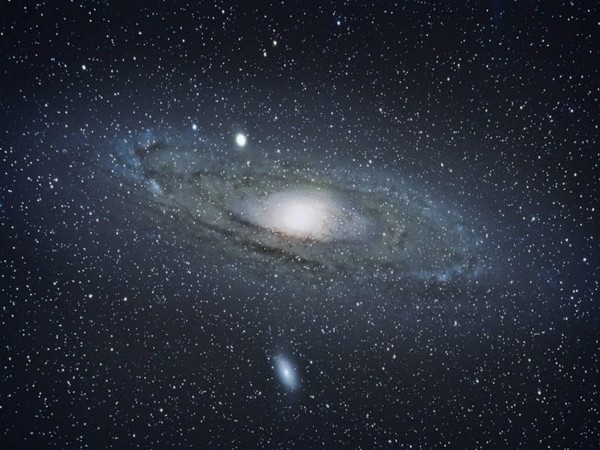
Representative Image

Washington [US], January 17 (ANI): A recent study by Hokkaido University explains how dust grains form in interstellar gas and could offer significant insights to astronomers and help materials scientists develop valuable nanoparticles.
Laboratory and rocket-borne studies have revealed new insights into how interstellar dust grains came into being before our solar system formed. The results, published by Hokkaido University researchers and colleagues in Japan and Germany in the journal Science Advances, might also help scientists make nanoparticles with useful applications in more efficient and eco-friendly ways.
These 'presolar' grains can be found in meteorites that fall to Earth, allowing laboratory studies that reveal possible routes for their formation.
"Just as the shapes of snowflakes provide information on the temperature and humidity of the upper atmosphere, the characteristics of presolar grains in meteorites limits the environments in the outflow of gas from stars in which they could have formed," explains Yuki Kimura of the Hokkaido team. Unfortunately, however, it has proved difficult to pin down the possible environments for the formation of grains consisting of a titanium carbide core and a surrounding graphitic carbon mantle.
Better understanding of the environment around stars in which the grains could have formed is crucial to learning more about the interstellar environment in general. That could, in turn, help clarify how stars evolve and how the materials around them become the building blocks for planets.
The structure of the grains appears to suggest that their titanium carbide core first formed and was then subsequently coated in a thick layer of carbon in more distant regions of gas outflow from stars that formed before the Sun.
The team explored the conditions that might recreate the grain formation in laboratory modelling studies guided by theoretical work on grain nucleation -- the formation of grains from tiny original specks. This work was augmented by experiments performed in the periods of microgravity experienced aboard sub-orbital rocket flights.
The results offered some surprises. They suggest the grains most likely formed in what the researchers call a non-classical nucleation pathway: a series of three distinct steps not predicted by conventional theories. First, carbon forms tiny, homogenous nuclei; titanium then deposits on these carbon nuclei to form carbon particles containing titanium carbide; finally, thousands of these fine particles fuse to form the grain.
"We also suggest that the characteristics of other types of presolar and solar grains that formed at later stages in the development of the solar system might be accurately explained by considering non-classical nucleation pathways, such as those suggested by our work," Kimura concludes.
The research could aid understanding of distant astronomical events, including giant stars, newly forming planetary systems, and the atmospheres of planets in alien solar systems around other stars. But it might also help scientists here on Earth to gain better control over the nanoparticles they are exploring for use in many fields, including solar energy, chemical catalysis, sensors and nanomedicine. The potential implications of studying the tiny grains in meteorites therefore range from the future industries of Earth to as far away as we can imagine. (ANI)


Get the App

What to Read Next

Science

New method guides magnetism without magnets

New method guides magnetism without magnets

Researchers at Paul Scherrer Institute PSI have demonstrated an innovative method to control magnetism in materials using an energy-efficient electric field.

Read More
Science

New insights into how cancer evades the immune system: Study

New insights into how cancer evades the immune system: Study

Immunotherapy research primarily focuses on better recognition of cancer cells by the body's own immune system. Researchers at Amsterdam UMC and Moffitt Cancer Center have taken a different approach.

Read More
Science

Scientists use AI to better understand nanoparticles: Study

Scientists use AI to better understand nanoparticles: Study

A group of scientists has created a way to illuminate the dynamic behavior of nanoparticles, which are essential components in the production of pharmaceuticals, electronics, and industrial and energy-conversion materials.

Read More
Science

Study reveals impact of animals as architects of Earth

Study reveals impact of animals as architects of Earth

A new study led by Professor Gemma Harvey from Queen Mary University of London has revealed how hundreds of species shape the landscapes we depend on, from termite mounds visible from space to beavers creating wetlands and hippos carving drainage systems.

Read More
Science

Shubhanshu Shukla: IAF officer becomes first Indian astronaut for

Shubhanshu Shukla: IAF officer becomes first Indian astronaut for

Shubhanshu Shukla, Indian Air Force (IAF) officer and one of four astronauts for Indian Space Research Organisation's (ISRO) Gaganyaan mission, has been sele Shubhanshu Shukla, Indian Air Force (IAF) officer and one of four astronauts for Indian Space Research Organisation's (ISRO) Gaganyaan mission, has been selected as the pilot for Axiom Mission 4, scheduled for Spring 2025.cted as the pilot for Axiom Mission 4, scheduled for Spring 2025.

Read More
Science

Astronomers find the smallest main-belt asteroids ever detected:

Astronomers find the smallest main-belt asteroids ever detected:

The majority of known asteroids orbit inside the main asteroid belt, which is positioned between Mars and Jupiter at an average distance of around 250 million km from Earth. Since the discovery of the first asteroid in 1801, about 750.000 asteroids have been identified, primarily in the last decade thanks to several optical surveys that examine the sky on clear nights.

Read More
Science

Bacterial vaccine demonstrates potential as cancer treatment

Bacterial vaccine demonstrates potential as cancer treatment

Columbia researchers developed probiotic bacteria that train the immune system to eliminate cancer cells, paving the way for a new class of cancer vaccinations that take advantage of bacteria's innate tumour-targeting abilities. These microbial cancer vaccines can be tailored to each person's specific original tumour and metastases, perhaps preventing future recurrences.

Read More
Science

Cancer cells may be using lipids to hide from immune system

Cancer cells may be using lipids to hide from immune system

Cancer cells rarely begin stealthily. Quite the contrary, they alert the immune system to their presence by displaying chemical red flags on their membranes. When detected, the body's defences can swoop in and destroy renegade cells before they can do significant damage. Lipids, fatty molecules traditionally thought to be largely a fuel supply for developing tumours, are at the heart of this early detection system.

Read More
Science

Study finds how cancer develops when immune system fails

 Study finds how cancer develops when immune system fails

It has been suggested that the immune system is unable to eradicate invasive tumour cells by referring to cancer as "a wound that does not heal."

Read More
Science

Rare diseases highlight connections between metabolism, immunity

Rare diseases highlight connections between metabolism, immunity

A new study suggested that inherited immune and metabolism disorders are more similar than previously believed. The results provide fresh information that may help patients with these illnesses receive better care by highlighting a novel collection of metabolic genes that are critical for immune system T cell activity.

Read More
Home About Us Our Products Advertise Contact Us Terms & Condition Privacy Policy

Copyright © aninews.in | All Rights Reserved.


