

ADD ANI AS A TRUSTED SOURCE
googleads
ANI Logo
Menu
Science

Study sheds light on treatments to prevent cancer, infectious diseases

Researchers have figured out how one particular sort of immune cell, which defends the body against disease and infection, originates in the body. Additionally, a recent study suggests that the discovery may aid in the creation of other preventative medicines.

ANI Jul 16, 2023 23:23 IST googleads

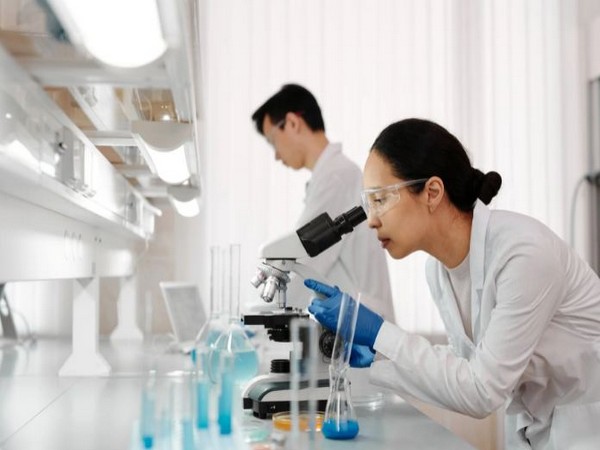
Representative Image

Parkville [Australia], July 16 (ANI): Researchers have figured out how one particular sort of immune cell, which defends the body against disease and infection, originates in the body. Additionally, a recent study suggests that the discovery may aid in the creation of other preventative medicines.
The study, which was co-led by Federation University Australia and the Murdoch Children's Research Institute, has revealed how these specialized white blood cells function and can trigger an immunological response.
Understanding the role of these cells, according to associate professor Dan Pellicci, could enable the prevention of cancer and other highly contagious diseases as COVID-19, Strep A, and tuberculosis.
The study, which was published in Science Immunology, included samples from heart surgery patients up to the age of 16 that were given to the Melbourne Children's Heart Tissue Bank. The 'gamma delta T cells' were examined by the researchers from these samples in the context of the thymus gland, a tiny organ situated within the chest, close to the heart.
Associate Professor Pellicci said the study showed for the first time how this organ produced these infection-fighting immune cells.
 “We have large numbers of these specialised cells in our blood and tissues, which accumulate as we become adults. Until our study, it was unclear how these cells develop in the body,” he said.
“We have shown how these cells are trained over three stages, similar to receiving a primary, secondary and tertiary education, and fully formulate within the thymus. Following this education, the cells are ready to enter the rest of the body and are completely capable of fighting infections.”
Associate Professor Pellicci said previous studies suggested that these immune cells were mainly derived in the liver during a baby’s development in the womb, but this research debunked that theory.
“Many experts assumed that after birth, the thymus played little role in the development of these cells as we age, but we now know this little unsung organ helps the body prepare for a lifetime of good health,” he said.
“The more we know about these cells the greater the likelihood of unlocking new ways to treat infectious diseases and cancer.” (ANI)


Get the App

What to Read Next

Science

Amphibians bounce-back from Earth’s greatest mass extinction

Amphibians bounce-back from Earth’s greatest mass extinction

Researchers at the University of Bristol discovered that ancient frog ancestors survived the biggest mass extinction of species by eating on freshwater prey that evaded terrestrial predators.

Read More
Science

New insights into how cancer evades the immune system: Study

New insights into how cancer evades the immune system: Study

Immunotherapy research primarily focuses on better recognition of cancer cells by the body's own immune system. Researchers at Amsterdam UMC and Moffitt Cancer Center have taken a different approach.

Read More
Science

Strand Life Sciences launches portal for rare disease diagnosis

Strand Life Sciences launches portal for rare disease diagnosis

Marking Rare Disease Day, Strand Life Sciences, a subsidiary of Reliance Industries and a leading genomics research company, has launched the StrandOmics Portal, an innovative digital platform designed to assist doctors in diagnosing rare diseases more efficiently.

Read More
Science

Study reveals impact of animals as architects of Earth

Study reveals impact of animals as architects of Earth

A new study led by Professor Gemma Harvey from Queen Mary University of London has revealed how hundreds of species shape the landscapes we depend on, from termite mounds visible from space to beavers creating wetlands and hippos carving drainage systems.

Read More
Science

COVID-19 severity may be predicted by White Blood Cell Count

COVID-19 severity may be predicted by White Blood Cell Count

A COVID-19 diagnosis is no longer as frightening as it used to be, thanks to developments in treatment choices. However, a new study reveals that leukocyte (white blood cell) count may now be used to identify who is more likely to develop more significant disease symptoms.

Read More
Science

Discovery of unexpected collagen structure to influence research

Discovery of unexpected collagen structure to influence research

Collagen, the body's most abundant protein, has long been considered a predictable structural component of tissues.

Read More
Science

Shubhanshu Shukla: IAF officer becomes first Indian astronaut for

Shubhanshu Shukla: IAF officer becomes first Indian astronaut for

Shubhanshu Shukla, Indian Air Force (IAF) officer and one of four astronauts for Indian Space Research Organisation's (ISRO) Gaganyaan mission, has been sele Shubhanshu Shukla, Indian Air Force (IAF) officer and one of four astronauts for Indian Space Research Organisation's (ISRO) Gaganyaan mission, has been selected as the pilot for Axiom Mission 4, scheduled for Spring 2025.cted as the pilot for Axiom Mission 4, scheduled for Spring 2025.

Read More
Science

Microbes help detoxify our atmosphere, says study 

Microbes help detoxify our atmosphere, says study 

Melbourne researchers have uncovered important new information on how microbes absorb huge amounts of carbon monoxide (CO) and assist in reducing levels of this deadly gas.

Read More
Science

Weather change linked to heightened risk of Salmonella outbreaks

Weather change linked to heightened risk of Salmonella outbreaks

According to new research from the University of Surrey, climate change has an impact on Salmonella spread. This study builds on prior work by the researchers, which discovered that weather change is contributing to the spread of deadly diarrhoeal illnesses.

Read More
Science

Astronomers find the smallest main-belt asteroids ever detected:

Astronomers find the smallest main-belt asteroids ever detected:

The majority of known asteroids orbit inside the main asteroid belt, which is positioned between Mars and Jupiter at an average distance of around 250 million km from Earth. Since the discovery of the first asteroid in 1801, about 750.000 asteroids have been identified, primarily in the last decade thanks to several optical surveys that examine the sky on clear nights.

Read More
Home About Us Our Products Advertise Contact Us Terms & Condition Privacy Policy

Copyright © aninews.in | All Rights Reserved.
