 हिंदी खबर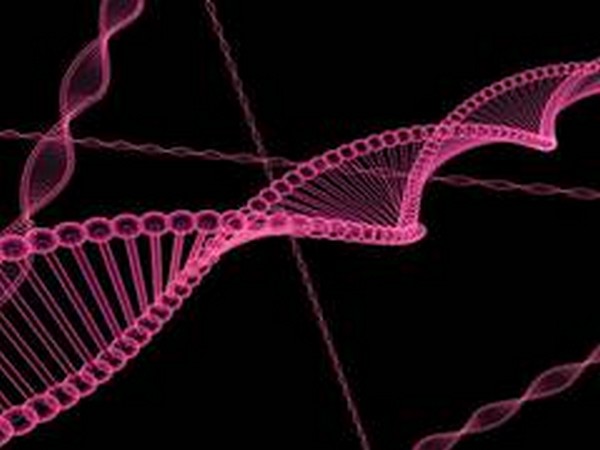

Washington [US], February 13 (ANI): A new study suggested that the distinctions in the expression of gene transcripts that construct the cells of the human body might prove helpful in understanding how mental issues with shared hereditary danger factors bring about various examples of onset, symptoms, side effects, course of ailment, and treatment reactions.
Findings from the study, conducted by researchers at the National Institute of Mental Health (NIMH), part of the National Institutes of Health, appeared in the journal Neuropsychopharmacology.
"Major mental disorders, such as schizophrenia, bipolar disorder, and major depressive disorder, share common genetic roots, but each disorder presents differently in each individual," said Francis J. McMahon, M.D., a senior author of the study and chief of the Human Genetics Branch, part of the Intramural Research Program NIMH. "We wanted to investigate why disorders present differently, despite this seeming genetic similarity."
McMahon and colleagues suspected that the brain's transcriptome may hold some clues. The human genome is made up of DNA that contains instructions for helping maintain and build our cells. These instructions must be read and then copied into so-called "transcripts" for them to be carried out. Importantly, many different transcripts can be copied from a single gene, yielding a variety of proteins and other outputs. The transcriptome is the full set of transcripts found within the body.
The researchers used post-mortem tissue samples to examine the brain transcriptomes of 200 people who had been diagnosed with either schizophrenia, bipolar disorder, major depressive disorder, or who did not have a known mental illness. The researchers examined both genes and transcripts expressed in the subgenual anterior cingulate cortex, a brain site involved in mood disorders, reward, impulse control, and emotion regulation. The brain tissue samples came from the NIMH Human Brain Collection Core, curated by NIMH's Barbara Lipska, Ph.D., co-senior author of the paper.
To increase the odds of detecting rare transcripts, the researchers sequenced the transcripts at a resolution about four times greater than that used in previous studies. This technique identified 1.5 times more transcripts than earlier studies using the same method at a lower resolution, confirming that this sequencing method picks up many transcripts that otherwise would have been missed.
The researchers found only modest differences in gene expression between individuals with a mental disorder and individuals without a mental disorder. However, when they focused on the transcripts, they found two to three times as many differences between individuals in the two groups.
The most noticeable differences emerged when the researchers compared transcripts between two groups of individuals with a mental disorder -- e.g., bipolar disorder versus schizophrenia, depression versus schizophrenia, or depression versus bipolar disorder.
"When we compared disorders in our transcript-level analyses, that is when we saw the stark differences," said Dr. McMahon. "Most transcripts that were expressed differently -- produced in higher versus lower levels -- turned out to be expressed in opposite directions in people with different disorders. Some transcripts were expressed in the same direction in individuals with mood disorders and the opposite direction in individuals with schizophrenia."
For example, distinct transcripts in the gene, SMARCA2, a known risk gene for autism spectrum disorder that regulates the expression of many other genes important in neuronal development, were expressed differently in brain samples from people with schizophrenia than in samples from people with bipolar disorder.
Parts of a gene's instructions may be kept in or left out during the transcription process. The researchers found that a common genetic variant that regulates this inclusion and exclusion, called splicing quantitative trait loci (sQTLs), may play a notable role in the inherited risk for each disorder.
"We found that subtle differences in gene expression across different disorders reflect more pronounced and diagnosis-specific changes at the level of transcripts," said McMahon. "A cell can express many different transcripts from the same gene, resulting in different proteins -- and potentially different illness processes."
More research is needed to better understand the functions of different transcripts, the timing of alternative splicing, and the transcriptomic differences in specific brain regions and cell types. However, the current study sheds light on the importance of understanding transcript-level differences to get a full picture of why mental disorders vary in onset, progression, and symptoms. (ANI)




