

ADD ANI AS A TRUSTED SOURCE
googleads
ANI Logo
Menu
Science

Study sheds light on how blood stem cells maintain their lifelong potential for self-renewal

Washington [US], January 27 (ANI): A team of scientists has discovered that cells in the so-called "stem cell niche" are responsible for the lifelong self-renewal capacity.

ANI Jan 27, 2021 17:47 IST googleads

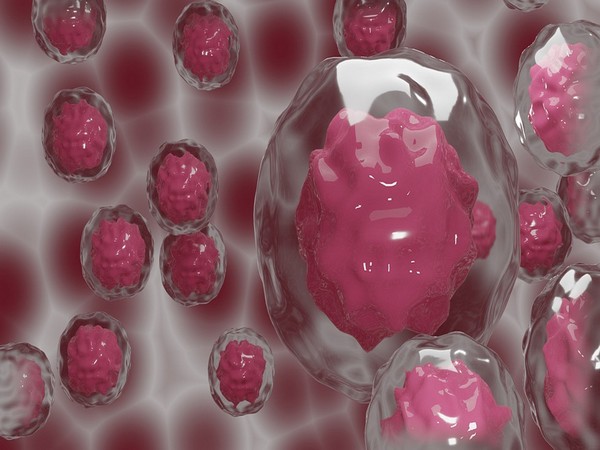
Representative image

Washington [US], January 27 (ANI): A team of scientists has discovered that cells in the so-called "stem cell niche" are responsible for the lifelong self-renewal capacity.
The study on mice stem cells suggested that the blood vessel cells of the niche produce a factor that stimulates blood stem cells and thus maintains their self-renewal capacity. However, during aging, the production of this factor ceases and blood stem cells begin to age.
The study led by scientists at the German Cancer Research Center (DKFZ) and the Heidelberg Institute for Stem Cell Technology and Experimental Medicine* (HI-STEM) was published in the journal Nature Communications.
Throughout life, blood stem cells in the bone marrow ensure that our body is adequately supplied with mature blood cells. If there is no current need for cell replenishment, the blood stem cells remain in a deep sleep to protect themselves from damage to the genome, which can lead to cancer.
Blood loss, infections, and inflammations act like an alarm clock: immediately, the blood stem cells begin to divide and produce new cells - for example, to provide immune cells to fight viruses or to compensate for a loss of red blood cells or platelets. With each cell division, the stem cells always regenerate themselves as well, so that the stem cell pool is maintained. This is what scientists call self-renewal.
"The dormancy is the prerequisite for this unique ability of stem cells," explained Andreas Trumpp, a stem cell expert at DKFZ and HI-STEM.
"The almost unlimited self-renewal capacity is considered a key property of the very rare stem cells, which play a central role in the maintenance and repair of tissues and organs. However, cancer cells also possess this ability. They either derive directly from stem cells or acquire this ability through genetic modification. Without self-renewal, there is no cancer," Trumpp summed it up.
A team of researchers led by Andreas Trumpp now wanted to find out which molecular signals control the self-renewal ability. In their current analyses, they discovered in mice that dormant blood stem cells carry large amounts of the receptor protein neogenin-1 (Neo-1) on their surface.
In contrast, other blood cells do not produce this receptor. Further investigations revealed Neo-1 to be a key molecule for self-renewal: if the researchers genetically switched off the receptor in mice, the stem cells no longer slept, thus losing their ability to self-renew, and the animals' hematopoietic system exhausted prematurely.
Neo-1 is a receptor that enables the stem cell to receive external signals. But where do these important signals, which are essential for the self-renewal ability, come from? The researchers identified the signal molecule netrin-1 as the binding partner and activator of the Neo-1 receptor. Netrin-1 is produced by the endothelial cells that line the fine blood vessels in the bone marrow.
"We genetically knocked out netrin-1 in the stem cell niche of mouse bone marrow. The blood stem cells then lost the ability to self-renew. In contrast, when netrin-1 production was experimentally increased, they slept all the more deeply," said Simon Renders, first author of the study.
Scientists refer to the structures in the immediate vicinity of stem cells as a stem cell niche. The niche can consist of cellular and non-cellular components and exerts a major influence on the functions and fate of blood stem cells. Netrin-1-bearing cells of blood capillaries are also part of the niche.
"Our results reconfirm the central role of the stem cell niche for stem cell function and thus for the regenerative capacity and health of our body," Trumpp explained.
The age-related depletion of the hematopoietic system could also be traced in the animals: With age, the bone marrow changes its structure, and the tiny blood vessels degenerate. Using older mice, the scientists were able to show that this is accompanied by a loss of netrin-1.
The blood stem cells initially try to compensate for this lack of their important signal generator by increasing the formation of Neo-1. However, with increasing age, this compensation is no longer sufficient, and the hematopoietic system increasingly loses its self-renewal capacity. The result of these changes is an increasingly weaker immune system in old age. (ANI)


Get the App

What to Read Next

Science

Amphibians bounce-back from Earth’s greatest mass extinction

Amphibians bounce-back from Earth’s greatest mass extinction

Researchers at the University of Bristol discovered that ancient frog ancestors survived the biggest mass extinction of species by eating on freshwater prey that evaded terrestrial predators.

Read More
Science

New insights into how cancer evades the immune system: Study

New insights into how cancer evades the immune system: Study

Immunotherapy research primarily focuses on better recognition of cancer cells by the body's own immune system. Researchers at Amsterdam UMC and Moffitt Cancer Center have taken a different approach.

Read More
Science

Scientists use AI to better understand nanoparticles: Study

Scientists use AI to better understand nanoparticles: Study

A group of scientists has created a way to illuminate the dynamic behavior of nanoparticles, which are essential components in the production of pharmaceuticals, electronics, and industrial and energy-conversion materials.

Read More
Science

COVID-19 severity may be predicted by White Blood Cell Count

COVID-19 severity may be predicted by White Blood Cell Count

A COVID-19 diagnosis is no longer as frightening as it used to be, thanks to developments in treatment choices. However, a new study reveals that leukocyte (white blood cell) count may now be used to identify who is more likely to develop more significant disease symptoms.

Read More
Science

New technology enhances gravitational-wave detection: Study

New technology enhances gravitational-wave detection: Study

A team of physicists led by Jonathan Richardson of the University of California, Riverside, demonstrated how new optical technology can extend the detection range of gravitational-wave observatories such as the Laser Interferometer Gravitational-Wave Observatory, or LIGO, and pave the way for future observatories.

Read More
Science

Astronomers find the smallest main-belt asteroids ever detected:

Astronomers find the smallest main-belt asteroids ever detected:

The majority of known asteroids orbit inside the main asteroid belt, which is positioned between Mars and Jupiter at an average distance of around 250 million km from Earth. Since the discovery of the first asteroid in 1801, about 750.000 asteroids have been identified, primarily in the last decade thanks to several optical surveys that examine the sky on clear nights.

Read More
Science

Study finds connection between quantum theory, information theory

Study finds connection between quantum theory, information theory

"Our results have no clear or direct application right now. It's basic research that lays the foundation for future technologies in quantum information and quantum computers. There's enormous potential for complete discoveries in many different research fields," said Guilherme B Xavier, a researcher in quantum communication at Linkoping University, Sweden.

Read More
Science

Tool for detecting problems during protein synthesis

Tool for detecting problems during protein synthesis

Protein synthesis in eukaryotic cells--found in plants, animals, and fungi--involves more than just the straightforward ribosome assembly of amino acids.

Read More
Science

When devices can read human emotions without a camera: Study

When devices can read human emotions without a camera: Study

Tokyo Metropolitan University researchers employed long-term skin conductance measurements to distinguish between emotions. Volunteers were given videos representing frightening scenarios, family bonding, and humour, while their skin conductance was measured.

Read More
Science

'Nuroscience study results can be better predicted by AI'

'Nuroscience study results can be better predicted by AI'

Large language models, a type of AI that analyses text, can anticipate the results of proposed neuroscience studies more correctly than human experts, according to a new study led by UCL (University College London) researchers.

Read More
Home About Us Our Products Advertise Contact Us Terms & Condition Privacy Policy

Copyright © aninews.in | All Rights Reserved.
