

ADD ANI AS A TRUSTED SOURCE
googleads
ANI Logo
Menu
Science

Study sheds light on correlation between allergy seasons, pollens

Munich [Germany], February 28 (ANI): A recent study has shed light on how the length of allergy seasons in Germany are affected by pollens traveling far distances.

ANI Feb 28, 2021 16:03 IST googleads

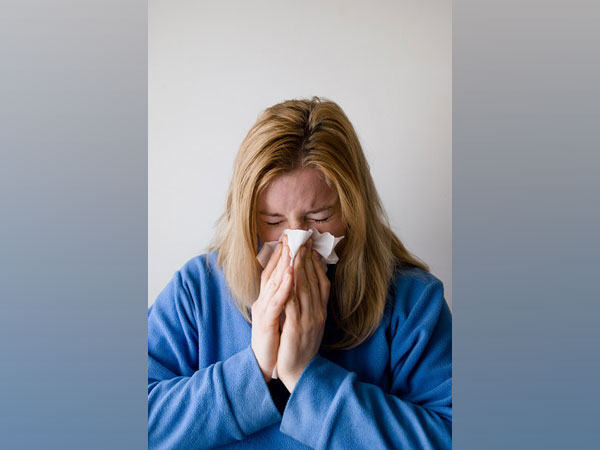
Representative image

Munich [Germany], February 28 (ANI): A recent study has shed light on how the length of allergy seasons in Germany are affected by pollens traveling far distances.
Allergy sufferers are no strangers to problems with pollen. But now - due to climate change - the pollen season is lasting longer and starting earlier than ever before, meaning more days of itchy eyes and runny noses. Warmer temperatures cause flowers to bloom earlier, while higher CO2 levels cause more pollen to be produced.
The effects of climate change on the pollen season have been studied at length, and according to some scientists, has grown by as much as 20 days in the past 30 years, at least in the US and Canada. But one important element is often overlooked - "Pollen is meant to fly," said Dr Annette Menzel, Professor of ecoclimatology at the Technical University of Munich. "Transport phenomena have to be taken into account."
Along with her colleagues, she studied the transport of pollen in Bavaria, Germany, in order to better understand how the pollen season has changed over time. "The transport of pollen has important implications for the length, timing, and severity of the allergenic pollen season," said Dr. Ye Yuan, a coauthor on the study.
Menzel and her team focused on Bavaria - a state in southeast Germany - and used six pollen monitoring stations scattered around the region to analyse data. Their results were recently published in Frontiers in Allergy. They found that certain species of pollen, such as hazel shrubs and alder trees, advanced the start of their seasons by up to 2 days per year, over a period of 30 years (between 1987 and 2017). Other species, which tend to bloom later in the year, such as birch and ash trees, moved their seasons 0.5 days earlier on average each year, across that same time period.
Pollen can travel hundreds of kilometres and, with changing weather patterns and altered species distributions, it's possible that people are becoming exposed to "new" pollen species - meaning pollen that our bodies are unaccustomed to encountering each year.
While it can sometimes be difficult to differentiate between local and transported pollen, the researchers focused on pre-season transports. So, for example, if pollen from birch trees was present at the monitoring station, but local birch trees would not flower for at least another 10 days, that pollen was considered to be transported from far away.
"We were surprised that pre-season pollen transport is a quite common phenomenon being observed in two-thirds of the cases," said Menzel.
As for why it's important to understand how much pollen is from far away, Yuan said that: "Especially for light-weight allergenic [pollen], long-distance transport could seriously influence local human health."
By examining another element besides simple pollen concentration, scientists can delve deeper into how exactly the pollen season is being affected by climate change. For example, Menzel said that the pollen season maybe even longer than estimated based on flowering observations by "taking into account pollen transport, as it has been done in our current study."
While the Munich study did not track how far pollen was transported, and only differentiated between local and long-range transport (meaning pollen coming from outside Bavaria), it provides a crucial key in our understanding of annual pollen patterns. Yuan said that future studies should account for "climate change scenarios [and] land use/land cover changes." He also added that citizen scientists may be able to contribute to pollen studies, who can help collect local observations and contribute to data collection.
It doesn't look like the pollen season will shorten any time soon, but more research on the subject can provide a better understanding of global patterns and changes so that we can better address these issues in the future. (ANI)


Get the App

What to Read Next

Science

New method guides magnetism without magnets

New method guides magnetism without magnets

Researchers at Paul Scherrer Institute PSI have demonstrated an innovative method to control magnetism in materials using an energy-efficient electric field.

Read More
Science

Amphibians bounce-back from Earth’s greatest mass extinction

Amphibians bounce-back from Earth’s greatest mass extinction

Researchers at the University of Bristol discovered that ancient frog ancestors survived the biggest mass extinction of species by eating on freshwater prey that evaded terrestrial predators.

Read More
Science

New insights into how cancer evades the immune system: Study

New insights into how cancer evades the immune system: Study

Immunotherapy research primarily focuses on better recognition of cancer cells by the body's own immune system. Researchers at Amsterdam UMC and Moffitt Cancer Center have taken a different approach.

Read More
Science

Scientists use AI to better understand nanoparticles: Study

Scientists use AI to better understand nanoparticles: Study

A group of scientists has created a way to illuminate the dynamic behavior of nanoparticles, which are essential components in the production of pharmaceuticals, electronics, and industrial and energy-conversion materials.

Read More
Science

New device could allow you to taste cake in virtual reality

New device could allow you to taste cake in virtual reality

The 'e-Taste' interface employs sensors and wireless chemical dispensers to enable remote taste perception, often known as gestation. Field testing done by researchers at The Ohio State University confirmed the device's ability to digitally simulate a range of taste intensities, while still offering variety and safety for the user.

Read More
Science

Study reveals impact of animals as architects of Earth

Study reveals impact of animals as architects of Earth

A new study led by Professor Gemma Harvey from Queen Mary University of London has revealed how hundreds of species shape the landscapes we depend on, from termite mounds visible from space to beavers creating wetlands and hippos carving drainage systems.

Read More
Science

Opposing arrows of time emerge from certain quantum systems

Opposing arrows of time emerge from certain quantum systems

Researchers at the University of Surrey made a thought-provoking discovery. A new study reveals that opposing arrows of time can theoretically emerge from certain quantum systems.

Read More
Science

COVID-19 severity may be predicted by White Blood Cell Count

COVID-19 severity may be predicted by White Blood Cell Count

A COVID-19 diagnosis is no longer as frightening as it used to be, thanks to developments in treatment choices. However, a new study reveals that leukocyte (white blood cell) count may now be used to identify who is more likely to develop more significant disease symptoms.

Read More
Science

Seals can essentially act as 'smart sensors': Study

Seals can essentially act as 'smart sensors': Study

A new study by marine biologists reports that seals can essentially act as 'smart sensors' for monitoring fish populations in the ocean's eerily dim 'twilight zone.'

Read More
Science

New technology enhances gravitational-wave detection: Study

New technology enhances gravitational-wave detection: Study

A team of physicists led by Jonathan Richardson of the University of California, Riverside, demonstrated how new optical technology can extend the detection range of gravitational-wave observatories such as the Laser Interferometer Gravitational-Wave Observatory, or LIGO, and pave the way for future observatories.

Read More


