

ADD ANI AS A TRUSTED SOURCE
googleads
ANI Logo
Menu
Science

Study sheds light on connection of warmer springs, bees waking up earlier

Warmer springs, according to recent research, are prompting bees to awaken earlier, endangering agricultural pollination of apples and pears.

ANI Jul 15, 2023 20:09 IST googleads

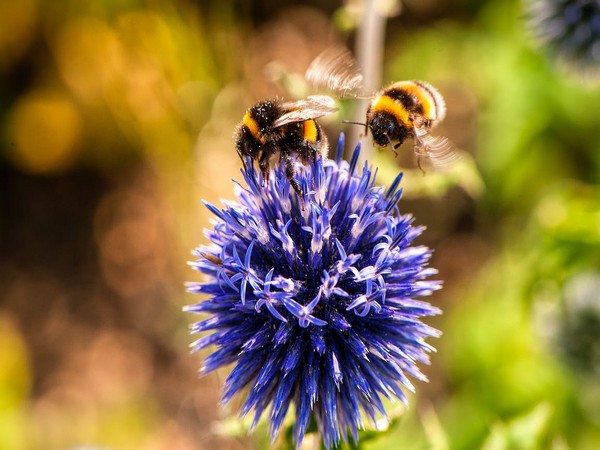
Representative Image

Washington [US], July 15 (ANI): Warmer springs, according to recent research, are prompting bees to awaken earlier, endangering agricultural pollination of apples and pears.
The findings of the study were published in Ecology and Evolution.
The study claimed to be the largest of its type in the UK, revealed that for every 1 degree Celsius rise in temperature induced by climate change, wild bees such as bumblebees emerge from their eggs 6.5 days sooner on average.
As spring arrives earlier and bees emerge earlier in the year, they may lose sync with the plants on which they rely, implying that there will be less food for them to consume. This means that bees may not have enough energy to pollinate crops effectively or may completely miss crop blossom.
PhD researcher Chris Wyver, of the University of Reading's School of Agriculture, Policy and Development, who led the study, said: "Rising temperatures are making life tougher for bees. Warmer conditions mean bees emerge from hibernation earlier, but there may not be enough food to provide energy for them when they start buzzing about.
"Matching wake-up dates with plant flowering is vital for newly emerged bees because they need to find pollen and nectar to increase their chances of survival and produce offspring. A mismatch means bees cannot pollinate effectively."
"Less natural pollination could lead to farmers needing to use managed honeybees, meaning greater costs, which may be passed on to consumers. We could see even more expensive apples, pears and vegetables in supermarkets as a result."
The study examined 88 different species of wild bees over a period of 40 years, using more than 350,000 individual recordings that showed shifts in emergence dates, both over time and in relation to temperature.
Data showed that some bees emerge earlier than others as different species of bee respond differently to the changing temperature. On average, 88 species are emerging 4 days earlier per decade.
With winters projected to be between 1 and 4.5°C warmer and up to 30 per cent wetter by 2070, according to the Met Office, spring is likely to continue to start earlier and bees will continue to become active earlier in the year. (ANI)

Get the App

What to Read Next

Science

Amphibians bounce-back from Earth’s greatest mass extinction

Amphibians bounce-back from Earth’s greatest mass extinction

Researchers at the University of Bristol discovered that ancient frog ancestors survived the biggest mass extinction of species by eating on freshwater prey that evaded terrestrial predators.

Read More
Science

Study reveals impact of animals as architects of Earth

Study reveals impact of animals as architects of Earth

A new study led by Professor Gemma Harvey from Queen Mary University of London has revealed how hundreds of species shape the landscapes we depend on, from termite mounds visible from space to beavers creating wetlands and hippos carving drainage systems.

Read More
Science

Plastic pollution, seawater flooding effect on coastal plants

Plastic pollution, seawater flooding effect on coastal plants

Two of the planet's most urgent environmental stressors have the potential to affect the development and reproductive production of plants found along the world's coasts, according to new research.

Read More
Science

Gardeners can help to identify possibly invasive plants: Research

Gardeners can help to identify possibly invasive plants: Research

Researchers from the University of Reading and the Royal Horticultural Society have discovered that gardeners play a vital role in identifying 'future invaders' - ornamental plants that could become invasive species.

Read More
Science

Butterflies mimic each other's flight patterns to evade predators

Butterflies mimic each other's flight patterns to evade predators

Researchers discovered that inedible butterfly species that replicate one other's colour patterns have developed similar flight habits to warn predators and avoid being eaten.

Read More
Science

Study reveals air pollution hides increases in rainfall

Study reveals air pollution hides increases in rainfall

We know that greenhouse gas emissions, such as carbon dioxide, should increase rainfall. The emissions warm the atmosphere, resulting in a one-two punch: warmer oceans make it easier for water to evaporate, and warmer air can store more water vapour, allowing more moisture to fall as rain. However, for long of the twentieth century, the data did not clearly reveal a rise in precipitation.

Read More
Science

Great apes tease each other just like humans do: Study

Great apes tease each other just like humans do: Study

Scientists reported evidence of playful teasing in the four great ape species orangutans, chimpanzees, bonobos and gorillas.

Read More
Science

Researchers find four species of apes playfully tease each other

Researchers find four species of apes playfully tease each other

Cognitive biologists and primatologists have documented playful teasing in four species of great apes

Read More
Science

Study finds a species that protect crops without pesticides

Study finds a species that protect crops without pesticides

Researchers have identified a microscopic worm species that infects and kills insects.

Read More
Science

Study finds worm species that protect crops without pesticides

Study finds worm species that protect crops without pesticides

Researchers identified a microscopic worm species that infects and kills insects.

Read More
Home About Us Our Products Advertise Contact Us Terms & Condition Privacy Policy

Copyright © aninews.in | All Rights Reserved.




