

ADD ANI AS A TRUSTED SOURCE
googleads
ANI Logo
Menu
Science

Study reveals water crises due to climate change is more severe than previously thought

Climate change alters the global atmospheric circulation, which in turn alters precipitation and evaporation in large parts of the world and, in consequence, the amount of river water that can be used locally

ANI Feb 02, 2023 23:10 IST googleads

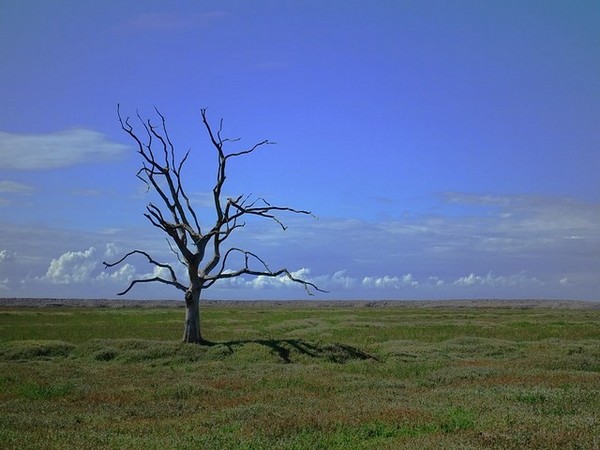
Representative Image

Washington [US], February 2 (ANI): Climate change alters the global atmospheric circulation, which in turn alters precipitation and evaporation in large parts of the world and, in consequence, the amount of river water that can be used locally.
So far, projections of climate impact on stream flow have usually been calculated on the basis of physical models, e.g. the projections reported by IPCC (Intergovernmental Panel on Climate Change).
However, new data analyses conducted under the leadership of Prof. Gunter Bloschl (TU Wien, Vienna) indicate that previous models systematically underestimate how sensitive water availability reacts to certain changing climate parameters. An analysis of measurement data from over 9,500 hydrological catchments from all over the world shows that climate change can lead to local water crises to an even greater extent than previously expected. The results have now been published in the scientific journal Nature Water.
Model approach and measured data approach
"In the climatology community, the effects of climate change on the atmosphere are very well understood. However, their local consequences on rivers and the availability of water falls into the field of hydrology," explains Prof. Gunter Bloschl from the Institute of Hydraulic Engineering and Water Resources Management at TU Wien.
Locally, it is often possible to explain very well how water availability is related to external parameters such as precipitation or temperature - this is being studied at many measuring stations around the world, in particular in Bloschl's hydrology laboratory in Petzenkirchen, where numerous sensors have been installed over an area of 60 hectares. But global conclusions cannot be drawn from such individual observations: "How the water balance depends on external parameters varies from place to place; local vegetation also plays a very important role here," says Gunter Bloschl. It is difficult to develop a simple physical model that can be used to calculate these interrelationships at all places in the world with precision.
Gunter Bloschl, therefore, has collaborated with colleagues from China, Australia, the USA and Saudi Arabia to build up and analyse a large database of streamflow observations from all over the world. Over 9,500 catchments were included, with time series extending several decades into the past.
The water system reacts to climate change more sensitively than thought
"So we don't base our analysis on physical models, but on actual measurements," Gunter Bloschl emphasises. "We look at how much the amount of available water changed in the past when external conditions changed. In this way we can find out how sensitively changes in climate parameters are related to a change in local water availability. And this allows us to make predictions for a future, warmer climate."
And it turned out that the connection between precipitation and the amount of water in the rivers is much more sensitive than was previously thought - and thus much more sensitive than is assumed in the models currently used to predict climate change.
Forecasting models of the effects of climate change on water supply should therefore be fundamentally revised. "Up to now, runoff measurements have usually not been included at all in the models, such as those currently reported by the IPCC," says Gunter Bloschl. "With the series of measurements now available, it should now be possible to adjust the physical prediction models accordingly."
More severe than assumed
In any case, the results of the research team around Gunter Bloschl show that the danger of climate change on the water supply in many parts of the world may have been underestimated so far. Especially for Africa, Australia and North America, the new data predict a significantly higher risk of water supply crises by 2050 than previously assumed. (ANI)


Get the App

What to Read Next

Science

Discovering the genetics of climate adaptation 

Discovering the genetics of climate adaptation 

As climate change accelerates, plants are under increasing pressure to adapt to changing habitats and environmental conditions.

Read More
Science

Weather change linked to heightened risk of Salmonella outbreaks

Weather change linked to heightened risk of Salmonella outbreaks

According to new research from the University of Surrey, climate change has an impact on Salmonella spread. This study builds on prior work by the researchers, which discovered that weather change is contributing to the spread of deadly diarrhoeal illnesses.

Read More
Science

Researchers discover molecular mechanism for bacterial infection

Researchers discover molecular mechanism for bacterial infection

Researchers at Virginia Tech have discovered how bacteria change molecules in order to infect their host.

Read More
Science

Contrail avoidance is less likely to damage climate by mistake

Contrail avoidance is less likely to damage climate by mistake

A new study allays concerns that rerouting planes to avoid producing climate-warming contrails may accidentally exacerbate climate change.

Read More
Science

Memory problems in old age may be linked to key enzyme: Study

Memory problems in old age may be linked to key enzyme: Study

Everyone experiences occasional episodes of forgetfulness, particularly as they age. It's not only that fresh material is hard for older folks to remember. Moreover, when new information becomes available, they find it more difficult to change those thoughts. Nevertheless, not much is understood about the processes that underlie memory updating and how they malfunction as we age.

Read More
Science

Study finds how genetic diagnostics of ultra-rare diseases

Study finds how genetic diagnostics of ultra-rare diseases

Most rare diseases are caused by genetics. A molecular genetic diagnosis can be made more quickly and readily by identifying the underlying genetic change, for instance by exome sequencing (ES). The analysis of every region of our DNA that codes for a protein is known as ES.

Read More
Science

Researchers discover new approach against follicular lymphoma

Researchers discover new approach against follicular lymphoma

Important factors that cause follicular lymphoma, a type of blood cancer, to change from its slow-growing form to the aggressive form it takes in some people have been found by a team of researchers at Weill Cornell Medicine.

Read More
Science

Climate change disrupts vital ecosystems in Alps: Study

Climate change disrupts vital ecosystems in Alps: Study

Reduced snow cover and altering vegetation patterns in the Alps, both caused by climate change, are having significant combined effects on biodiversity and ecosystem functioning in the high mountains, according to a new study.

Read More
Science

Researchers discover potential novel biomarkers of heart disease

Researchers discover potential novel biomarkers of heart disease

Coronary heart disease is a serious global health concern, particularly among those with type 2 diabetes.

Read More
Science

Climate policies and children's health

Climate policies and  children's health

A recent study suggests that efforts to limit carbon dioxide (CO2) emissions from motor vehicles, along with investments in electric vehicles and public transit, would reduce air pollution and have a significant impact on children's health. They'd also save money.

Read More
Home About Us Our Products Advertise Contact Us Terms & Condition Privacy Policy

Copyright © aninews.in | All Rights Reserved.


