

ADD ANI AS A TRUSTED SOURCE
googleads
ANI Logo
Menu
Science

Study reveals less aviation during global lockdown had positive impact on climate

Leipzig [Germany], June 2 (ANI): While many may recount the COVID-19 induced lockdown as a bane, a team of researchers have highlighted a silver lining on the cloud in the form of a new study. They discovered that less aviation during the global lockdown had a positive impact on the climate.

ANI Jun 02, 2021 21:48 IST googleads

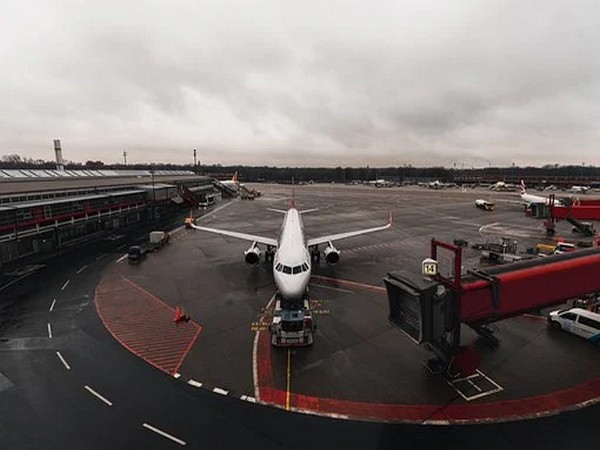
Representative image

Leipzig [Germany], June 2 (ANI): While many may recount the COVID-19 induced lockdown as a bane, a team of researchers have highlighted a silver lining on the cloud in the form of a new study. They discovered that less aviation during the global lockdown had a positive impact on the climate.
They studied the extent to which cirrus clouds caused by aircraft occurred during the global hard lockdown between March and May 2020 and compared the values with those during the same period in previous years. The study was led by Johannes Quaas, Professor of Theoretical Meteorology at Leipzig University, and has now been published in the renowned journal "Environmental Research Letters".
Cirrus clouds, known for their high, wispy strands, contribute to warming the climate. When cirrus clouds occur naturally, large ice crystals form at an altitude of about 36 kilometres, in turn reflecting sunlight back into space - albeit to a small extent. However, they also prevent radiated heat from escaping the atmosphere, and thus have a net heating effect. This is the dominant effect in cirrus clouds.
When the weather conditions are right, condensation trails form behind aircraft. These may persist and spread to form larger cirrus clouds. In this case, their effect on the climate is much greater than that of narrow contrails alone.
The researchers led by Professor Quaas analysed satellite images of clouds in the northern hemisphere, between 27° and 68° North, in the period from March to May 2020. They then compared these with images from the same period in previous years. "Crucially, our studies reveal a clear causal relationship. Since clouds vary considerably depending on the weather, we would not have been able to detect the effects of air traffic in this way under normal circumstances. The period of lockdown due to the COVID-19 pandemic offered a unique opportunity to compare clouds in air traffic corridors at very different traffic levels.
Analysis of the data collected showed that nine per cent fewer cirrus clouds formed during the global lockdown and that the clouds were also two per cent less dense," said Professor Quaas. "The study clearly demonstrates that aircraft contrails lead to additional cirrus clouds and have an impact on global warming." According to Professor Quaas, the data collected confirmed previous estimates based only on climate models: "Our study may improve the ability to simulate these effects in climate models."
Despite the team's findings, there has still not been enough research into the impact of aviation on global warming. A European research collaboration involving Professor Quaas's research group is currently investigating the precise mechanisms in detail. "The tough global lockdown has been helpful in terms of our research. In order to mitigate or even avoid the warming effect on the climate, flight routes could be adapted in the future to avoid cirrus cloud formation, for example by separating flight corridors," said the Professor of Theoretical Meteorology at Leipzig University. (ANI)


Get the App

What to Read Next

Science

New method guides magnetism without magnets

New method guides magnetism without magnets

Researchers at Paul Scherrer Institute PSI have demonstrated an innovative method to control magnetism in materials using an energy-efficient electric field.

Read More
Science

Amphibians bounce-back from Earth’s greatest mass extinction

Amphibians bounce-back from Earth’s greatest mass extinction

Researchers at the University of Bristol discovered that ancient frog ancestors survived the biggest mass extinction of species by eating on freshwater prey that evaded terrestrial predators.

Read More
Science

New insights into how cancer evades the immune system: Study

New insights into how cancer evades the immune system: Study

Immunotherapy research primarily focuses on better recognition of cancer cells by the body's own immune system. Researchers at Amsterdam UMC and Moffitt Cancer Center have taken a different approach.

Read More
Science

Scientists use AI to better understand nanoparticles: Study

Scientists use AI to better understand nanoparticles: Study

A group of scientists has created a way to illuminate the dynamic behavior of nanoparticles, which are essential components in the production of pharmaceuticals, electronics, and industrial and energy-conversion materials.

Read More
Science

New device could allow you to taste cake in virtual reality

New device could allow you to taste cake in virtual reality

The 'e-Taste' interface employs sensors and wireless chemical dispensers to enable remote taste perception, often known as gestation. Field testing done by researchers at The Ohio State University confirmed the device's ability to digitally simulate a range of taste intensities, while still offering variety and safety for the user.

Read More
Science

Study reveals impact of animals as architects of Earth

Study reveals impact of animals as architects of Earth

A new study led by Professor Gemma Harvey from Queen Mary University of London has revealed how hundreds of species shape the landscapes we depend on, from termite mounds visible from space to beavers creating wetlands and hippos carving drainage systems.

Read More
Science

Opposing arrows of time emerge from certain quantum systems

Opposing arrows of time emerge from certain quantum systems

Researchers at the University of Surrey made a thought-provoking discovery. A new study reveals that opposing arrows of time can theoretically emerge from certain quantum systems.

Read More
Science

COVID-19 severity may be predicted by White Blood Cell Count

COVID-19 severity may be predicted by White Blood Cell Count

A COVID-19 diagnosis is no longer as frightening as it used to be, thanks to developments in treatment choices. However, a new study reveals that leukocyte (white blood cell) count may now be used to identify who is more likely to develop more significant disease symptoms.

Read More
Science

Seals can essentially act as 'smart sensors': Study

Seals can essentially act as 'smart sensors': Study

A new study by marine biologists reports that seals can essentially act as 'smart sensors' for monitoring fish populations in the ocean's eerily dim 'twilight zone.'

Read More
Science

New technology enhances gravitational-wave detection: Study

New technology enhances gravitational-wave detection: Study

A team of physicists led by Jonathan Richardson of the University of California, Riverside, demonstrated how new optical technology can extend the detection range of gravitational-wave observatories such as the Laser Interferometer Gravitational-Wave Observatory, or LIGO, and pave the way for future observatories.

Read More
Home About Us Our Products Advertise Contact Us Terms & Condition Privacy Policy

Copyright © aninews.in | All Rights Reserved.


