

ADD ANI AS A TRUSTED SOURCE
googleads
ANI Logo
Menu
Science

Study reveals how new way to rearrange store products could boost impulse buying

Merchants can enhance new shop layouts based on customer familiarity with where their favourite items used to be by using a data-driven strategy for routinely moving products.

ANI Feb 12, 2023 16:40 IST googleads

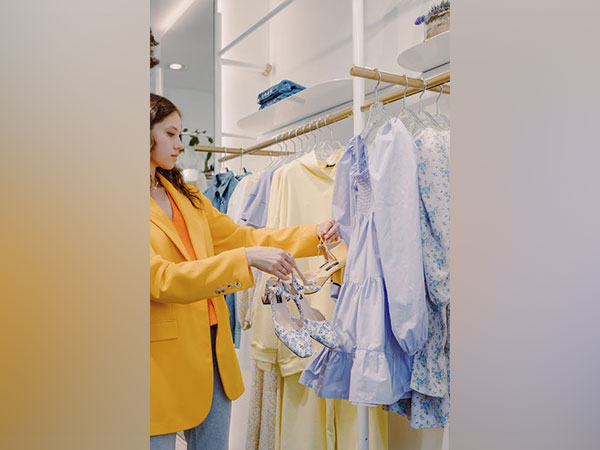
Representative Image

Washington [US], February 12 (ANI): Merchants can enhance new shop layouts based on customer familiarity with where their favourite items used to be by using a data-driven strategy for routinely moving products.
In order to give brick-and-mortar stores a taste of the personalised shopping experience that online retailers like Amazon utilise to entice impulse purchases, the Washington State University-led initiative uses data from previous consumer transactions.
"What's new here is that we designed our model so that customers walking down an aisle they normally peruse will notice products they will likely be interested in based on associations with what was there before," said Chuck Munson, a professor in the WSU Carson College of Business and corresponding author of a study appearing in Expert Systems with Applications. "Our analysis shows that if you are a store that likes to rearrange periodically this would be a smart way to do it."
Gihan Edirisinghe, study lead author and a former WSU PhD student now at Western Kentucky University, came up with the idea for the research on a Saturday evening trip to Walmart a few years ago. As he and his wife perused the aisles, they quickly realized something strange was afoot.
"We found ourselves walking the aisles we normally do but all our stuff had moved," he said. "So, I started wondering if the Walmart folks had put a lot of thought into the rearrangement. When I got home, I checked the literature and it turned out there was a lot of research on one-time store rearrangements but literally nothing data-driven on the best way to periodically rearrange products."
Edirisinghe discussed his findings with Munson and the two researchers decided to tackle the knowledge gap. They developed and tested a product allocation model that uses data mining techniques to extract profitability and product affinity details from tens of thousands of real customer transactions contained in the Microsoft database 'Foodmart.'
Their model then uses a three-step process to determine ideal product placement for stores that periodically rearrange their wares.
First, it identifies a store's most profitable products so they can be placed in highly visible locations. Next, it determines which items tend to be purchased together so they can be placed in a way that customers will notice something interesting next to a planned purchase. Finally, the model utilizes what the researchers call past-aisle impulse to take advantage of customers' familiarity with where products used to be to determine future store layouts.
"This last step is designed so that people looking in a familiar place for, say, potato chips will notice something new that our data tells us will interest them," Edirisinghe said. "Every rearrangement can then be used as the basis for the next. To the best of our knowledge, no previous research has considered this effect."
Munson and Edirisinghe ran numerical simulations to compare the potential profitability of their new model to previous work on product placement. Their model significantly outperformed allocation methods that rely solely on visual rearrangement as well as other modelling techniques that use data association.
One important factor they identified that influenced potential profitability was the nature of the retailer's target market.
"If it is more like a gas station store next to a freeway where people don't really have too much familiarity with the layout, we found that a one-time optimization of products was superior to our method of periodic rearrangement because there is no real strong past impulse there," Edirisinghe said. "However, for a Whole Foods kind of crowd, where there is a higher discretionary income and familiarity with the store layout, our method outperformed one-time optimization."
Moving forward, the researchers said their hope is that their study will attract enough interest from commercial retailers to put their method to a real-life test.
"Our allocation method could ultimately be something that store managers could install and use with a little training," Munson said. "When you take into consideration the fact that 80 per cent of shoppers don't make a list before visiting a brick-and-mortar retailer, it is easy to see how important something like this could be to maximizing profits and helping physical stores compete with online retailers." (ANI)


Get the App

What to Read Next

Science

Amphibians bounce-back from Earth’s greatest mass extinction

Amphibians bounce-back from Earth’s greatest mass extinction

Researchers at the University of Bristol discovered that ancient frog ancestors survived the biggest mass extinction of species by eating on freshwater prey that evaded terrestrial predators.

Read More
Science

New insights into how cancer evades the immune system: Study

New insights into how cancer evades the immune system: Study

Immunotherapy research primarily focuses on better recognition of cancer cells by the body's own immune system. Researchers at Amsterdam UMC and Moffitt Cancer Center have taken a different approach.

Read More
Science

Scientists use AI to better understand nanoparticles: Study

Scientists use AI to better understand nanoparticles: Study

A group of scientists has created a way to illuminate the dynamic behavior of nanoparticles, which are essential components in the production of pharmaceuticals, electronics, and industrial and energy-conversion materials.

Read More
Science

New device could allow you to taste cake in virtual reality

New device could allow you to taste cake in virtual reality

The 'e-Taste' interface employs sensors and wireless chemical dispensers to enable remote taste perception, often known as gestation. Field testing done by researchers at The Ohio State University confirmed the device's ability to digitally simulate a range of taste intensities, while still offering variety and safety for the user.

Read More
Science

Strand Life Sciences launches portal for rare disease diagnosis

Strand Life Sciences launches portal for rare disease diagnosis

Marking Rare Disease Day, Strand Life Sciences, a subsidiary of Reliance Industries and a leading genomics research company, has launched the StrandOmics Portal, an innovative digital platform designed to assist doctors in diagnosing rare diseases more efficiently.

Read More
Science

Study reveals impact of animals as architects of Earth

Study reveals impact of animals as architects of Earth

A new study led by Professor Gemma Harvey from Queen Mary University of London has revealed how hundreds of species shape the landscapes we depend on, from termite mounds visible from space to beavers creating wetlands and hippos carving drainage systems.

Read More
Science

Opposing arrows of time emerge from certain quantum systems

Opposing arrows of time emerge from certain quantum systems

Researchers at the University of Surrey made a thought-provoking discovery. A new study reveals that opposing arrows of time can theoretically emerge from certain quantum systems.

Read More
Science

'Creation of black holes without singularities through gravity'

'Creation of black holes without singularities through gravity'

Traditional black holes, as predicted by Albert Einstein's theory of General Relativity, contain what are known as singularities, i.e. points where the laws of physics break down. Identifying how singularities are resolved in the context of quantum gravity is one of the fundamental problems in theoretical physics. Now, a team of experts has described the creation of regular black holes from gravitational effects without the need for the existence of exotic matter required by some previous models.

Read More
Science

New technology enhances gravitational-wave detection: Study

New technology enhances gravitational-wave detection: Study

A team of physicists led by Jonathan Richardson of the University of California, Riverside, demonstrated how new optical technology can extend the detection range of gravitational-wave observatories such as the Laser Interferometer Gravitational-Wave Observatory, or LIGO, and pave the way for future observatories.

Read More
Science

Discovering the genetics of climate adaptation 

Discovering the genetics of climate adaptation 

As climate change accelerates, plants are under increasing pressure to adapt to changing habitats and environmental conditions.

Read More
Home About Us Our Products Advertise Contact Us Terms & Condition Privacy Policy

Copyright © aninews.in | All Rights Reserved.


