 हिंदी खबर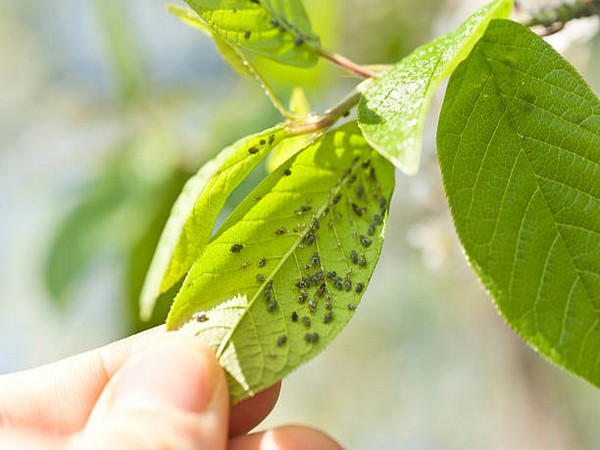

Washington [US], October 16 (ANI): Despite the decrease in the population of bugs, researchers at the University of Wyoming discovered that insects are nevertheless causing tremendous damage to plants.
The first-of-its-kind study compares insect herbivore damage of modern-era plants with that of fossilized leaves from as far back as the late Cretaceous period, nearly 67 million years ago. The research and the findings at the University were published in the journal: 'Proceedings of the National Academy of Sciences'.
"Our work bridges the gap between those who use fossils to study plant-insect interactions over deep time and those who study such interactions in a modern context with fresh leaf material," says lead researcher, UW PhD graduate Lauren Azevedo-Schmidt, now a postdoctoral research associate at the University of Maine.
"The difference in insect damage between the modern era and the fossilized record is striking," -Schmidt added.
Azevedo-Schmidt conducted the research along with UW Department of Botany and Department of Geology and Geophysics Professor Ellen Currano, and Assistant Professor Emily Meineke of the University of California-Davis.
The study examined fossilized leaves with insect feeding damage from the Late Cretaceous through the Pleistocene era, a little over 2 million years ago, and compared them with leaves collected by Azevedo-Schmidt from three modern forests. The detailed research looked at different types of damage caused by insects, finding marked increases in all recent damage compared to the fossil record.
"Our results demonstrate that plants in the modern era are experiencing unprecedented levels of insect damage, despite widespread insect declines," wrote the scientists, who suggest that the disparity can be explained by human activity.
More research is necessary to determine the precise causes of increased insect damage to plants, but the scientists say a warming climate, urbanization and the introduction of invasive species likely have had a major impact.
"We hypothesize that humans have influenced (insect) damage frequencies and diversities within modern forests, with the most human impact occurring after the Industrial Revolution," the researchers wrote. "Consistent with this hypothesis, herbarium specimens from the early 2000s were 23 per cent more likely to have insect damage than specimens collected in the early 1900s, a pattern that has been linked to climate warming."
But climate change doesn't fully explain the increase in insect damage, they say.
"This research suggests that the strength of human influence on plant-insect interactions is not controlled by climate change alone but, rather, the way in which humans interact with the terrestrial landscape," the researchers concluded. (ANI)


