

ADD ANI AS A TRUSTED SOURCE
googleads
ANI Logo
Menu
Science

Study reveals cancer immunotherapy success may depend on gut bacteria

New Delhi [India], Mar 7 (ANI): In a recent study, researchers suggest that gut bacteria can penetrate tumour cells and boost the effectiveness of experimental immunotherapy that targets the CD47 protein. The study focused on the response to cancer immunotherapy and if it depends on bacteria that originate in the gut and travel to the tumour.

ANI Mar 07, 2020 22:45 IST googleads

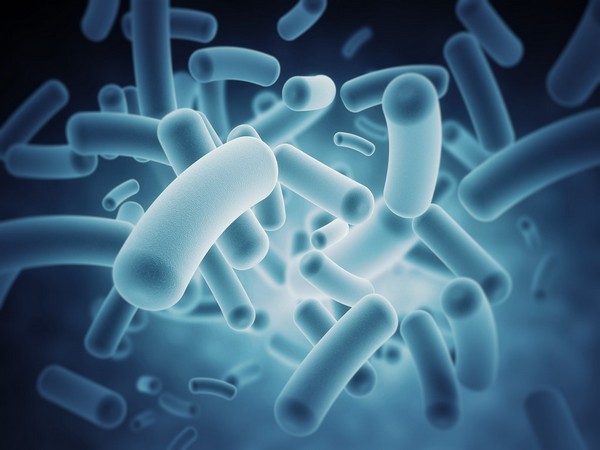
Representative image

New Delhi [India], Mar 7 (ANI): In a recent study, researchers suggest that gut bacteria can penetrate tumour cells and boost the effectiveness of experimental immunotherapy that targets the CD47 protein. The study focused on the response to cancer immunotherapy and if it depends on bacteria that originate in the gut and travel to the tumour.
The team's study, published in the Journal of Experimental Medicine, discovered that the response to treatment depends on the type of bacteria living in the animals' guts. They then identified the mechanism, finding that the combination of antibodies against CD47 and gut bacteria works via the body's STING pathway of innate immunity - the body's first line of defence against infection.
Using mouse models of malignancy, the scientists found that the intestinal microbe Bifidobacterium accumulates within tumours, transforming anti-CD47 unresponsive tumours into responsive ones.
Their experiments used mice from different resource facilities, antibiotic-fed mice, and mice raised in a germ-free environment.
In one experiment, they studied mice raised in two different facilities and that had distinct mixtures of bacteria in their intestines. One group was responsive to anti-CD47 and another was not. The second group became responsive, however, after being housed with the responders, indicating that oral transfer or contact transmission of gut bacteria occurred between groups, the researchers say.
The protein CD47 is expressed in high levels on the surface of many cancer cells, where it acts as a "don't eat me" signal to the immune system's macrophages, commonly known as white blood cells. As a result, anti-CD47, also known as CD47 blockade therapy, is currently under investigation in multiple clinical trials. However, the mouse studies that predated those trials had mixed results, with only some mice responding to the anti-CD47 therapy, explains corresponding author Yang-Xin Fu, M.D., Ph.D., professor of pathology, immunology, and radiation at UT Southwestern.
"We felt we needed to improve anti-CD47 therapy and understand the mechanisms," he says, leading them to wonder about the gut microbiome, the bacteria that grow in the intestines and aid with digestion. That bacterial ecosystem, sometimes called the microbiota, is also known to affect the gut's ability to resist pathogens and the host's response to cancer immunotherapy.
"But how the microbiota does that has been unclear," Fu says. "This study finds that some of the bacteria from the gut travel to the tumour and get into the cells, or microenvironment, where the bacteria facilitate CD47 blockade's ability to attack the tumour. We found it does that via the immune signalling pathway called stimulator of interferon genes (STING)."
The findings suggest that a probiotic might someday be used to improve anti-CD47 therapy, says Fu, a Cancer Prevention and Research Institute (CPRIT) Scholar and holder of the Mary Nell and Ralph B. Rogers Professorship in Immunology at UT Southwestern.
The researchers also found that tumour-bearing mice that normally respond to anti-CD47 treatment failed to respond if their gut bacteria were killed off by antibiotics. In contrast, anti-CD47 treatment became effective in mice that are usually nonresponsive when these animals were supplemented with Bifidobacteria, a type of bacteria that is often found in the gastrointestinal tract of healthy mice and humans.
They further discovered that the bacteria migrate into tumours, activating the STING immune signalling pathway. This sets off the production of immune signalling molecules such as type 1 interferons and activating immune cells that appear to attack and destroy the tumour once the anti-CD47 agent nullifies the CD47's "don't eat me" tag, the researchers report. The researchers found that mice genetically unable to activate type 1 interferon failed to respond to the bacteria-immunotherapy approach. Similarly, mice unable to access the STING pathway showed no benefit from the combined bacteria-immunotherapy approach, confirming that STING signalling is essential.
"It is very possible that more than one type of gut microbiota could enhance tumour immunity in a similar way and we would like to investigate that," he adds. (ANI)


Get the App

What to Read Next

Science

New method guides magnetism without magnets

New method guides magnetism without magnets

Researchers at Paul Scherrer Institute PSI have demonstrated an innovative method to control magnetism in materials using an energy-efficient electric field.

Read More
Science

Amphibians bounce-back from Earth’s greatest mass extinction

Amphibians bounce-back from Earth’s greatest mass extinction

Researchers at the University of Bristol discovered that ancient frog ancestors survived the biggest mass extinction of species by eating on freshwater prey that evaded terrestrial predators.

Read More
Science

New insights into how cancer evades the immune system: Study

New insights into how cancer evades the immune system: Study

Immunotherapy research primarily focuses on better recognition of cancer cells by the body's own immune system. Researchers at Amsterdam UMC and Moffitt Cancer Center have taken a different approach.

Read More
Science

Scientists use AI to better understand nanoparticles: Study

Scientists use AI to better understand nanoparticles: Study

A group of scientists has created a way to illuminate the dynamic behavior of nanoparticles, which are essential components in the production of pharmaceuticals, electronics, and industrial and energy-conversion materials.

Read More
Science

New device could allow you to taste cake in virtual reality

New device could allow you to taste cake in virtual reality

The 'e-Taste' interface employs sensors and wireless chemical dispensers to enable remote taste perception, often known as gestation. Field testing done by researchers at The Ohio State University confirmed the device's ability to digitally simulate a range of taste intensities, while still offering variety and safety for the user.

Read More
Science

Study reveals impact of animals as architects of Earth

Study reveals impact of animals as architects of Earth

A new study led by Professor Gemma Harvey from Queen Mary University of London has revealed how hundreds of species shape the landscapes we depend on, from termite mounds visible from space to beavers creating wetlands and hippos carving drainage systems.

Read More
Science

Opposing arrows of time emerge from certain quantum systems

Opposing arrows of time emerge from certain quantum systems

Researchers at the University of Surrey made a thought-provoking discovery. A new study reveals that opposing arrows of time can theoretically emerge from certain quantum systems.

Read More
Science

COVID-19 severity may be predicted by White Blood Cell Count

COVID-19 severity may be predicted by White Blood Cell Count

A COVID-19 diagnosis is no longer as frightening as it used to be, thanks to developments in treatment choices. However, a new study reveals that leukocyte (white blood cell) count may now be used to identify who is more likely to develop more significant disease symptoms.

Read More
Science

Seals can essentially act as 'smart sensors': Study

Seals can essentially act as 'smart sensors': Study

A new study by marine biologists reports that seals can essentially act as 'smart sensors' for monitoring fish populations in the ocean's eerily dim 'twilight zone.'

Read More
Science

New technology enhances gravitational-wave detection: Study

New technology enhances gravitational-wave detection: Study

A team of physicists led by Jonathan Richardson of the University of California, Riverside, demonstrated how new optical technology can extend the detection range of gravitational-wave observatories such as the Laser Interferometer Gravitational-Wave Observatory, or LIGO, and pave the way for future observatories.

Read More
Home About Us Our Products Advertise Contact Us Terms & Condition Privacy Policy

Copyright © aninews.in | All Rights Reserved.


