

ADD ANI AS A TRUSTED SOURCE
googleads
ANI Logo
Menu
Science

Study reveals analysing patients shortly after stroke can help link brain regions to speech functions

Washington D.C.[USA], Mar 29 (ANI): Researchers have found that analysing the brains of stroke patients just days after the stroke can help them link various speech functions to different parts of the brain. The recent study from Rice University and Baylor College of Medicine may lead to better treatment and recovery of stroke patients.

ANI Mar 29, 2020 11:29 IST googleads

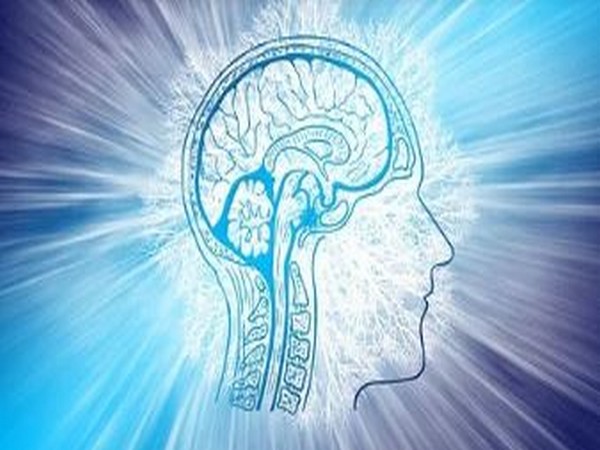
Representative image

Washington D.C.[USA], Mar 29 (ANI): Researchers have found that analysing the brains of stroke patients just days after the stroke can help them link various speech functions to different parts of the brain. The recent study from Rice University and Baylor College of Medicine may lead to better treatment and recovery of stroke patients.
The study, 'Dissociation between frontal and temporal-parietal contributions to connected speech in acute stroke' will appear in an upcoming edition of the journal Brain.
Study co-author Randi Martin, the Elma W. Schneider Professor of Psychology at Rice, worked with a team of researchers led by Tatiana Schnur, associate professor of neurosurgery and neuroscience at the Baylor College of Medicine, to evaluate the spontaneous language production of 65 stroke patients by using storytelling. For the experiment, the patients were read the story of Cinderella and were then asked to retell it.
The researchers used a well-established process to score the patients -- the Quantitative Production Analysis method-- and relied on 13 different measures for evaluation, including words per minute, types of words, and sentence length and formation. They found that by evaluating patients between one- and 13-days post-stroke, they were able to identify how different and critical components related to language production linked up with different regions of the brain.
The researchers used cutting-edge techniques to relate the brain areas damaged in each individual to the degree of their impairment on these language-production measures. Specifically, they found that retrieving words and putting them into increasingly complex sentences relied on the left temporal and parietal lobes, while producing grammatical aspects of sentences relied on the left frontal lobe.
Martin noted there are only a few other studies that have looked at stroke patients in the acute stage, but those focused on the ability to produce single words rather than providing a detailed analysis of language production. The majority of studies, she said, look at stroke patients in the chronic stage of recovery, which is at least six months after the stroke. At that time, considerable reorganization of language function in the brain may have occurred.
Also, studying individuals at the acute stage allows for studying those with smaller areas of damage, she said. Those with small lesions are likely to recover and thus not included in studies of chronic stroke, and examining these people allows for a more precise mapping between areas damaged and language abilities.
"Many patients in the chronic stage of stroke have significantly worse brain damage than acute patients and have plateaued with their recovery," she said. "Their brains cannot be evaluated in the same way as acute stroke patients."
Future work will look at these same individuals at different stages during their first year of the recovery process. One important issue will be to determine what areas of brain damage and what language abilities will predict performance a year after stroke.
Martin hopes this work will help better understand how different brain regions recover from the stroke. She expects the work will be useful in the design of treatment options for stroke patients, including early interventions that may boost long-term recovery. (ANI)


Get the App

What to Read Next

Science

New insights into how cancer evades the immune system: Study

New insights into how cancer evades the immune system: Study

Immunotherapy research primarily focuses on better recognition of cancer cells by the body's own immune system. Researchers at Amsterdam UMC and Moffitt Cancer Center have taken a different approach.

Read More
Science

Strand Life Sciences launches portal for rare disease diagnosis

Strand Life Sciences launches portal for rare disease diagnosis

Marking Rare Disease Day, Strand Life Sciences, a subsidiary of Reliance Industries and a leading genomics research company, has launched the StrandOmics Portal, an innovative digital platform designed to assist doctors in diagnosing rare diseases more efficiently.

Read More
Science

Discovery of unexpected collagen structure to influence research

Discovery of unexpected collagen structure to influence research

Collagen, the body's most abundant protein, has long been considered a predictable structural component of tissues.

Read More
Science

Shubhanshu Shukla: IAF officer becomes first Indian astronaut for

Shubhanshu Shukla: IAF officer becomes first Indian astronaut for

Shubhanshu Shukla, Indian Air Force (IAF) officer and one of four astronauts for Indian Space Research Organisation's (ISRO) Gaganyaan mission, has been sele Shubhanshu Shukla, Indian Air Force (IAF) officer and one of four astronauts for Indian Space Research Organisation's (ISRO) Gaganyaan mission, has been selected as the pilot for Axiom Mission 4, scheduled for Spring 2025.cted as the pilot for Axiom Mission 4, scheduled for Spring 2025.

Read More
Science

Weather change linked to heightened risk of Salmonella outbreaks

Weather change linked to heightened risk of Salmonella outbreaks

According to new research from the University of Surrey, climate change has an impact on Salmonella spread. This study builds on prior work by the researchers, which discovered that weather change is contributing to the spread of deadly diarrhoeal illnesses.

Read More
Science

Study finds connection between quantum theory, information theory

Study finds connection between quantum theory, information theory

"Our results have no clear or direct application right now. It's basic research that lays the foundation for future technologies in quantum information and quantum computers. There's enormous potential for complete discoveries in many different research fields," said Guilherme B Xavier, a researcher in quantum communication at Linkoping University, Sweden.

Read More
Science

Study reveals how reminders can eliminate age-related memory loss

Study reveals how reminders can eliminate age-related memory loss

A recent study from UT Arlington showed that setting reminders can reverse some age-related memory deficits. The findings represent a significant breakthrough in tackling the cognitive issues that older persons confront, particularly in the context of prospective memory, which is the ability to remember to complete an intended activity at the appropriate time, such as taking medication or attending appointments.

Read More
Science

Biomarker may predict response to immunotherapy in liver cancer

Biomarker may predict response to immunotherapy in liver cancer

According to a preclinical study conducted by Weill Cornell Medicine researchers, it may soon be feasible to detect whether individuals with hepatocellular carcinoma, a kind of liver cancer, may benefit from immunotherapy.

Read More
Science

Bacterial vaccine demonstrates potential as cancer treatment

Bacterial vaccine demonstrates potential as cancer treatment

Columbia researchers developed probiotic bacteria that train the immune system to eliminate cancer cells, paving the way for a new class of cancer vaccinations that take advantage of bacteria's innate tumour-targeting abilities. These microbial cancer vaccines can be tailored to each person's specific original tumour and metastases, perhaps preventing future recurrences.

Read More
Science

Alzheimer’s disease can damage brain in two phases

Alzheimer’s disease can damage brain in two phases

Alzheimer's disease may cause brain damage in two stages, according to new research supported by the National Institutes of Health (NIH) that uses sophisticated brain mapping methods.

Read More
Home About Us Our Products Advertise Contact Us Terms & Condition Privacy Policy

Copyright © aninews.in | All Rights Reserved.


