

ADD ANI AS A TRUSTED SOURCE
googleads
ANI Logo
Menu
Science

Study reveals about 60 per cent cancer patients do not respond effectively to chemotherapy treatments

Indiana [US], October 25 (ANI): Nearly 60 per cent of all cancer patients do not respond effectively to chemotherapy treatments, as estimated by scientists from Purdue University. In recent research, they say that the results can be even worse - as many of those same patients experience toxic and sometimes deadly side effects.

ANI Oct 25, 2020 13:25 IST googleads

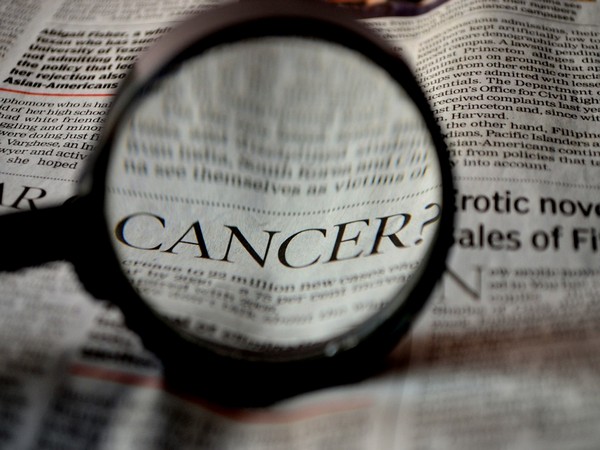
Representative image

Indiana [US], October 25 (ANI): Nearly 60 per cent of all cancer patients do not respond effectively to chemotherapy treatments, as estimated by scientists from Purdue University. In recent research, they say that the results can be even worse - as many of those same patients experience toxic and sometimes deadly side effects.
Now, a Purdue University scientist and entrepreneur working to use simple LED light to help determine if certain chemotherapy options will work for specific patients. The work is published in Scientific Reports.
"We are using a technique very similar to Doppler radar used in the weather to advance personalized medicine," said David Nolte, the Edward M. Purcell Distinguished Professor of Physics and Astronomy in Purdue's College of Science. "We take the LED light and shine it on biopsies. We then apply chemotherapy to the biopsies and analyse how the light scatters off the tissues."
Nolte, who also is a member of the Purdue University Center for Cancer Research, said the light scattering dynamics give scientists and doctors detailed information about the likelihood of a chemotherapy drug being effective for a patient. Nolte said they have results within 24 hours. This first trial looked at biodynamic imaging on human patients with ovarian cancer.
"We look for signs of apoptosis, or what we call the controlled death of cells," Nolte said. "Apoptosis is the signal that indicates the effectiveness of the chemotherapy for this patient's tissues and tumours. For some cancers, there are so many treatment options available that it's like a doctor is trying to fit square pegs in circular holes until the desired outcome is found. We want to make this process better for patients."
Nolte has worked with several groups within the Purdue entrepreneurial and commercialization ecosystem, including the Purdue Foundry, on business plan development and management searches. AniDyn, a medical technology startup, was spun out of Purdue by professors Nolte and John J. Turek. AniDyn is focused on the development and commercialization of live-tissue imaging platform technologies.
Nolte also works closely with the Purdue Research Foundation Office of Technology Commercialisation to patent and license his technologies. (ANI)


Get the App

What to Read Next

Science

New method guides magnetism without magnets

New method guides magnetism without magnets

Researchers at Paul Scherrer Institute PSI have demonstrated an innovative method to control magnetism in materials using an energy-efficient electric field.

Read More
Science

Amphibians bounce-back from Earth’s greatest mass extinction

Amphibians bounce-back from Earth’s greatest mass extinction

Researchers at the University of Bristol discovered that ancient frog ancestors survived the biggest mass extinction of species by eating on freshwater prey that evaded terrestrial predators.

Read More
Science

New insights into how cancer evades the immune system: Study

New insights into how cancer evades the immune system: Study

Immunotherapy research primarily focuses on better recognition of cancer cells by the body's own immune system. Researchers at Amsterdam UMC and Moffitt Cancer Center have taken a different approach.

Read More
Science

Scientists use AI to better understand nanoparticles: Study

Scientists use AI to better understand nanoparticles: Study

A group of scientists has created a way to illuminate the dynamic behavior of nanoparticles, which are essential components in the production of pharmaceuticals, electronics, and industrial and energy-conversion materials.

Read More
Science

New device could allow you to taste cake in virtual reality

New device could allow you to taste cake in virtual reality

The 'e-Taste' interface employs sensors and wireless chemical dispensers to enable remote taste perception, often known as gestation. Field testing done by researchers at The Ohio State University confirmed the device's ability to digitally simulate a range of taste intensities, while still offering variety and safety for the user.

Read More
Science

Strand Life Sciences launches portal for rare disease diagnosis

Strand Life Sciences launches portal for rare disease diagnosis

Marking Rare Disease Day, Strand Life Sciences, a subsidiary of Reliance Industries and a leading genomics research company, has launched the StrandOmics Portal, an innovative digital platform designed to assist doctors in diagnosing rare diseases more efficiently.

Read More
Science

Study reveals impact of animals as architects of Earth

Study reveals impact of animals as architects of Earth

A new study led by Professor Gemma Harvey from Queen Mary University of London has revealed how hundreds of species shape the landscapes we depend on, from termite mounds visible from space to beavers creating wetlands and hippos carving drainage systems.

Read More
Science

Opposing arrows of time emerge from certain quantum systems

Opposing arrows of time emerge from certain quantum systems

Researchers at the University of Surrey made a thought-provoking discovery. A new study reveals that opposing arrows of time can theoretically emerge from certain quantum systems.

Read More
Science

COVID-19 severity may be predicted by White Blood Cell Count

COVID-19 severity may be predicted by White Blood Cell Count

A COVID-19 diagnosis is no longer as frightening as it used to be, thanks to developments in treatment choices. However, a new study reveals that leukocyte (white blood cell) count may now be used to identify who is more likely to develop more significant disease symptoms.

Read More
Science

Seals can essentially act as 'smart sensors': Study

Seals can essentially act as 'smart sensors': Study

A new study by marine biologists reports that seals can essentially act as 'smart sensors' for monitoring fish populations in the ocean's eerily dim 'twilight zone.'

Read More
Home About Us Our Products Advertise Contact Us Terms & Condition Privacy Policy

Copyright © aninews.in | All Rights Reserved.
