

ADD ANI AS A TRUSTED SOURCE
googleads
ANI Logo
Menu
Science

Study on brain's response to perceived threats useful for treatment of post-traumatic stress disorder

Washington [US], July 6 (ANI): A new study measures changes in the human brain's response to a perceived threat following non-invasive stimulation of the nervous system via the vagus nerve. The results have implications for the development of treatments for post-traumatic stress disorder (PTSD) and other mental health conditions, as well as for increasing alertness and attention during learning.

ANI Jul 06, 2022 06:35 IST googleads

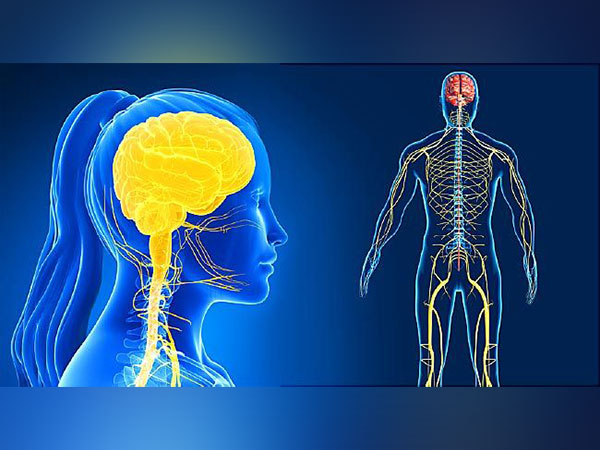
Representative Image

Washington [US], July 6 (ANI): A new study measures changes in the human brain's response to a perceived threat following non-invasive stimulation of the nervous system via the vagus nerve. The results have implications for the development of treatments for post-traumatic stress disorder (PTSD) and other mental health conditions, as well as for increasing alertness and attention during learning.
"While our sample size was small, our results are intriguing," said the study's lead author Dr. Imanuel Lerman of UC San Diego's Qualcomm Institute (QI), School of Medicine, and Jacobs School of Engineering as well as the VA Center of Excellence for Stress and Mental Health. "The stimulation of participants' vagus nerve heightened their reaction to negative images and decreased reaction to positive images. This supports the idea that there's an additive link between vagus nerve stimulation and norepinephrine signaling, which is critical for fight or flight responses, in the brain."
One of the body's major means of communicating with the brain, the vagus nerve plays a critical role in regulating the "fight or flight" response. While previous research had indicated that stimulating this nerve improves attention, reduces reaction time and augments learning, no one had tested how this technique affects the body's response to emotionally charged stimulus.
The research team selected 24 healthy adults to receive either a placebo treatment or non-invasive stimulation of the vagus nerve where it runs parallel to the carotid artery.
These volunteers entered an fMRI machine and completed a simple task that involved pressing a button on a handheld device in response to being shown a blue circle or square. All participants were then either informed that the shape would turn red to signal the imminent appearance of an upsetting image (i.e. an image of warfare), accompanied by a high-pitched tone, or green to signal an incoming pleasant image (i.e. a photo of a quiet lakeside), accompanied by a low, soothing tone.
Researchers recorded the difference in participants' reaction time, brain activity and blood oxygen levels. Volunteers who received vagus nerve stimulation showed significantly quicker reaction times during both the neutral and emotionally charged tasks. However, individuals who received vagus nerve stimulation had stronger brain responses to negative/upsetting imagery, and diminished responses to pleasant imagery when measured with fMRI. The opposite was true for the control group.
"The study's findings represent a first step toward understanding how non-invasive vagus nerve stimulation might be efficiently used as a tool to treat patients with PTSD, generalized anxiety and other disorders that involve a heightened response to perceived threats," Lerman said. (ANI)


Get the App

What to Read Next

Science

New insights into how cancer evades the immune system: Study

New insights into how cancer evades the immune system: Study

Immunotherapy research primarily focuses on better recognition of cancer cells by the body's own immune system. Researchers at Amsterdam UMC and Moffitt Cancer Center have taken a different approach.

Read More
Science

Gut microbes play role in regulating stress responsiveness

Gut microbes play role in regulating stress responsiveness

A groundbreaking study has revealed the critical role of gut bacteria in regulating stress responses through interactions with the body's circadian rhythms.

Read More
Science

Study reveals how reminders can eliminate age-related memory loss

Study reveals how reminders can eliminate age-related memory loss

A recent study from UT Arlington showed that setting reminders can reverse some age-related memory deficits. The findings represent a significant breakthrough in tackling the cognitive issues that older persons confront, particularly in the context of prospective memory, which is the ability to remember to complete an intended activity at the appropriate time, such as taking medication or attending appointments.

Read More
Science

Study finds novel approach to treat neurological diseases

Study finds novel approach to treat neurological diseases

The matter of what causes complicated neurological disorders like Alzheimer's or multiple sclerosis continues to perplex scientists and doctors, with unknowns impeding early diagnosis and successful treatment.

Read More
Science

Bacterial vaccine demonstrates potential as cancer treatment

Bacterial vaccine demonstrates potential as cancer treatment

Columbia researchers developed probiotic bacteria that train the immune system to eliminate cancer cells, paving the way for a new class of cancer vaccinations that take advantage of bacteria's innate tumour-targeting abilities. These microbial cancer vaccines can be tailored to each person's specific original tumour and metastases, perhaps preventing future recurrences.

Read More
Science

Alzheimer’s disease can damage brain in two phases

Alzheimer’s disease can damage brain in two phases

Alzheimer's disease may cause brain damage in two stages, according to new research supported by the National Institutes of Health (NIH) that uses sophisticated brain mapping methods.

Read More
Science

Study discovers how special immune cells stop metastatic cancer

Study discovers how special immune cells stop metastatic cancer

The majority of cancer deaths are caused by metastatic disease, which occurs when cancer spreads from the primary tumour to other areas of the body. and researchers understand how cancer cells escape the primary location to seed new tumours, it is unclear why some cancer cells produce new tumours decades later and others do not.

Read More
Science

Study: New potential treatment for cardiac arrhythmias

Study: New potential treatment for cardiac arrhythmias

A recent study by researchers at the University of Arizona College of Medicine - Phoenix and the University of California Davis Health discovered a new target for developing a medication to treat atrial fibrillation, the most prevalent kind of irregular heart rhythm.

Read More
Science

Study: New imaging method accurately detects kidney cancer

Study: New imaging method accurately detects kidney cancer

A recent study conducted by UCLA Health Jonsson Comprehensive Cancer Center researchers found that new, non-invasive imaging technology can detect clear-cell renal cell carcinoma, the most common kind of kidney cancer.

Read More
Science

Sleep apnea may increase abdominal aortic aneurysms risk

Sleep apnea may increase abdominal aortic aneurysms risk

Obstructive sleep apnea may increase the chance of developing abdominal aortic aneurysms, according to experts from the University of Missouri School of Medicine and NextGen Precision Health.

Read More
Home About Us Our Products Advertise Contact Us Terms & Condition Privacy Policy

Copyright © aninews.in | All Rights Reserved.
