

ADD ANI AS A TRUSTED SOURCE
googleads
ANI Logo
Menu
Science

Study: Imaging appearance of ballistic wounds predicts bullet composition for MRI safety

Leesburg (Virginia) [US], January 3 (ANI): According to recent study radiography and CT can be used to identify non-ferromagnetic projectiles that are safe for MRI since patients with ballistic embedded fragments are frequently denied MRI (due to indeterminate bullet composition sans shell casings).

ANI Jan 03, 2021 23:22 IST googleads

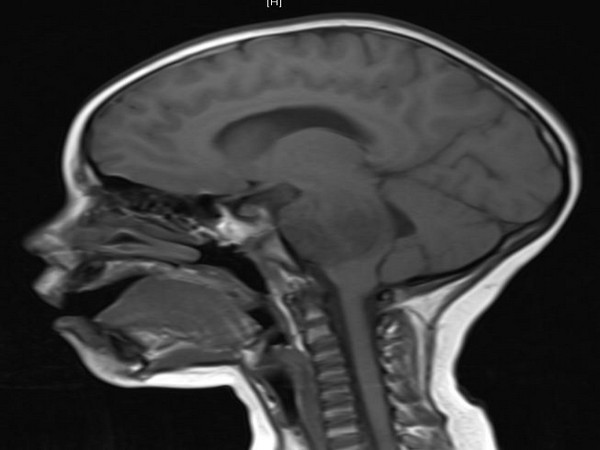
Representative Image

Leesburg (Virginia) [US], January 3 (ANI): According to recent study radiography and CT can be used to identify non-ferromagnetic projectiles that are safe for MRI since patients with ballistic embedded fragments are frequently denied MRI (due to indeterminate bullet composition sans shell casings).
According to an article in ARRS' American Journal of Roentgenology (AJR), because patients with ballistic embedded fragments are frequently denied MRI (due to indeterminate bullet composition sans shell casings), radiography and CT can be used to identify non-ferromagnetic projectiles that are safe for MRI.
"Commercially available handgun and shotgun ammunition representing projectiles commonly encountered in a clinical setting were fired into ballistic gelatin as a surrogate for human tissue," explained first author Arthur J. Fountain from the department of radiology and imaging sciences at Emory University.
After obtaining radiographs and CT images of these gelatin blocks, Fountain and colleagues then obtained MR images of unfired bullets suspended in gelatin blocks using T1- and T2-weighted sequences. Magnetic attractive force, rotational torque, and heating effects of unfired bullets were assessed at 1.5 T.
Based upon debris trail and primary projectile deformation, the team separated the fired bullets into two groups: ferromagnetic and non-ferromagnetic. Although ferromagnetic bullets showed mild torque forces and marked imaging artifacts at 1.5 T, non-ferromagnetic bullets did not exhibit these effects.
Importantly, heating above the Food and Drug Administration limit of 2°C was not observed in any of the projectiles tested.
Additionally, the authors of this AJR article presented a triage algorithm for patients with retained ballistic fragments. "In particular," Fountain et al. described, "a projectile that leaves a metallic debris trail from entry to final position or has been appreciably deformed is of copper, copper-alloy, or lead composition with a partial jacketed configuration or represents lead shotgun shot and does not pose a significant risk for imaging at 1.5 T or less, regardless of when the injury occurred."
"Non-ferromagnetic ballistic projectiles do not undergo movement or heating during MRI, and the imaging modality can be performed when medically necessary without undue risk and with limited artifact susceptibility on the resulting images, even when the projectile is in or near a vital structure," the authors concluded. (ANI)


Get the App

What to Read Next

Science

New method guides magnetism without magnets

New method guides magnetism without magnets

Researchers at Paul Scherrer Institute PSI have demonstrated an innovative method to control magnetism in materials using an energy-efficient electric field.

Read More
Science

New insights into how cancer evades the immune system: Study

New insights into how cancer evades the immune system: Study

Immunotherapy research primarily focuses on better recognition of cancer cells by the body's own immune system. Researchers at Amsterdam UMC and Moffitt Cancer Center have taken a different approach.

Read More
Science

New device could allow you to taste cake in virtual reality

New device could allow you to taste cake in virtual reality

The 'e-Taste' interface employs sensors and wireless chemical dispensers to enable remote taste perception, often known as gestation. Field testing done by researchers at The Ohio State University confirmed the device's ability to digitally simulate a range of taste intensities, while still offering variety and safety for the user.

Read More
Science

Study reveals impact of animals as architects of Earth

Study reveals impact of animals as architects of Earth

A new study led by Professor Gemma Harvey from Queen Mary University of London has revealed how hundreds of species shape the landscapes we depend on, from termite mounds visible from space to beavers creating wetlands and hippos carving drainage systems.

Read More
Science

Opposing arrows of time emerge from certain quantum systems

Opposing arrows of time emerge from certain quantum systems

Researchers at the University of Surrey made a thought-provoking discovery. A new study reveals that opposing arrows of time can theoretically emerge from certain quantum systems.

Read More
Science

COVID-19 severity may be predicted by White Blood Cell Count

COVID-19 severity may be predicted by White Blood Cell Count

A COVID-19 diagnosis is no longer as frightening as it used to be, thanks to developments in treatment choices. However, a new study reveals that leukocyte (white blood cell) count may now be used to identify who is more likely to develop more significant disease symptoms.

Read More
Science

Seals can essentially act as 'smart sensors': Study

Seals can essentially act as 'smart sensors': Study

A new study by marine biologists reports that seals can essentially act as 'smart sensors' for monitoring fish populations in the ocean's eerily dim 'twilight zone.'

Read More
Science

New technology enhances gravitational-wave detection: Study

New technology enhances gravitational-wave detection: Study

A team of physicists led by Jonathan Richardson of the University of California, Riverside, demonstrated how new optical technology can extend the detection range of gravitational-wave observatories such as the Laser Interferometer Gravitational-Wave Observatory, or LIGO, and pave the way for future observatories.

Read More
Science

Microbes help detoxify our atmosphere, says study 

Microbes help detoxify our atmosphere, says study 

Melbourne researchers have uncovered important new information on how microbes absorb huge amounts of carbon monoxide (CO) and assist in reducing levels of this deadly gas.

Read More
Science

Weather change linked to heightened risk of Salmonella outbreaks

Weather change linked to heightened risk of Salmonella outbreaks

According to new research from the University of Surrey, climate change has an impact on Salmonella spread. This study builds on prior work by the researchers, which discovered that weather change is contributing to the spread of deadly diarrhoeal illnesses.

Read More
Home About Us Our Products Advertise Contact Us Terms & Condition Privacy Policy

Copyright © aninews.in | All Rights Reserved.
